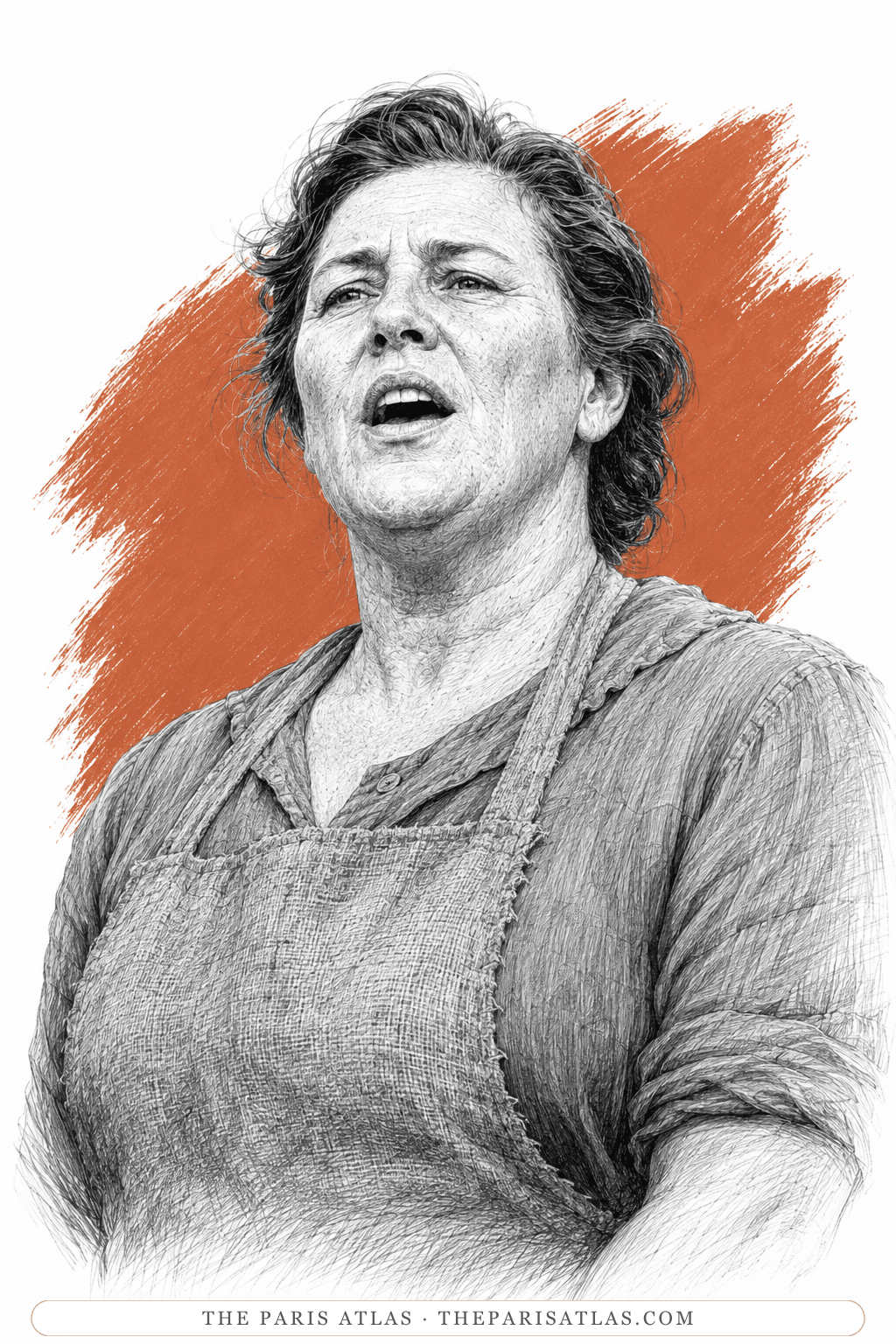
Comrade Ogilvy
A Party hero who never existed. Winston Smith invents him at the speakwrite one morning to fill the space left by a vaporised official named Withers, dictating a life in Big Brother's own style: no toys but a drum and a sub-machine gun at three, the Spies at six, an uncle denounced at eleven, a vow of celibacy, and death in action at twenty-three. A few lines of print and two faked photographs, Winston reflects, will bring him into existence.
Nothing outside the Party. The dictated life allows him no recreations except a daily hour in the gymnasium, no subjects of conversation except the principles of Ingsoc, and no aim except the defeat of the Eurasian enemy and the hunting-down of traitors.
The book

At a glance
- A Party hero invented by Winston Smith to fill a gap in an old Big Brother speech
- None. The novel states outright that there was no such person
- A commemoration of Withers, an official since vaporized and now an unperson
- In action at twenty-three, over the Indian Ocean — in the version dictated for the record
- Part One, Chapter 4
Who they are in the book
Spoiler-freeComrade Ogilvy is a forgery, and the novel says so in the sentence that introduces him. He is made up in about twenty minutes by Winston Smith, the book's central character, who works in the Records Department of the Ministry of Truth altering back numbers of The Times so that the past always agrees with whatever the Party is saying now.
The job on his desk that morning is an old Order for the Day in which Big Brother had singled out an official named Withers for praise. Withers has since been disgraced and vaporized, and the file note calls him an unperson: he did not exist, he had never existed. Simply reversing the praise strikes Winston as too obvious. Inventing a victory at the front or a triumph of over-production might complicate the records elsewhere. What is needed, he decides, is a piece of pure fantasy, and Comrade Ogilvy arrives ready made — a humble, rank-and-file Party member recently dead in battle in heroic circumstances, the sort of person Big Brother occasionally devotes an Order for the Day to commemorating.
Winston pulls the speakwrite towards him and dictates in Big Brother's own manner, which he describes as at once military and pedantic, and easy to imitate because of a trick of asking questions and then promptly answering them. What comes out is a life told as a list of ages. Toys at three, the Spies at six, a troop leader at nine, an uncle denounced at eleven, the Junior Anti-Sex League at seventeen, a hand grenade at nineteen, death at twenty-three. Winston considers awarding him the Order of Conspicuous Merit and decides against it, on the ground that it would mean unnecessary cross-referencing.
What the novel never gives him is a body. There is no face, no build, no voice and no dress, because there is nobody to describe. Winston's estimate of what would be needed to make him real is a few lines of print and a couple of faked photographs, and by the end of the passage he considers the job done. Comrade Ogilvy, unimagined an hour ago, was now a fact. It strikes Winston as curious that you can create dead men but not living ones, and that once the act of forgery is forgotten this one will exist just as authentically, and on the same evidence, as Charlemagne or Julius Caesar.
How Comrade Ogilvy Is Portrayed
- Why he was neededA back number of The Times carried Big Brother's praise of an official named Withers, who has since been vaporized. Reversing the praise would have been too obvious and inventing a battlefield victory would have complicated the records, so Winston Smith reaches for a piece of pure fantasy instead.
- The style he is written inBig Brother's own — military and pedantic, and easy to imitate because of a trick of asking a question and then immediately answering it. Winston dictates the whole life straight into the speakwrite.
- The childhoodAt three he refused all toys except a drum, a sub-machine gun and a model helicopter. At six he joined the Spies, a year early by a special relaxation of the rules, and at nine he was a troop leader.
- The uncleAt eleven he denounced his uncle to the Thought Police after overhearing a conversation which appeared to him to have criminal tendencies.
- The grenadeAt seventeen he was a district organizer of the Junior Anti-Sex League. At nineteen he designed a hand grenade that the Ministry of Peace adopted and that killed thirty-one Eurasian prisoners in one burst at its first trial.
- The habitsA total abstainer and a nonsmoker, with no recreations except a daily hour in the gymnasium, and a vow of celibacy taken on the ground that marriage and the care of a family were incompatible with a twenty-four-hour-a-day devotion to duty.
- The deathAt twenty-three, pursued by enemy jet planes over the Indian Ocean while carrying important despatches, he weighted his body with his machine gun and jumped from the helicopter into deep water, despatches and all. Big Brother calls it an end impossible to contemplate without feelings of envy.
- No faceThe novel gives him no appearance of any kind. What it gives instead is Winston's estimate of what would be required to make him real: a few lines of print and a couple of faked photographs.
If you like Nineteen Eighty-Four


If you like George Orwell
Explore authors with a similar voice, perspective, and influence.

Henry Miller
The Brooklyn dropout who arrived in Paris broke at thirty-eight and wrote the exuberant, banned books that ended American censorship.
View author
Louis-Ferdinand Céline
The doctor of the Paris slums who wrote the century's blackest, funniest novel — and changed the sound of French prose.
View author
Simone de Beauvoir
French writer and philosopher whose novels, memoirs, and social analysis examined freedom, gender, responsibility, aging, and the material conditions that shape a life.
View author