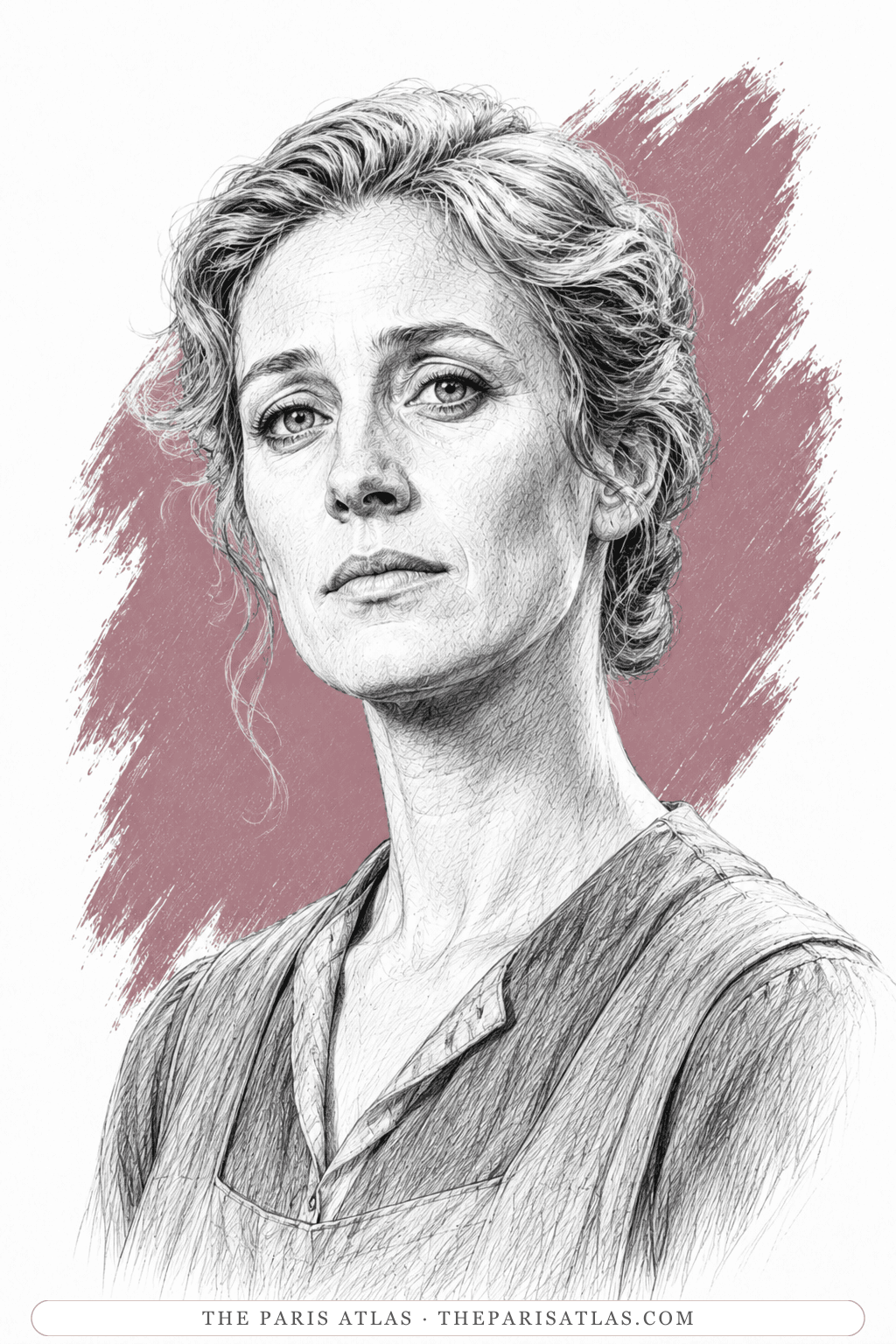
Martin
O'Brien's servant: a small, silent man with a yellow face who brings in the wine, is told he can stop being a servant for ten minutes, and sits down with the air of a valet enjoying a privilege.
To be unreadable. He plays the servant in a room where everyone present knows he is not only a servant, and does not step out of it even when he is ordered to.
The book

At a glance
- O'Brien's manservant
- Small and dark-haired, with a diamond-shaped, expressionless face and small dark eyes
- The white jacket worn by servants in Inner Party households, not Party overalls
- The Inner Party flat, where the telescreen can be switched off
- Part Two, Chapter 8
Who they are in the book
Spoiler-freeMartin opens the door to Winston Smith and Julia at O'Brien's flat and appears again, without knocking, carrying a tray with a decanter and glasses. O'Brien introduces him in three words — Martin is one of us — and tells him to bring a chair, because this is business and he can stop being a servant for the next ten minutes.
He sits down quite at his ease and still with a servant-like air. Watching him out of the corner of his eye, Winston decides that the man's whole life is a part he is playing, and that he feels it dangerous to drop the assumed personality even for a moment. Winston also glances at his face when O'Brien mentions that Party surgeons can alter people beyond recognition, and finds no scars.
Before Martin goes back to his pantry, O'Brien tells him to take a good look at these comrades' faces, because he will be seeing them again. The small dark eyes flicker over the two of them exactly as they had at the front door. There is not a trace of friendliness in it; he is memorising an appearance and feels no interest in the people wearing it. He leaves without speaking or saluting, closing the door silently.
How Martin Is Portrayed
- The faceSmall and dark-haired, with a diamond-shaped face and small dark eyes. Winston takes it for a synthetic face, perhaps incapable of changing its expression. He studies it twice and learns nothing from it either time.
- The white jacketServants in Inner Party households wear white jackets rather than Party overalls. Winston passes others hurrying to and fro on his way through the block of flats, and Martin keeps his on all evening, including the ten minutes he is told he can stop being a servant.
- The trayA decanter and glasses, brought in without knocking, at the moment Winston has finished incriminating himself and Julia out loud.
- The privilegeTold to sit down and stop being a servant, he does, but keeps the manner: at his ease, and still with the air of a valet enjoying a privilege.
- Memorising themHis last act in the book. Ordered to look at their faces because he will be seeing them again, he takes them in without a trace of friendliness and goes out silently.
If you like Nineteen Eighty-Four


If you like George Orwell
Explore authors with a similar voice, perspective, and influence.

Henry Miller
The Brooklyn dropout who arrived in Paris broke at thirty-eight and wrote the exuberant, banned books that ended American censorship.
View author
Louis-Ferdinand Céline
The doctor of the Paris slums who wrote the century's blackest, funniest novel — and changed the sound of French prose.
View author
Simone de Beauvoir
French writer and philosopher whose novels, memoirs, and social analysis examined freedom, gender, responsibility, aging, and the material conditions that shape a life.
View author