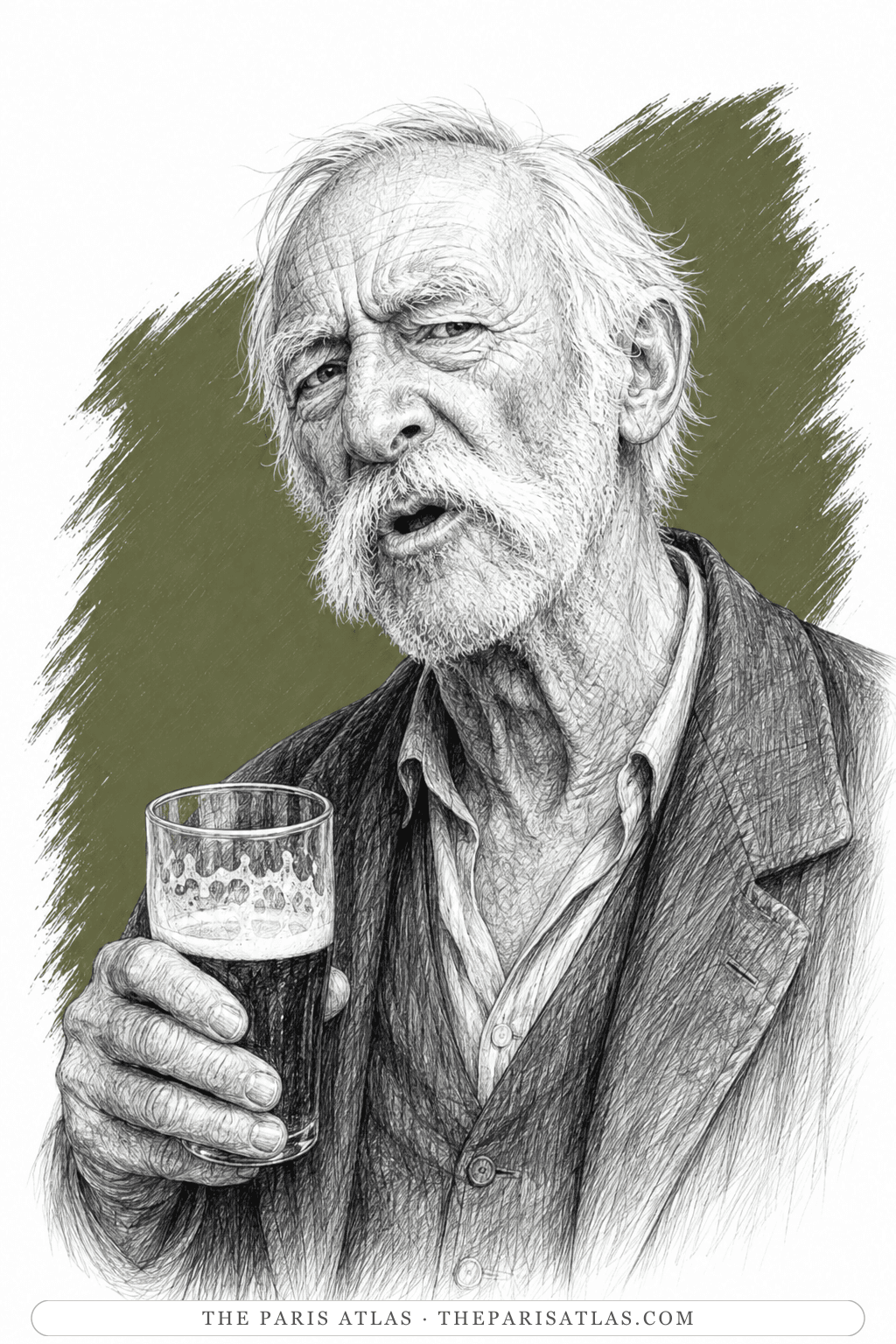
Emmanuel Goldstein
The Enemy of the People: a face screened daily during the Two Minutes Hate, the supposed head of an underground Brotherhood, and the named author of the banned book Winston Smith reads. Like Big Brother, he never appears.
In the footage the Party screens, he demands peace with Eurasia and freedom of speech, of the press, of assembly and of thought, and shouts that the revolution has been betrayed. Whether any of that is actually his is the question the novel leaves open.
The book

At a glance
- The Party's designated traitor, and the named author of the banned book
- Only on telescreens, in effigy, and as a name on a title page
- The Brotherhood, and The Theory and Practice of Oligarchical Collectivism
- O'Brien tells Winston there is such a person and that he is alive, and says he does not know where
- Part One, Chapter 1, at the Two Minutes Hate
Who they are in the book
Spoiler-freeGoldstein is the principal figure of the Two Minutes Hate, and his official history is fixed. He was once one of the leading figures of the Party, almost on a level with Big Brother; he engaged in counter-revolutionary activities, was condemned to death, and mysteriously escaped. He is the primal traitor, and every subsequent crime against the Party is held to spring from his teaching. He is somewhere abroad under the protection of foreign paymasters, or possibly hiding in Oceania.
On screen he has, in Orwell's description, a lean Jewish face with a great fuzzy aureole of white hair and a small goatee, spectacles perched near the end of a long thin nose, and a voice with a sheep-like quality. What he is shown saying is an attack on the Party: he denounces the dictatorship, demands immediate peace with Eurasia, calls for freedom of speech, of the press, of assembly and of thought, and cries that the revolution has been betrayed. Orwell notes that the speech is so exaggerated that a child should see through it, and delivered in a parody of Party oratory that uses more Newspeak than any real Party member would.
Attached to him are the two things nobody will name aloud: the Brotherhood, and a terrible book without a title that people refer to, if at all, as THE BOOK. A copy reaches Winston in a briefcase during Hate Week. It is a heavy black volume, amateurishly bound, its title page reading The Theory and Practice of Oligarchical Collectivism by Emmanuel Goldstein, and the chapters Winston reads are called Ignorance is Strength and War is Peace. He finds it tells him nothing he did not already know, and says so in the sentence readers remember: the best books are those that tell you what you know already.
The most peculiar thing about him is how little anyone knows. Julia excels everybody at shouting insults at him during the Hate and has only the dimmest idea who he is or what he is supposed to have argued. Winston's hatred can swing from Goldstein to Big Brother and back within seconds of the same reel. And O'Brien, opening a bottle of wine for two new recruits, raises his glass and says: "To our Leader: To Emmanuel Goldstein."
How Emmanuel Goldstein Is Portrayed
- The face on the screenLean, with a great fuzzy aureole of white hair, a small goatee and spectacles near the end of a long thin nose. Orwell writes that it resembles the face of a sheep, and so does the voice. At the climax of the Hate the voice becomes an actual bleat and the face changes into a sheep's.
- The official storyOnce almost the equal of Big Brother, then a renegade and backslider, condemned to death and mysteriously escaped. Nobody quite remembers how long ago. He is refuted, smashed and ridiculed a thousand times a day, and his influence never seems to grow less.
- The dictionaryDuring one Hate, the dark-haired girl behind Winston screams "Swine!" three times and hurls a heavy Newspeak dictionary at the screen. It strikes Goldstein's nose and bounces off, and the voice continues inexorably.
- THE BOOKA heavy black volume with no name or title on the cover, worn at the edges from many hands, titled inside The Theory and Practice of Oligarchical Collectivism. Winston reads two chapters of it aloud in the rented room. It is where the phrases War is Peace and Ignorance is Strength are argued out at length.
- The BrotherhoodO'Brien describes it as unkillable precisely because it is not an organisation: no lists, no recognition signals, nothing holding it together but an idea. He adds that Goldstein himself, if caught, could not name its members.
- Burned in effigyDuring the Hate Week bombings his effigy is burned along with hundreds of torn-down posters. When the enemy is switched from Eurasia to Eastasia mid-speech, the crowd's instant explanation for the wrong banners on the walls is that the agents of Goldstein have been at work.
If you like Nineteen Eighty-Four


If you like George Orwell
Explore authors with a similar voice, perspective, and influence.

Henry Miller
The Brooklyn dropout who arrived in Paris broke at thirty-eight and wrote the exuberant, banned books that ended American censorship.
View author
Louis-Ferdinand Céline
The doctor of the Paris slums who wrote the century's blackest, funniest novel — and changed the sound of French prose.
View author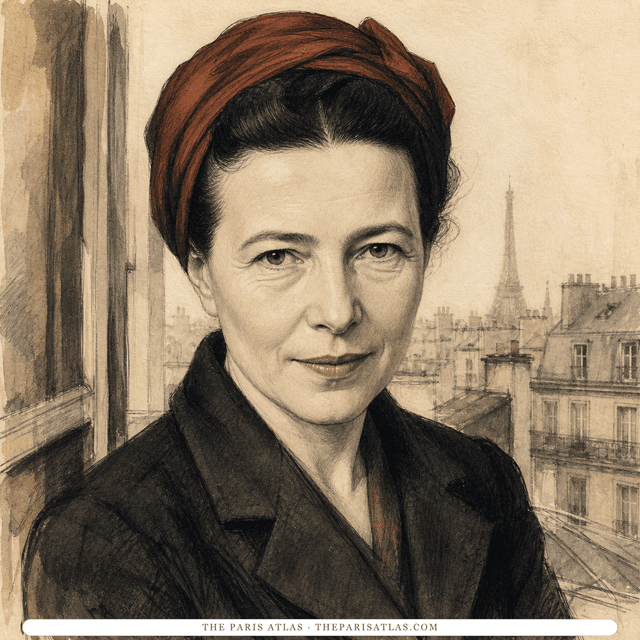
Simone de Beauvoir
French writer and philosopher whose novels, memoirs, and social analysis examined freedom, gender, responsibility, aging, and the material conditions that shape a life.
View author