Mrs Parsons
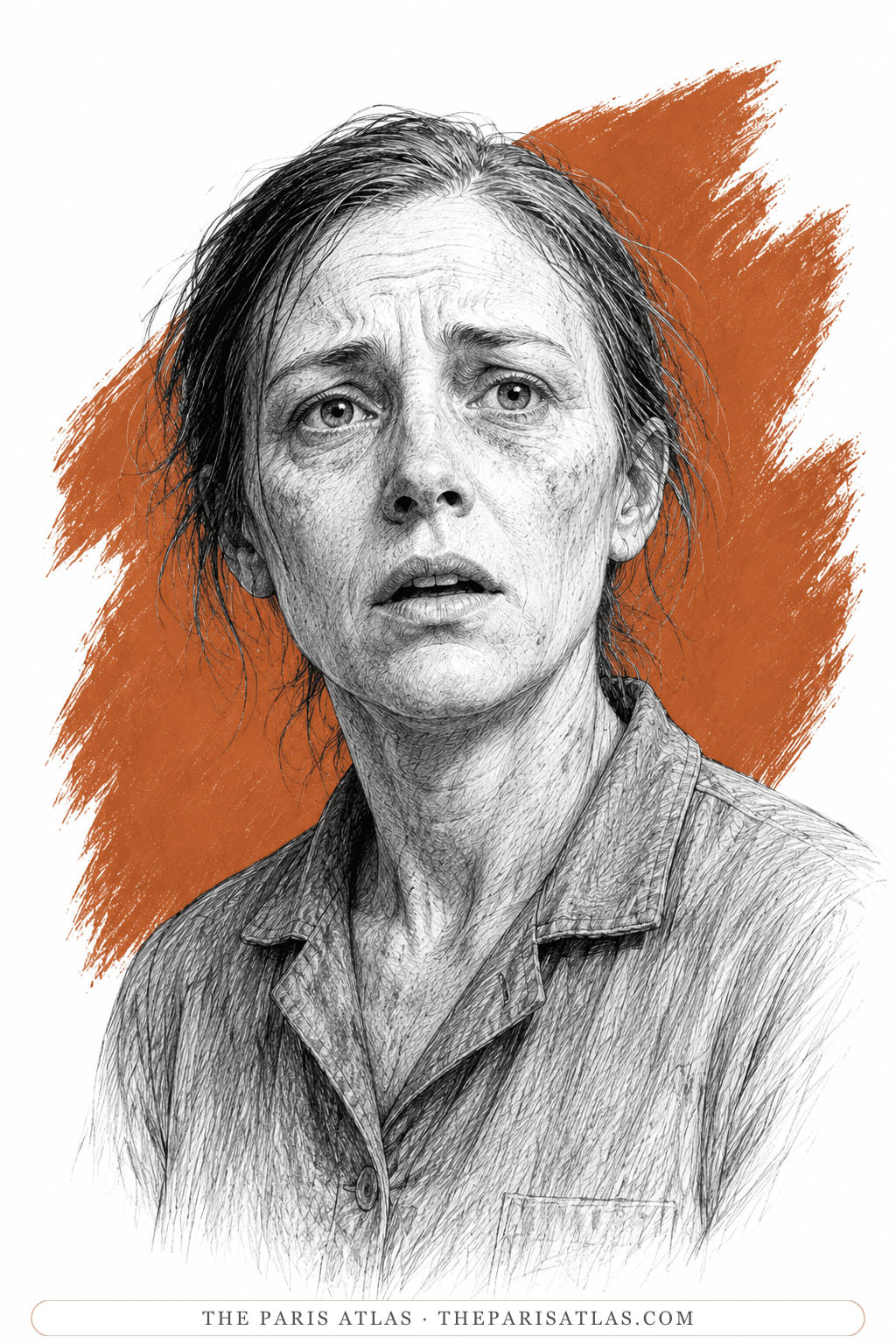
Parsons' wife, a colourless woman of about thirty who looks much older, with wispy hair and dust in the creases of her face. She lives in fear of her own children, and the book records it in a single look.
To keep the flat going until her husband gets home. Every remark she makes about the sink, the spanner or the children ends in a broken-off sentence and a reference to Tom, who is good with his hands.
The book

At a glance
- Winston's neighbour on the same floor at Victory Mansions
- About thirty, and looking much older
- Her husband Tom and two children, aged nine and seven, both in the Spies
- Only ever Mrs Parsons; Orwell notes that "Mrs" is a word the Party discourages
- Part One, Chapter 2
Who they are in the book
Spoiler-freeShe knocks on Winston's door in the first chapter, in a dreary whining voice, to ask whether he could come and look at their kitchen sink. It is blocked, and Tom is not home. She is about thirty and looks much older, colourless and crushed, with wispy hair and a lined face; Winston has the impression there is dust in the creases of it, and confirms in better light that there actually is. She has a habit of breaking off her sentences in the middle.
The flat is bigger than Winston's and dingy in a different way, with the look of having been visited by some large violent animal: hockey sticks, boxing gloves, a burst football and a pair of sweaty shorts on the floor, dirty dishes and dog-eared exercise books on the table, Youth League and Spies banners on the walls, and a full-sized poster of Big Brother. She watches Winston kneel down and pull a clot of human hair out of the pipe, and says helplessly that Tom would have it right in a moment, he loves anything like that.
Her children charge in and hold Winston up with a toy pistol and a fragment of wood, both in Spies uniform, shouting that he is a traitor, a thought-criminal and a Eurasian spy. She explains that they are noisy because they are disappointed at not getting to see the hanging that evening, and that she is too busy to take them. Her eyes flit from Winston to the children and back again while it goes on.
The scene ends with a catapult bullet in the back of Winston's neck, and the thing that most strikes him is not the pain but the look of helpless fright on his neighbour's greyish face as she drags the boy back through the doorway. She lends Winston a children's history textbook, which he copies into his diary. He predicts that within two years the children will denounce her to the Thought Police.
How Mrs Parsons Is Portrayed
- The dustWinston's first impression is that there is dust in the creases of her face; in the better light of the living room he notices with interest that there actually is. With the wispy hair and the lined greyish face, it is very nearly the whole of her physical description. What she wears is never mentioned.
- The half-sentences"Of course it's only because Tom isn't home." "It's the children. They haven't been out today. And of course----" "A spanner. I don't know, I'm sure. Perhaps the children----" She becomes, in Orwell's word, immediately invertebrate when asked a direct question.
- The hangingHer explanation for the noise. The children are disappointed at not being taken to see some Eurasian prisoners hanged in the Park that evening, which happens about once a month and is a popular spectacle. She is too busy, and Tom will not be back from work in time.
- The lookAfter the catapult shot she drags her son back into the doorway, and the expression on her face is the detail Winston takes away from the whole visit: helpless fright. He works out that in a year or two the children will be watching her night and day for symptoms of unorthodoxy.
- The textbookShe lends Winston a children's history book with a frontispiece portrait of Big Brother. He copies out its account of capitalists in top hats, and then sits looking at the frontispiece and wondering how much of it is lies.
If you like Nineteen Eighty-Four


If you like George Orwell
Explore authors with a similar voice, perspective, and influence.
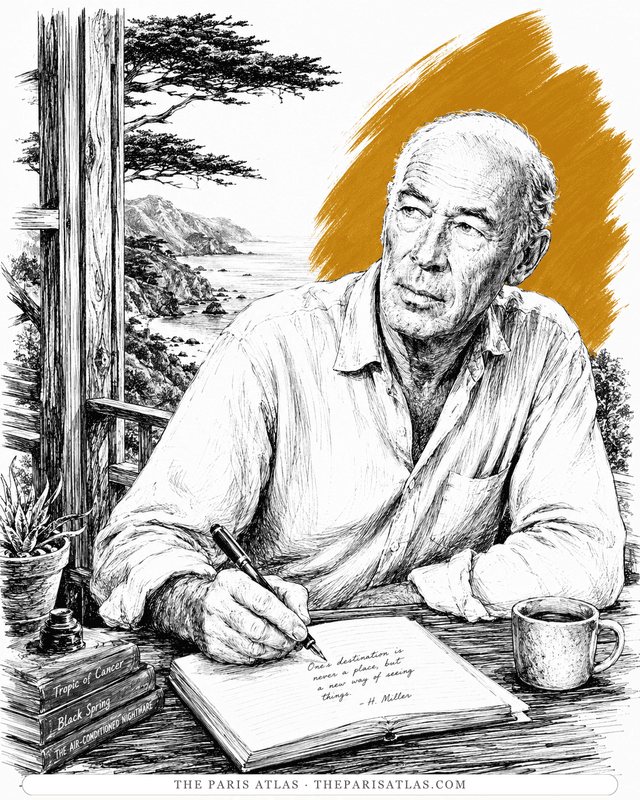
Henry Miller
The Brooklyn dropout who arrived in Paris broke at thirty-eight and wrote the exuberant, banned books that ended American censorship.
View author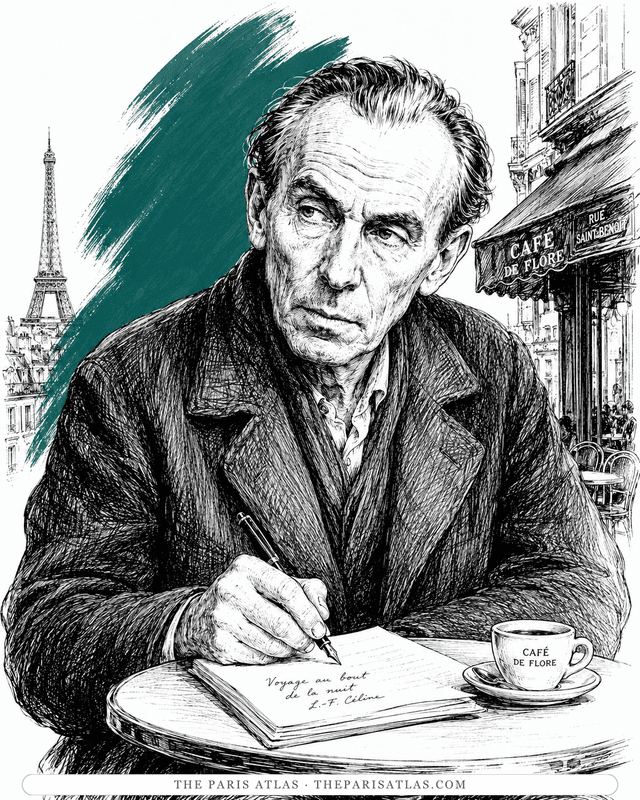
Louis-Ferdinand Céline
The doctor of the Paris slums who wrote the century's blackest, funniest novel — and changed the sound of French prose.
View author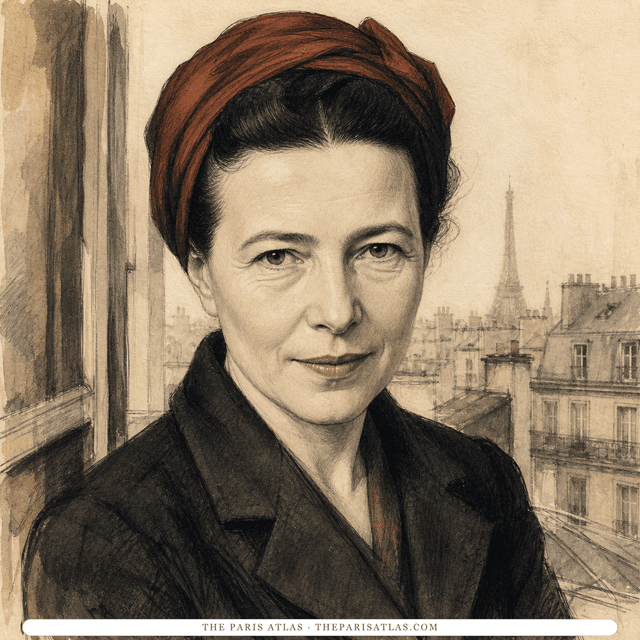
Simone de Beauvoir
French writer and philosopher whose novels, memoirs, and social analysis examined freedom, gender, responsibility, aging, and the material conditions that shape a life.
View author