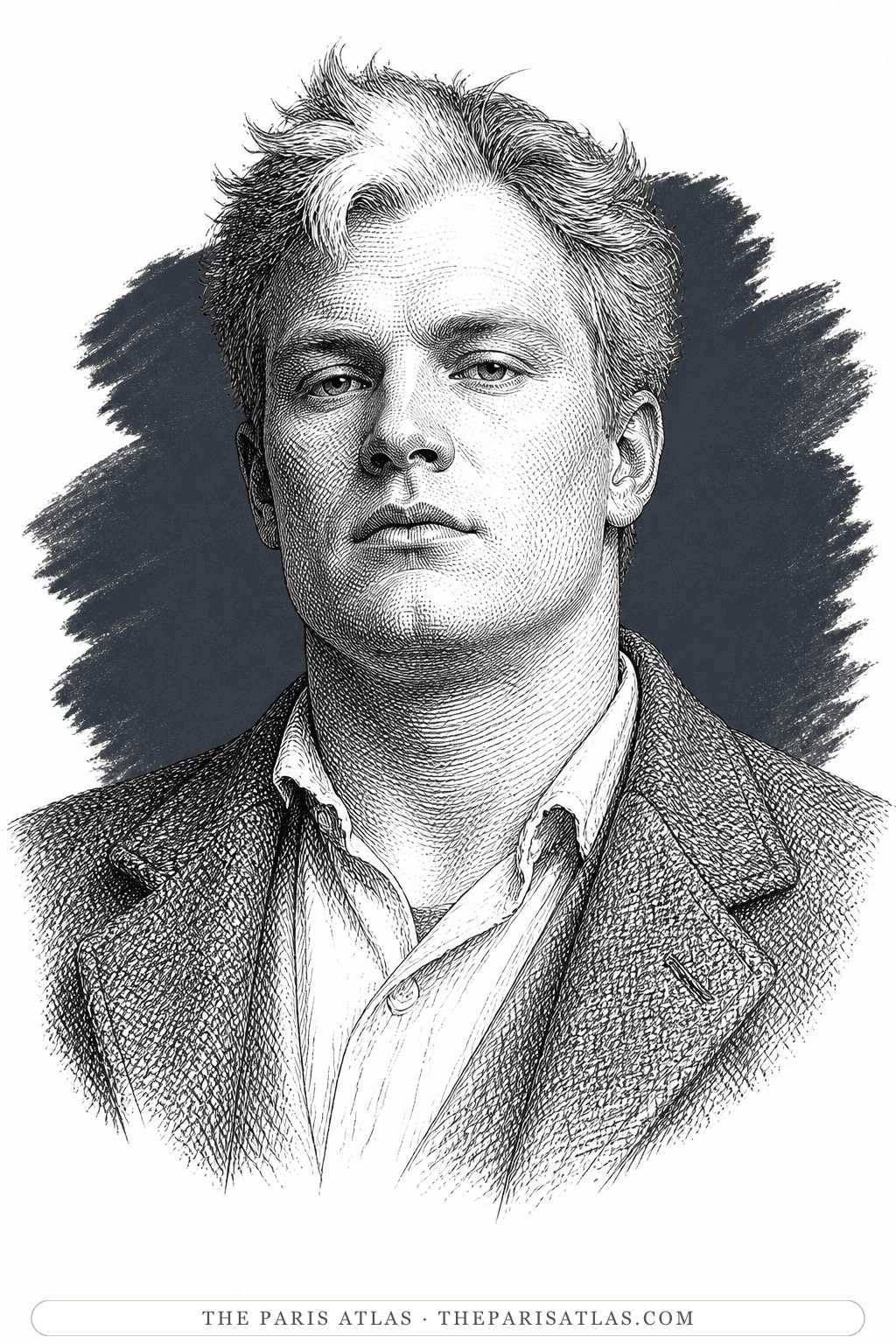
Christopher Tietjens
The central figure — a young English civil servant of good Yorkshire family who will not divorce the wife who left him, and will not discuss it with anybody.
To behave as he believes a gentleman is obliged to behave, and to say nothing about it. He tells Vincent Macmaster in the opening chapter: "I stand for monogamy and chastity." On his wife's flight, to his father: "No one but a blackguard would ever submit a woman to the ordeal of divorce."
The book

At a glance
- English civil servant, 26 in Part One, youngest son of a Yorkshire landowner
- A railway carriage, a golf course near Rye, a Sussex rectory, the Kent roads by night, and wartime London
- Third in command of the Imperial Department of Statistics
- Groby, the family house in Yorkshire, which he stays away from
- Sylvia Tietjens, who left him for a man named Perowne and has asked to come back
- No novels, and no poetry except Byron
- Arthur Marwood — Ford's friend and a backer of The English Review · 1868–1916 · Yorkshire
Who they are in the book
Spoiler-freeChristopher Tietjens is twenty-six when the book opens, the youngest son of a Yorkshire landowner, and third in command of a new government department that produces population figures for ministers. He is very big, fair and untidy, travels in golf boots because he dislikes changing his clothes, and has a patch of white already in his hair. His chief calls him a walking encyclopaedia and means it: he corrects a colleague's Canadian emigration figures in his head on a train, and has spent recent months listing, from memory, the mistakes in a new edition of the Encyclopædia Britannica.
His wife, Sylvia, left him four months earlier to go abroad with another man, and has written asking to come back. He agrees, because he holds that no decent man drags a woman through a divorce court, and then says almost nothing further about it to anyone, including his closest friend. That silence is the engine of the whole book. Around him, people who cannot get an explanation out of him invent one, and the inventions travel: by the second half of the novel his bank, his club and his own father have all acted on things about him that are not true.
How Christopher Tietjens Is Portrayed
- How he looksLarge, blond, high-coloured and apparently vacant, in loose tweeds and heavy nailed boots, with immense white hands. A friend watching him on a train cannot tell whether he is thinking about wave mathematics or nothing at all.
- The memoryHe carries exact figures, dates and place-names the way other people carry loose change, and produces them without warning: the costings of a new Lowestoft fishing boat, which of Henry VIII's castles were built cheaply and how.
- The silenceHe answers direct questions about his marriage with a sentence and then stops. Two confidences in years of friendship are all Macmaster can remember getting out of him, and one of them is that he does not know whether the child is his.
- The golf courseWhen a crowd of men chases two suffragettes across the links, he pitches his whole bag of clubs between the running policeman's legs, apologises for his clumsiness, and hands the man his flask.
- What he does with his handsHe spots a rotten girth on a stranger's horse, gets down, quiets the animal against his chest, and mends the harness at the roadside with a rabbit wire and a surgical needle. Mrs Wannop tells him she would have been dead in three minutes.
- After the shellIn the second half he has come back from France with a piece of his mind, as he puts it, without a proper blood supply. He is reading the Encyclopædia Britannica through in order to replace what is gone, and has reached K.
Part Two is the accounting. Tietjens spends one afternoon answering, item by item, the rumours that have followed him: the returned cheque, the woman seen with him in a train, the child he is supposed to have had, the money he is supposed to have taken. He convinces his banker and his brother and nobody else, and the damage is already done — his father is dead, and Sylvia tells him it was because a family friend passed on the stories at the club. He refuses his brother's offer of three thousand a year to live abroad, resigns from his club with a calculated insult, and goes back to France.
The last night is the book's argument in miniature. He asks Valentine Wannop to be his mistress, she agrees, and then her drunk brother has to be walked home across Kensington and the moment passes. On her doorstep he calls it off himself — — and she agrees. He wants to say something more before he goes and manages only "Well . . ." The character continues through three further novels: No More Parades, A Man Could Stand Up— and Last Post.
If you like Some Do Not…


If you like Ford Madox Ford
Explore authors with a similar voice, perspective, and influence.
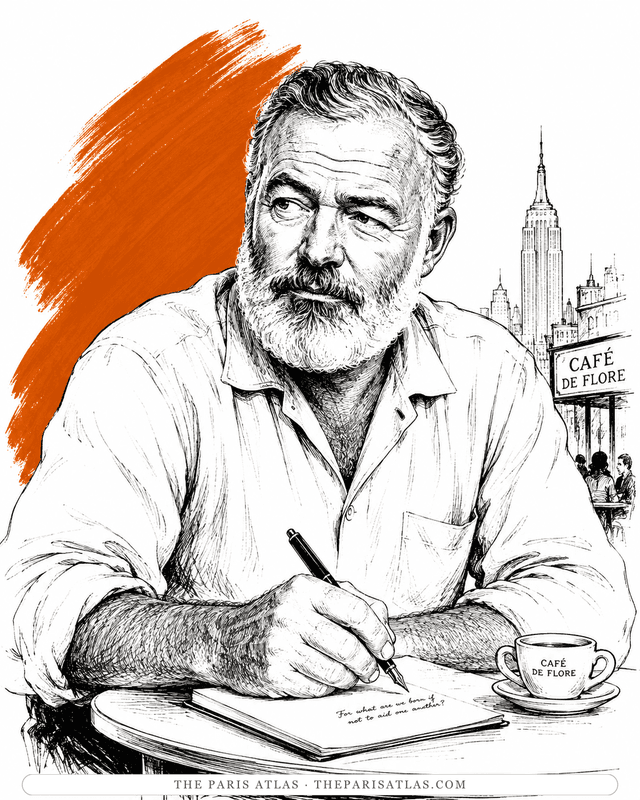
Ernest Hemingway
Ford published Hemingway's earliest Paris work and let him subedit the transatlantic review; Hemingway put him in The Sun Also Rises as Braddocks and settled accounts again in A Moveable Feast.
View author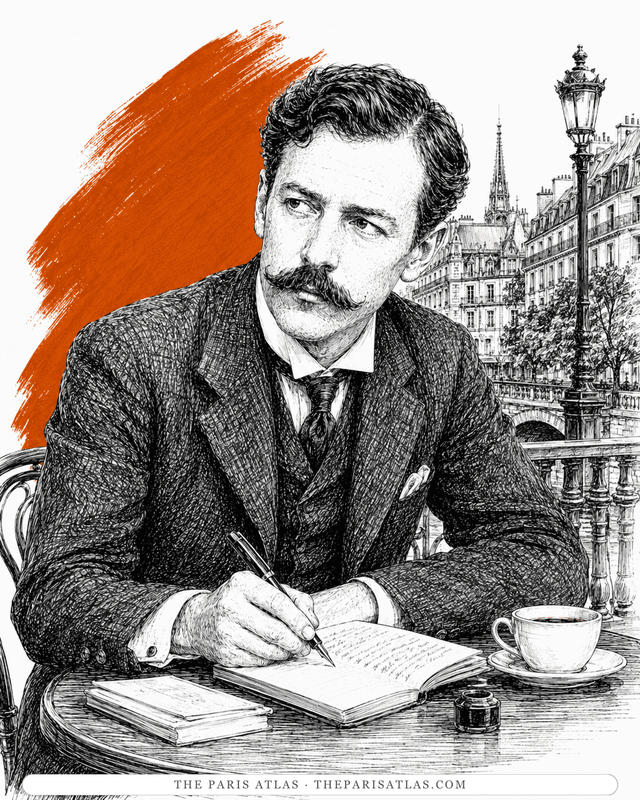
Sisley Huddleston
Fellow witness and friend — Huddleston's memoir catches Ford live: the studio parties, the bal musette, Conrad reminiscences on the Closerie terrace.
View author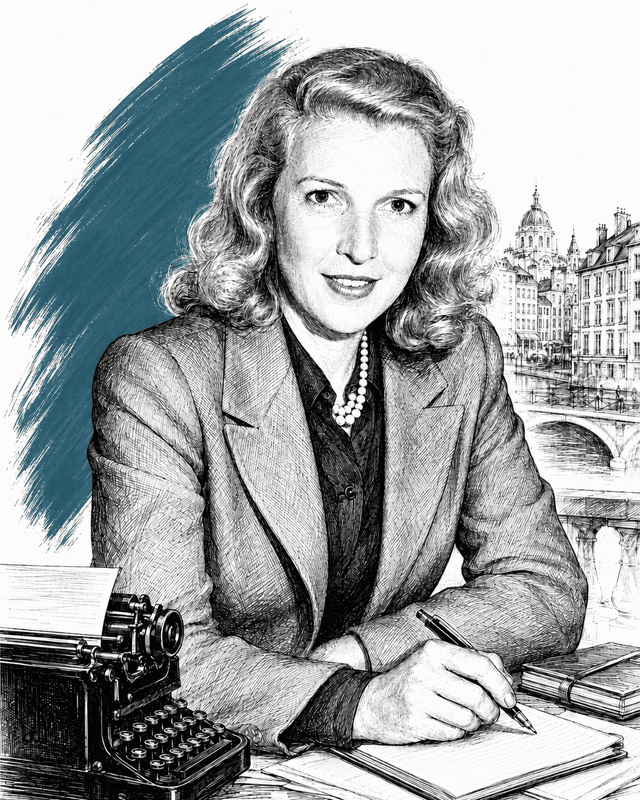
Martha Gellhorn
War correspondent who covered the Spanish Civil War, D-Day, and conflicts across five more decades; Hemingway's third wife, 1940–1945.
View author