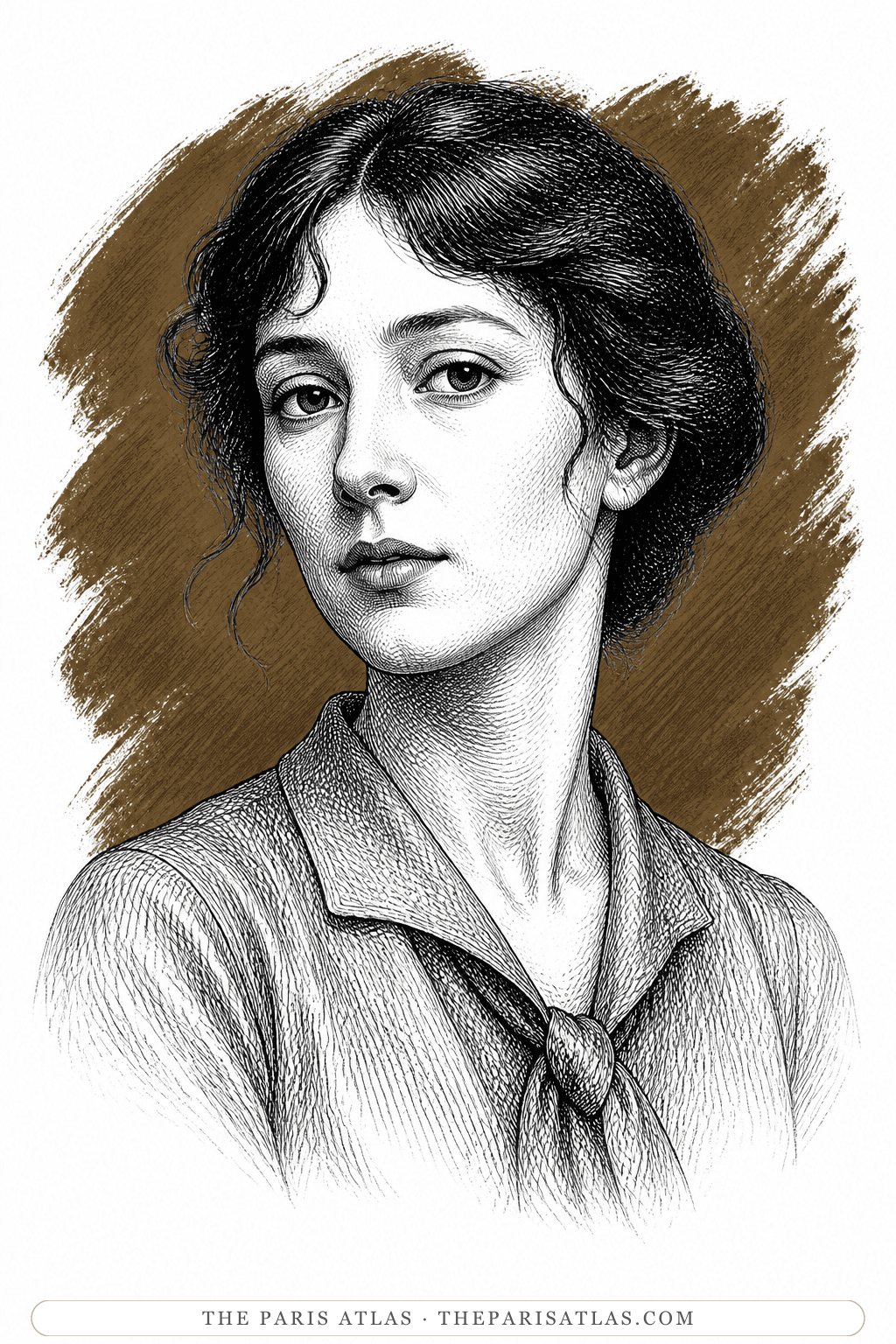
Nancy Durrell
Lawrence Durrell's wife, and the person Nin watches most carefully in the group's evenings — usually because nobody else is listening to her.
The book

At a glance
- “Nancy” — Lawrence Durrell's wife, in almost every scene he is in
- The Paris chapters from the Durrells' arrival to the outbreak of war
- Greece, where Miller joins them in 1939
- Nancy Durrell
Who they are in the book
Spoiler-freeNancy Durrell came to Paris with her husband, Lawrence Durrell, and is in almost every scene he is in. Nin's first description of her is affectionate and quick: a long-waisted gamin with beautiful long slanting eyes. What the diary does with her afterwards is less comfortable, and more interesting.
The four of them — the Durrells, Henry Miller and Nin — spend two years talking about writing, and Nin keeps noticing who is allowed to finish a sentence. Nancy is the reason several of the volume's sharpest lines about women exist at all.
How Nancy Durrell Is Portrayed
- First sightAt Miller's studio, meeting the Durrells for the first time, Nin puts her in a single phrase: a long-waisted gamin with beautiful long slanting eyes.
- The eveningsMiller, Durrell, Nancy and Nin spend soft summer evenings walking the lit city, getting on buses on a whim, wandering into an Indochinese restaurant because Durrell suggests it. Nin writes that the four of them nourish each other, and that Miller and Durrell often side against her.
- Told to shut up“Shut up,” says Larry to Nancy — and Nancy looks at Nin as though waiting to be defended. Nin's answer goes into the diary rather than into the room: she will not shut up, and she has a great deal to say, for June, for Nancy, and for other women.
- The question she asks out loudIn front of everyone, Nancy says to her husband: “Perhaps you are dissatisfied with me.” Nin calls it courageous and lets the line stand on its own.
- Why Nin listens to herShe writes that Nancy's stumbling and stuttering reawakened her own sense of how inarticulate women are kept, and that Nancy was loyal to her as the one person who tried to speak for them rather than against them.
If you like The Diary of Anaïs Nin, 1934–1939


If you like Anaïs Nin
Explore authors with a similar voice, perspective, and influence.

Henry Miller
The entangled careers of the Villa Seurat: she financed and prefaced his scandal, he detonated her prose — and each wrote the other into the century's record.
View author
Louis-Ferdinand Céline
The doctor of the Paris slums who wrote the century's blackest, funniest novel — and changed the sound of French prose.
View author
Martha Gellhorn
War correspondent who covered the Spanish Civil War, D-Day, and conflicts across five more decades; Hemingway's third wife, 1940–1945.
View author