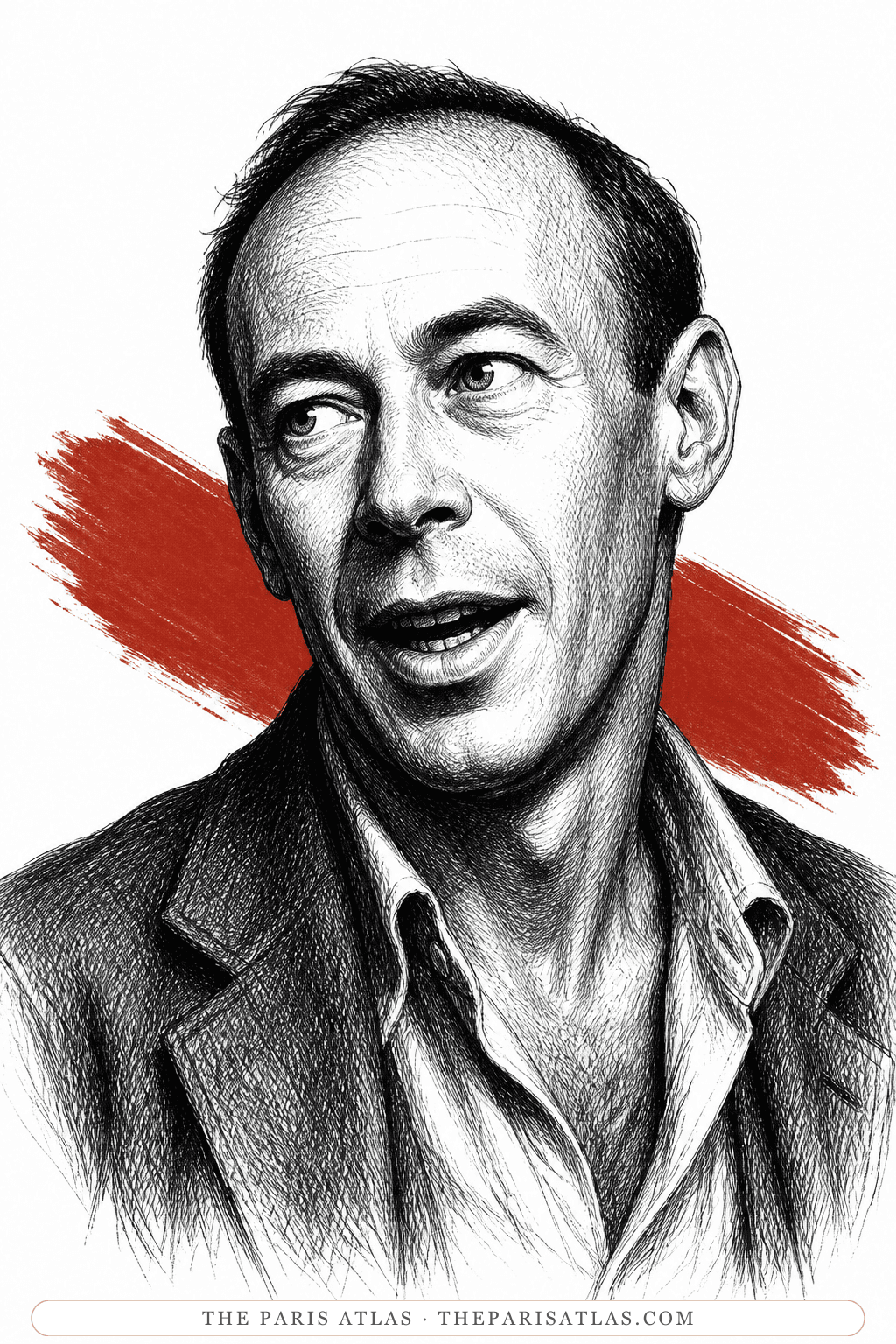
Henry Miller
The American novelist at the center of Nin's Paris life. She reads his drafts, addresses his subscription forms, and pays for a good deal of what he lives on.
In Nin's account, to get everything down without editing himself, and to owe nobody anything that would slow the writing.
The book

At a glance
- “Henry” — the American novelist at the center of her Paris circle
- The Villa Seurat, Paris
- Tropic of Capricorn, and Black Spring, brought out in the Obelisk Press series
- Greece, to stay with Lawrence Durrell and his wife, Nancy
- Henry Miller · 1891–1980 · Yorkville, Manhattan
Who they are in the book
Spoiler-freeHenry Miller was an American novelist who had settled in Paris with one published book behind him, Tropic of Cancer. He works at the Villa Seurat, a short Paris street of artists' studios where his friend Michael Fraenkel has the ground floor and where the circle around him assembles most days. Over the five years this volume covers he goes from selling copies by the hundred to being read and written to by other writers.
Nin is his first reader, his publicist and his bank. She goes through his pages and tells him which ones to cut, she sits at the Villa Seurat filling out subscription blanks for Black Spring, and she puts her own money into the printing press the group keeps planning. The diary admires him without softening him: she thinks he is the strongest person in the circle because he is not afraid of being alone, and the least dependable friend in it.
How Henry Miller Is Portrayed
- Selling the books by handOne afternoon at the Villa Seurat she finds Alfred Perlès carrying up milk for his breakfast with Fraenkel, and the four of them spend the day mailing out subscription blanks for Black Spring. Nin writes letters to strangers to drum up interest, and then she and Perlès go out to buy lunch.
- The first fan mailThe diary marks the moment his reputation starts, in one line of bookkeeping: letters from T. S. Eliot, a review by the writer Blaise Cendrars, and 130 copies of Tropic of Cancer sold to date.
- She edits himHe cuts pages she had objected to — a passage she calls ranting and moralizing. Her private conclusion after the session is that she now has more to say than he does.
- What he is writingHe is at work on Tropic of Capricorn, and she thinks the descriptions of void and disintegration in it are the best ever written. She also thinks the loss of self they describe is his own, and more dangerous than hers.
- The friends he dropsFraenkel leaves for Spain telling her that Miller is faithless to ideas and to friendships. Nin records what happened next in one sentence: Miller quickly forgot him.
- The BoosterPerlès inherited a magazine called the Booster and Miller took it over. The begging, cajoling and slapstick of it made Nin withdraw from the venture; the painter Reichel, whom Miller had praised in its pages, lay awake for nights trying to work out how to say he was ashamed of being boosted so crudely.
- The unmasking eveningMiller spends an evening taking Lawrence Durrell and Nin apart in conversation. When Durrell says, “And now we must unmask Henry,” Nin answers, “We can’t, because he has done it himself.”
- What the war does to himAs 1939 closes in he is the only cheerful person Nin knows — he calls himself the Happy Rock and does not much mind what happens to the rest of the world. He leaves for Greece to stay with the Durrells, and she notes that this is entirely consistent with his philosophy.
If you like The Diary of Anaïs Nin, 1934–1939


If you like Anaïs Nin
Explore authors with a similar voice, perspective, and influence.
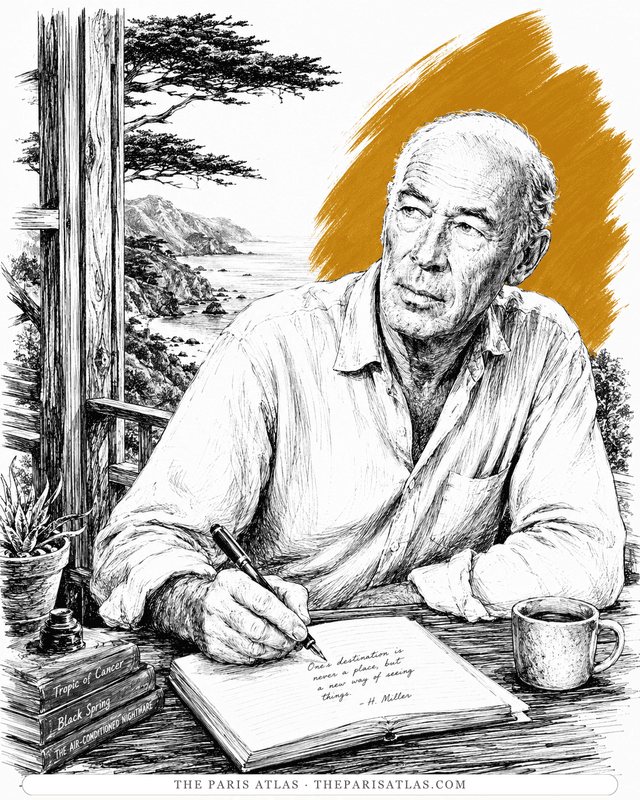
Henry Miller
The entangled careers of the Villa Seurat: she financed and prefaced his scandal, he detonated her prose — and each wrote the other into the century's record.
View author
Louis-Ferdinand Céline
The doctor of the Paris slums who wrote the century's blackest, funniest novel — and changed the sound of French prose.
View author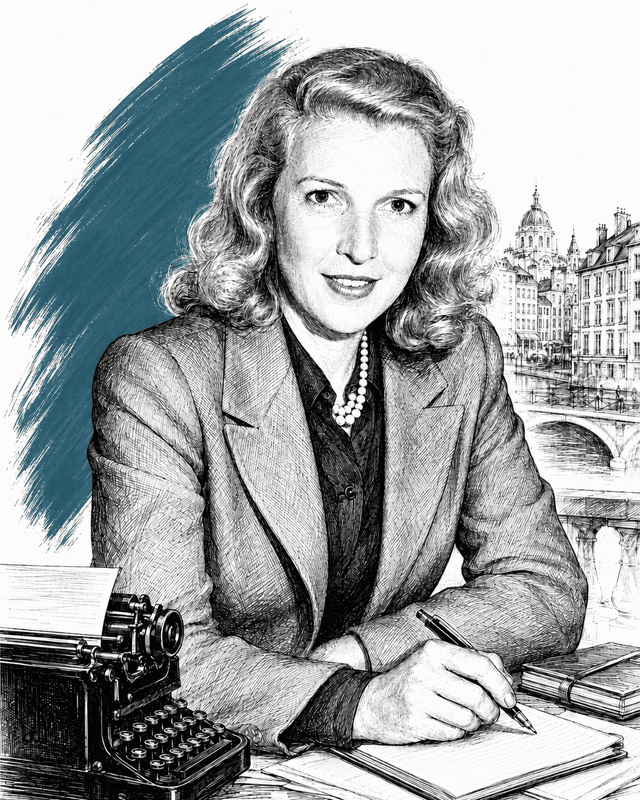
Martha Gellhorn
War correspondent who covered the Spanish Civil War, D-Day, and conflicts across five more decades; Hemingway's third wife, 1940–1945.
View author