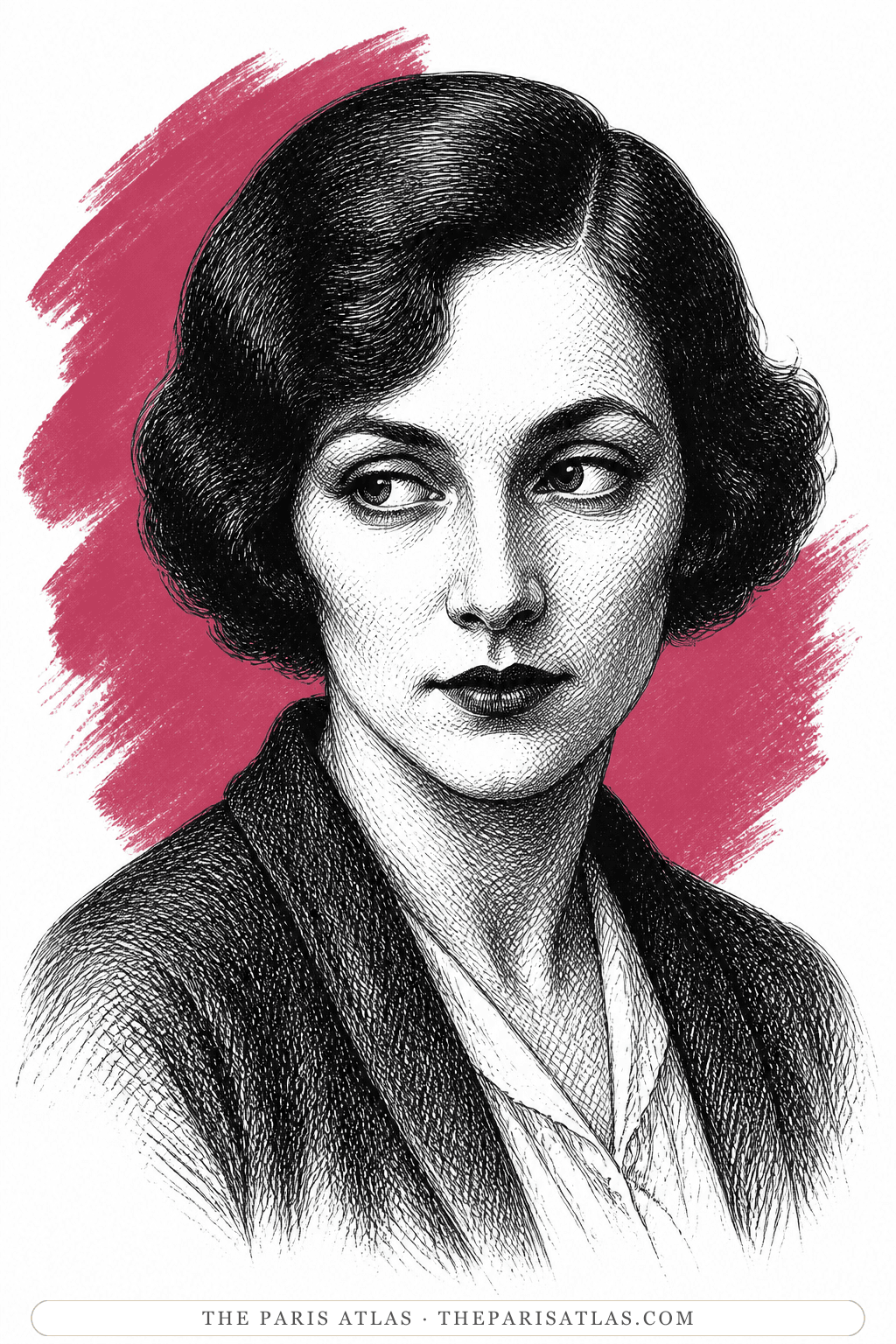
June Miller
Henry Miller's wife, and the subject he cannot leave alone. She is never physically present in these years — every appearance is a memory, a manuscript, or an argument about her.
June Miller — books, places, and lifeThe book

At a glance
- “June” — Henry Miller's wife, present only in memory and manuscript
- The United States; she does not appear in Paris in these years
- Miller, in the book that became Tropic of Capricorn, and Nin, who means to do it better
- June Miller · 1902–1979
Who they are in the book
Spoiler-freeJune Miller was Henry Miller's wife, and the person his books keep circling back to. In the first volume of the diary she is a live presence in Paris. In this one she is gone, and what remains is her effect: the pages Miller is writing about her, the flat where they lived, and Nin's running assessment of what the marriage did to them both.
The reason to read her card here is precisely that absence. This volume shows a woman being turned into literature by two writers at once while she is not in the room.
How June Miller Is Portrayed
- The Brooklyn flatIn New York, Nin goes to look at the cellar apartment in Brooklyn where Miller had lived with June and a woman called Jean. It is now a chop suey restaurant — barren and charmless, though Nin notes it is no worse than the unheated places her artist friends live in in Paris.
- The book being written about herBack in Paris, Miller is writing about June: their first meeting, their first kiss, her first lie. Nin records the progress of it the way she records the weather.
- The double standard Nin spotsComparing the men around her, she notes that Miller loves the idea of the prostitute, but that the moment anything of the kind shows in June, or in any woman he loves, he turns critical.
- What June did to his writingOver dinner she tells Miller that the personal experience with June outweighed everything he had written about crowds and cities, and proved the rest of it worthless. She then asks the diary whether she has been putting the core back into his work.
- The competition Nin sets herselfListing what she means to do as an artist, Nin puts June at the top of it, next to the best books she knows: “I want to do June better than Djuna Barnes did Nightwood.”
If you like The Diary of Anaïs Nin, 1934–1939


If you like Anaïs Nin
Explore authors with a similar voice, perspective, and influence.

Henry Miller
The entangled careers of the Villa Seurat: she financed and prefaced his scandal, he detonated her prose — and each wrote the other into the century's record.
View author
Louis-Ferdinand Céline
The doctor of the Paris slums who wrote the century's blackest, funniest novel — and changed the sound of French prose.
View author
Martha Gellhorn
War correspondent who covered the Spanish Civil War, D-Day, and conflicts across five more decades; Hemingway's third wife, 1940–1945.
View author