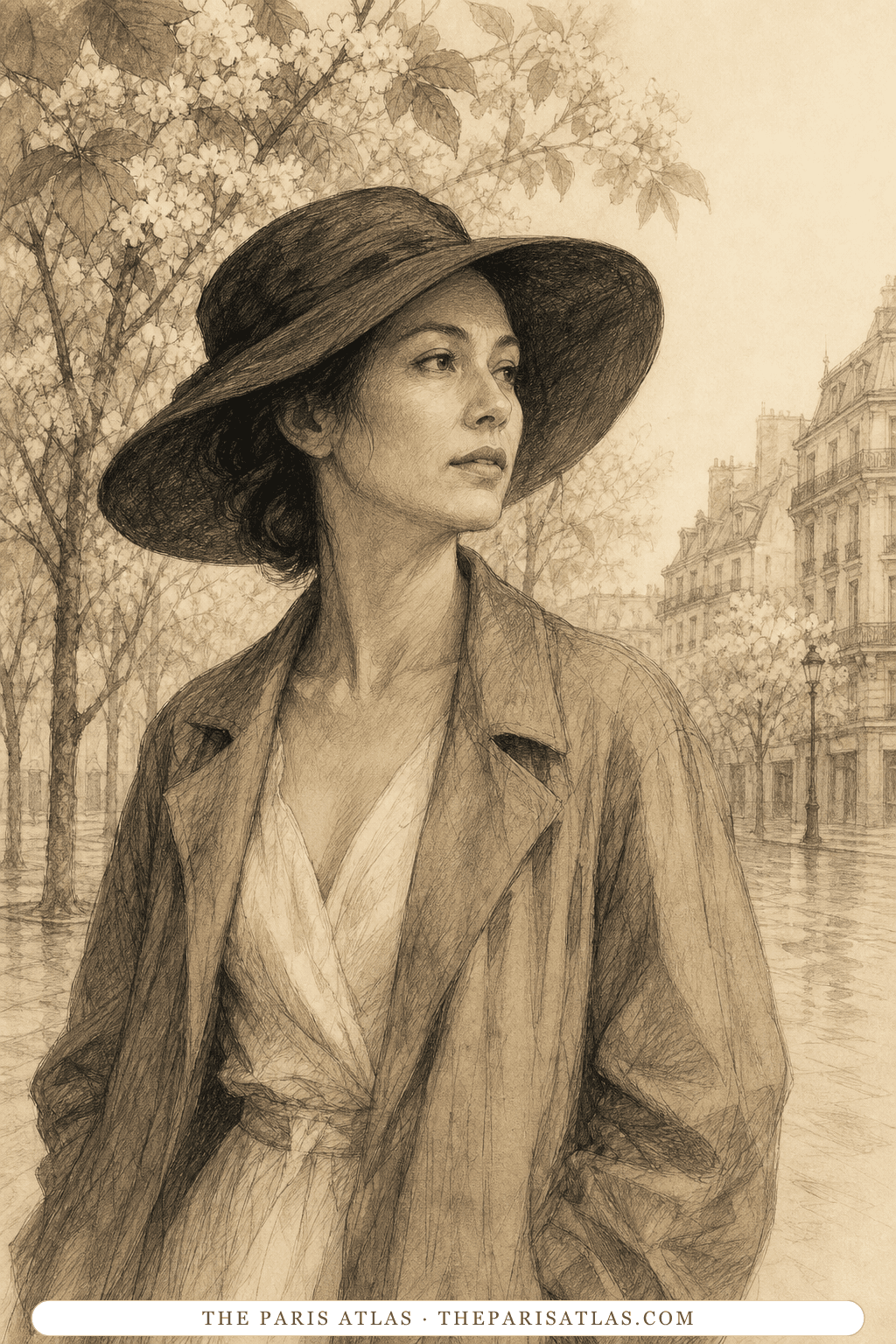
Betty Fernandez
An elegant and caring acquaintance from occupied Paris whose political collaboration complicates the narrator’s beautiful memory of her.
In the narrator’s account, to care for friends and preserve a social and literary life during occupation and shortage.
The book

At a glance
- German-occupied Paris
- Wife of literary critic Ramon Fernandez
- Friend and literary acquaintance of the adult narrator
- The narrator identifies the Fernandezes as collaborators
Who they are in the book
Spoiler-freeBetty Fernandez belongs to the narrator’s memories of German-occupied Paris, not to the Indochina affair. Duras interrupts the main story to remember Betty’s grace, short-sighted gaze, worn clothes, literary gatherings, and practical concern for friends during shortages.
Betty and her husband Ramon Fernandez hosted gatherings where people discussed literature. The narrator remembers Betty as loyal, affectionate, and attentive to the ordinary work of finding food and managing cold and hunger.
The memory is complicated by the fact that the Fernandezes collaborated during the occupation. The narrator refuses the easy comfort of making Betty’s beauty vanish once the political crime is known. She compares that misplaced faith in a political solution with her own later membership in the French Communist Party.
How Betty Fernandez Is Portrayed
- Remembered first through graceThe narrator sees her moving through Paris in loose, worn clothes that become elegant because of the way she wears them.
- Practical with friendsShe talks about people, rations, shops, cold, and hunger more readily than about abstract political arguments.
- A literary hostessThe gatherings around Betty and Ramon bring writers and conversation into the occupied city.
- Memory does not cancel judgmentThe narrator states the collaboration directly while admitting that later knowledge does not erase the visual and emotional force of the woman she knew.
Betty does not affect the affair’s outcome. Her memory interrupts it to show how the narrator thinks: one woman’s clothes, beauty, loyalty, and terrible political choice remain present together rather than being sorted into separate moral files.
The passage also moves the book beyond adolescence. The narrator’s later political commitment becomes another example of looking back at a former certainty without pretending she was always wiser than the people she judges.
If you like The Lover


If you like Marguerite Duras
Explore authors with a similar voice, perspective, and influence.
Martha Gellhorn
War correspondent who covered the Spanish Civil War, D-Day, and conflicts across five more decades; Hemingway's third wife, 1940–1945.
View author
Ernest Hemingway
Author of The Sun Also Rises and A Moveable Feast; his pared-down style, developed in 1920s Paris, became the most imitated in American prose.
View author
Louis-Ferdinand Céline
The doctor of the Paris slums who wrote the century's blackest, funniest novel — and changed the sound of French prose.
View author