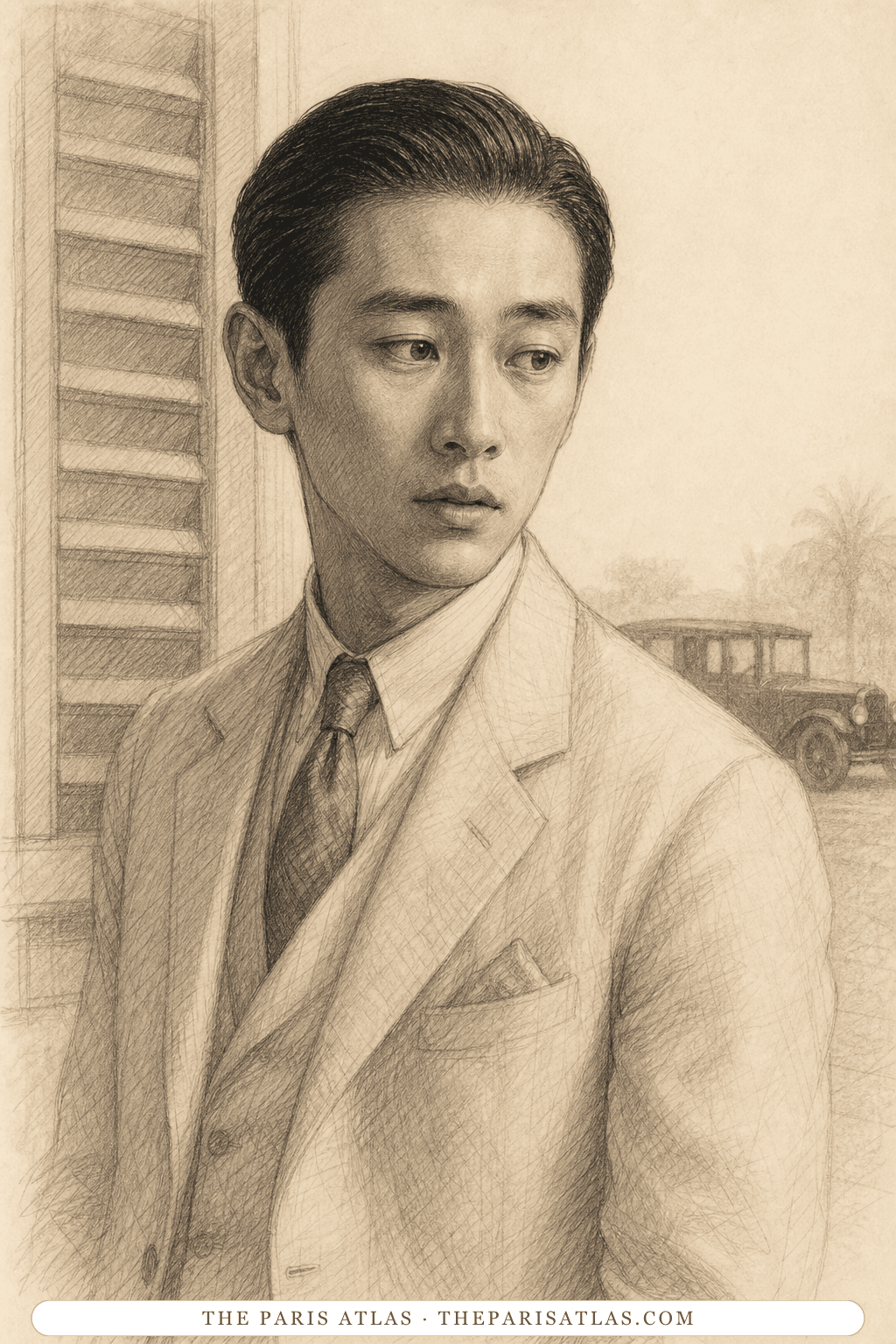
The Chinese man / the lover
A wealthy man from Cholon, about twenty-seven, whose love for the girl is limited by his dependence on his father.
In the narrator’s account, to keep the girl without losing his father’s money, approval, and plan for the family line.
The book

At a glance
- About twelve years older than the fifteen-and-a-half-year-old narrator
- Cholon and Sadec, in southern French Indochina
- Son of a very wealthy Chinese property owner
- Large black limousine with a chauffeur
- Unfinished business studies in Paris
Who they are in the book
Spoiler-freeThe unnamed Chinese man is about twelve years older than the girl, making him around twenty-seven when they meet. He is the son of an extremely wealthy property owner and travels in a large black limousine with a chauffeur. His money gives him adult freedom that the schoolgirl does not have.
Despite the car and clothes, he is not presented as emotionally secure. He approaches the girl nervously, trembles, weeps, and says he loves her. He has already failed to complete his studies in Paris after his father cut off his allowance. That history shows how completely his comfort still depends on family approval.
He wants to keep the girl but will not break with his father when marriage is refused. His love may be sincere, yet sincerity does not remove the age difference or make him willing to give up inheritance and position. The book lets tenderness, weakness, adult responsibility, and fear coexist in him.
How The Chinese man / the lover Is Portrayed
- Elegant on the ferryHe wears the light European suit associated with Saigon bankers and waits beside a chauffeur-driven limousine.
- Nervous rather than commandingHe is afraid when he approaches the girl and remains emotionally exposed throughout the relationship.
- Openly in loveHe says what she refuses to say, cries at the thought of losing her, and continues to describe the relationship as love.
- Financially dependentHis wealth belongs to a family structure controlled by his father. His earlier return from Paris proves how quickly that support can be withdrawn.
- Generous and compromisedHe pays for meals and gives the family access to luxury, but the gifts also make money inseparable from intimacy.
- Unable to rebelHe asks his father for permission but does not choose the girl against the answer. His fear of losing the inheritance determines the future.
His father refuses the marriage and he does not rebel. After the girl leaves for France, he marries the Chinese woman chosen by their families. The narrator imagines how the earlier affair might have remained in that marriage, but she clearly marks those scenes as guesses.
Years after the war, he visits Paris with his wife and calls the narrator. His voice still trembles. He tells her that he has never stopped loving her and will love her until death. The call confirms the endurance of his feeling without changing the life he chose.
If you like The Lover


If you like Marguerite Duras
Explore authors with a similar voice, perspective, and influence.

Martha Gellhorn
War correspondent who covered the Spanish Civil War, D-Day, and conflicts across five more decades; Hemingway's third wife, 1940–1945.
View author
Ernest Hemingway
Author of The Sun Also Rises and A Moveable Feast; his pared-down style, developed in 1920s Paris, became the most imitated in American prose.
View author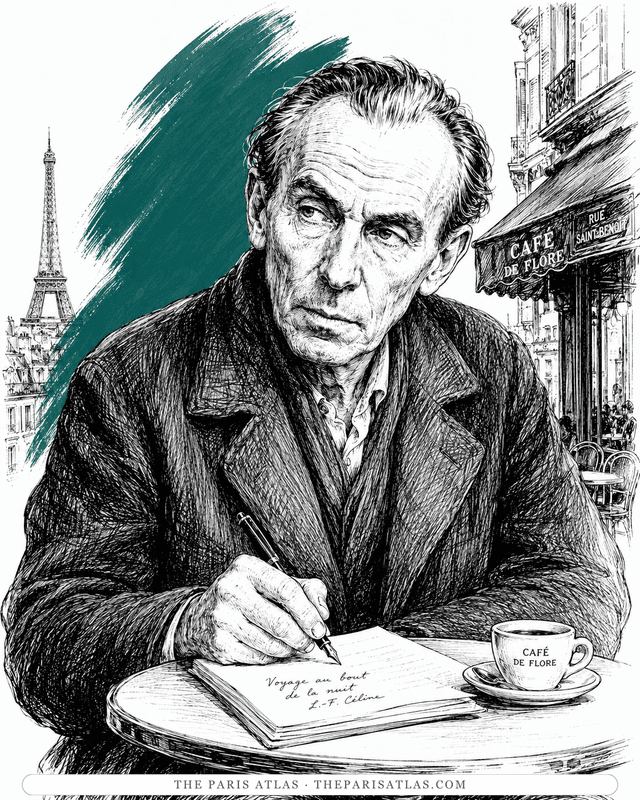
Louis-Ferdinand Céline
The doctor of the Paris slums who wrote the century's blackest, funniest novel — and changed the sound of French prose.
View author