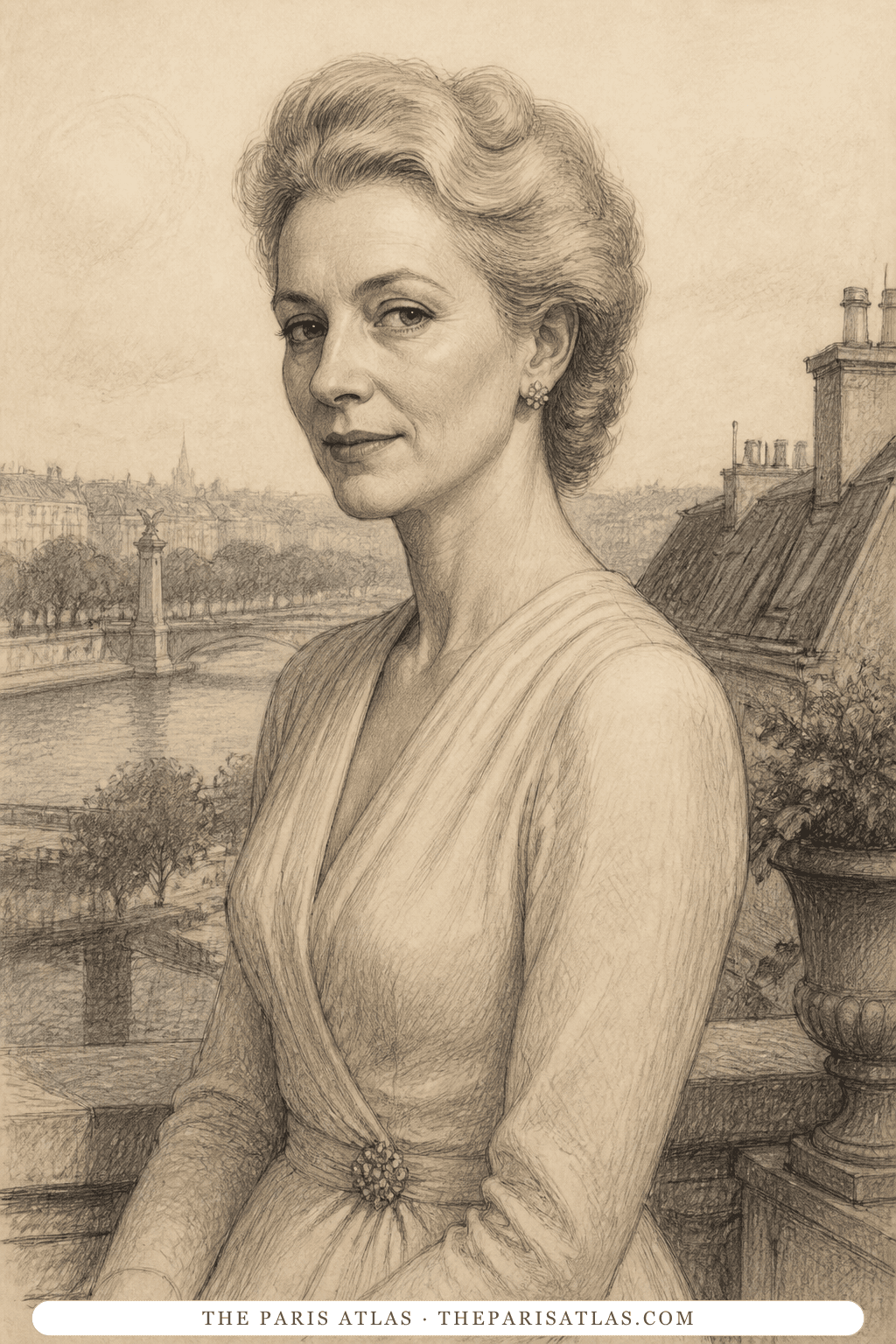
Marie-Claude Carpenter
A wealthy American hostess in wartime Paris whose reserved gatherings become a memory of distance and unanswered questions.
The book does not reveal Marie-Claude’s private goal; it shows her repeatedly creating gatherings while keeping her own life out of view.
The book

At a glance
- About forty-five in 1943
- American, apparently from Boston
- Top-floor apartment near place de l’Alma, Paris
- Wartime acquaintance of the adult narrator
Who they are in the book
Spoiler-freeMarie-Claude Carpenter appears in the narrator’s memory of Paris in 1943. She is an American, apparently from Boston, around forty-five, and wealthy enough to occupy a large top-floor apartment near the place de l’Alma overlooking the Seine.
She gives lunches and dinners attended by literary people, but the gatherings feel strangely impersonal to the narrator. Marie-Claude asks questions, says little about herself, and often leaves her guests soon after the meal while inviting them to remain.
The narrator studies her because she cannot understand who she is beneath the money, pale dresses, and polite routine. Marie-Claude’s brief appearance shows that memory can be intense even when knowledge is thin. A person may be visually unforgettable and still remain unknown.
How Marie-Claude Carpenter Is Portrayed
- An American in ParisThe narrator remembers Boston as her place of origin but signals that even this fact is not completely certain.
- A wealthy hostessHer apartment, catered meals, terrace, roof garden, and swimming pool stand out during wartime scarcity.
- Present but hard to knowShe listens, asks questions, smiles briefly, and leaves, producing social contact without personal closeness.
- A memory of unanswered questionsThe narrator watches her almost constantly, trying to understand why she is there and why no one seems to know her.
Marie-Claude never joins the Indochina plot. Her passage interrupts the affair at a moment of secrecy and fear, moving the reader to another woman whom the narrator can see clearly but cannot explain.
The book offers no later resolution to her mystery. That incompleteness is the point: memory preserves faces, rooms, and sensations without always preserving a full life story.
If you like The Lover


If you like Marguerite Duras
Explore authors with a similar voice, perspective, and influence.
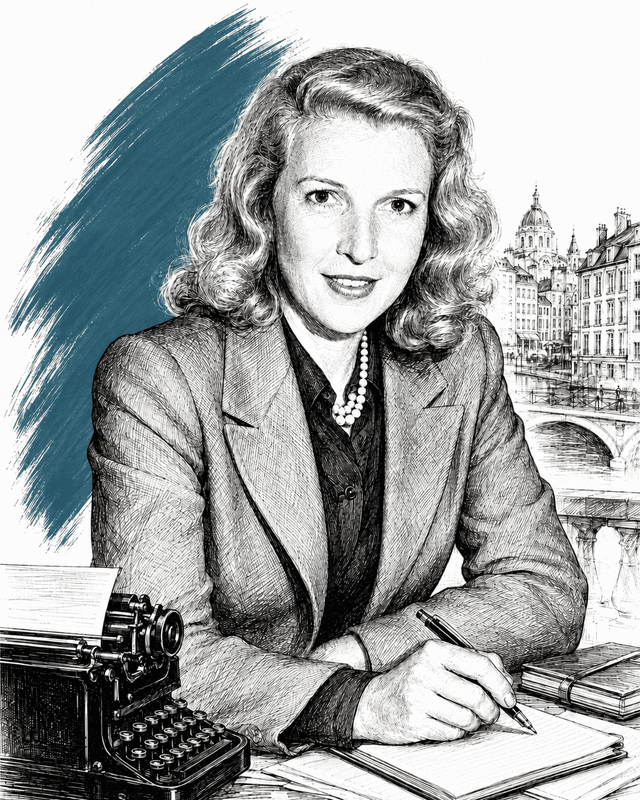
Martha Gellhorn
War correspondent who covered the Spanish Civil War, D-Day, and conflicts across five more decades; Hemingway's third wife, 1940–1945.
View author
Ernest Hemingway
Author of The Sun Also Rises and A Moveable Feast; his pared-down style, developed in 1920s Paris, became the most imitated in American prose.
View author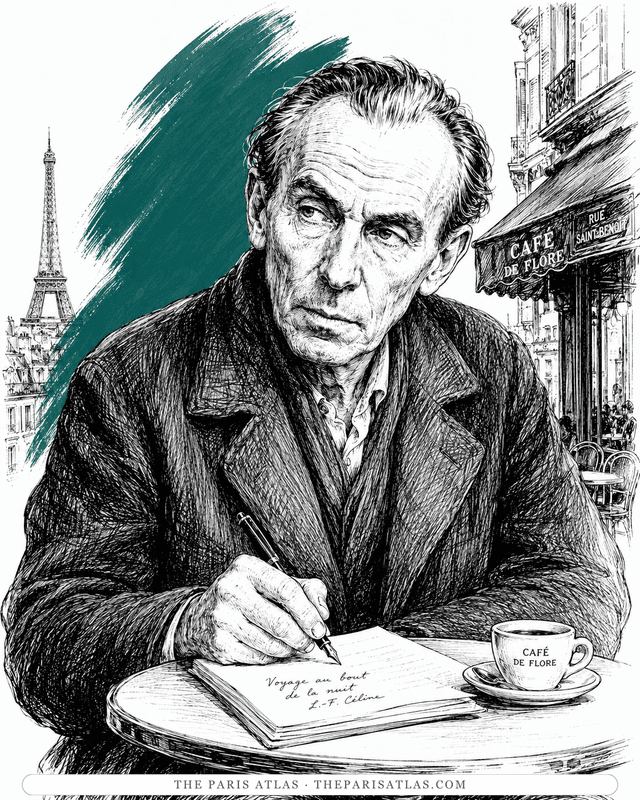
Louis-Ferdinand Céline
The doctor of the Paris slums who wrote the century's blackest, funniest novel — and changed the sound of French prose.
View author