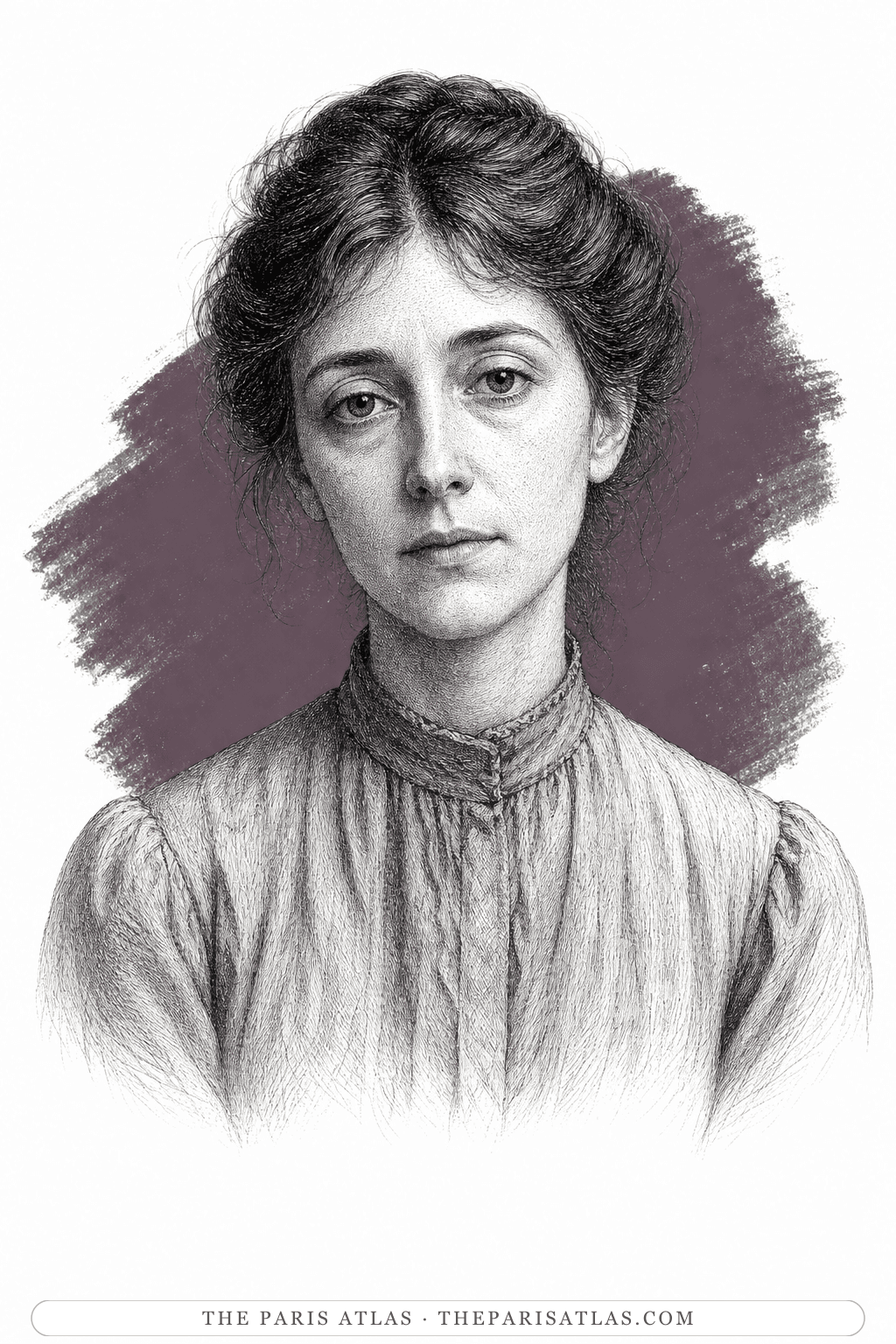
Alice Hindman
A dry goods clerk who has spent eleven years waiting for a man who went to the city and stopped writing.
For something to happen to her. Kneeling by her bed in the dark with a rolled blanket where a body would be, she says it twice: "Why doesn't something happen?" and "Why am I left here alone?"
The book

At a glance
- A dry goods clerk, and the subject of 'Adventure'
- Twenty-seven; she was sixteen when the affair began
- Winney's Dry Goods Store, on Main Street
- With her mother and her stepfather, Bush Milton, the carriage painter of Winesburg
- Ned Currie, who left for Cleveland eleven years ago
- Winesburg Methodist, joined at twenty-five, and the Epworth League on Sunday evenings
Who they are in the book
Spoiler-freeAlice Hindman is the subject of 'Adventure,' one of the stories in Winesburg, Ohio, the 1919 book of linked short stories by the American writer Sherwood Anderson. She is twenty-seven, tall and slight, her shoulders a little stooped and her head large enough to overshadow her body. She clerks at Winney's Dry Goods Store from eight in the morning until six at night, and goes back three evenings a week from seven until nine. She is very quiet, and Anderson says a continual ferment goes on beneath the placid exterior.
At sixteen she was in love with Ned Currie, who worked on the town paper before George Willard did. He left for Cleveland to get onto a city newspaper. She offered to go with him unmarried and work, and he refused on her behalf and told her to wait. On his last evening they drove out into the country and became lovers. He failed to get the Cleveland job and went on to Chicago, wrote almost every day for a while, then found friends, then a woman in his boarding house, and stopped.
She does not blame him and she does not stop. She saves money to follow him, gives up the plan, and keeps the habit of saving until she is no longer buying clothes. She decides she is his wife whether he returns or not, and turns away the young men who try. Anderson lets eleven years pass in about three pages.
How Alice Hindman Is Portrayed
- Her workWinney's Dry Goods Store, eight until six, plus three evenings a week. Her employer is a grey old man with false teeth and a drooping mustache who does not talk, and on rainy days and in winter storms whole hours pass with no customer at all.
- The man who leftNed Currie, a young man on the Winesburg Eagle. On the last night he told her that now they would have to stick to each other whatever happened, and the words echoed in her for years afterward. In Chicago he thought of her only when he was lonely, or when the moon came out over a city park the way it had over the meadow by Wine Creek.
- The vowShe decides that she is his wife and will remain his wife whether he comes back or not, and treats the idea of giving to another man what still belongs to Ned Currie as monstrous.
- The devices of lonely peopleShe kneels to pray at night and whispers into the prayers the things she wants to say to him. She becomes attached to her own furniture and cannot bear anyone touching it. On wet afternoons in the store she spreads her bank book open in front of her and works out how the interest might one day support them both.
- Trying to start againAt twenty-five, after her mother remarries a carriage painter and the isolation gets worse, she joins the Winesburg Methodist Church and the Epworth League on purpose, to become acquainted with people. She lets a middle-aged drug clerk called Will Hurley walk her home, touches the folds of his coat in the dark, and tells herself it is not him she wants but the company.
- The night it breaksOne rainy night she undresses in the dark, runs out of the empty house onto the grass, and calls to a man stumbling home along the brick sidewalk. He stops. He is old and somewhat deaf, and shouts back to ask what she said. She drops flat to the ground and crawls to the house on her hands and knees.
- Where the story leaves herIn bed with her face turned to the wall, having bolted the door and dragged the dressing table across it, trying to force herself to face the fact that many people must live and die alone, even in Winesburg.
If you like Winesburg, Ohio


If you like Sherwood Anderson
Explore authors with a similar voice, perspective, and influence.

Ernest Hemingway
Anderson's letters of introduction sent him to Paris; In Our Time borrowed the Winesburg shape; The Torrents of Spring paid the debt back in parody.
View author
Sisley Huddleston
The witness who recorded Anderson's Paris — the hotel by the Odéon, the Luxembourg walks, and the long conversations about America and art.
View author
F. Scott Fitzgerald
The Jazz Age's laureate — famous at twenty-three, author of Gatsby at twenty-eight, and owner of the longest posthumous comeback in American letters.
View author