
Enoch Robinson
A farm boy who went to New York to become a painter, meant to finish his training in Paris, never got there, and came home to Winesburg alone.
To be listened to, and to be the largest thing in the room. He tells George Willard that understanding him takes no effort at all: "All you have to do is to believe what I say, just listen and believe, that's all there is to it."
The book

At a glance
- The subject of 'Loneliness'
- Twenty-one when he left for New York; back in Winesburg after fifteen years
- A painter, at an art school in New York, with French lessons for the Paris he never reached
- An illustrator for advertisements
- A six-dollar room facing Washington Square, and later the third floor of the Heffner Block in Winesburg
- A wife and two children, left behind in New York
Who they are in the book
Spoiler-freeEnoch Robinson is the subject of 'Loneliness,' a story in Winesburg, Ohio, the 1919 book of linked short stories by the American writer Sherwood Anderson. He grew up on a farm two miles out of town, walked into Winesburg down the middle of the road reading a book, and at twenty-one went to New York City, where he stayed fifteen years. He studied French and enrolled at an art school, intending to finish his education among the masters in Paris, and never went.
He could draw well enough. What defeated him, Anderson says, is that he never grew up, so that the child in him kept bumping against actualities like money and sex and opinions. Young artists came to his room by Washington Square and talked about line and values and composition, and the thing he wanted to say about his own pictures he could never get out: that the dark spot by the road in one of them was the beginning of everything, that a woman lay hurt and unseen among the elders there, and that she was too beautiful to be painted.
So he stopped inviting them, locked the door, and invented people of his own instead. There were about two dozen of them living in the room with him, and he gave them instructions and made comments on life and always talked last and best. In between he married a girl from the art school, had two children, worked in a place where illustrations are made for advertisements, and walked out of all of it when eight thousand dollars came to him from his mother's estate. He gave the money to his wife and went back to the room.
Then a real woman began knocking at the door, and he could not decide whether he wanted her to come in. He tells the whole thing to George Willard, the young reporter, one wet October night in a bare and scrupulously clean room above Main Street.
How Enoch Robinson Is Portrayed
- Where he came fromA brown farmhouse on a side road off Trunion Pike, two miles beyond the town limits, with the blinds facing the road kept closed. Old citizens remembered a quiet smiling youth who walked in the middle of the road reading, so that drivers of teams had to shout and swear to get past him.
- What he went to New York forArt school and French lessons, with Paris at the end of them. He was twenty-one when he went and thirty-six when he came home, and he never made the crossing.
- The roomLong and narrow like a hallway, facing Washington Square, six dollars a month. Anderson tells you to fix it in your mind before he goes on: "The story of Enoch is in fact the story of a room almost more than it is the story of a man."
- Why he stopped talkingThe artists in his room discussed his pictures in terms of line and values and composition. He knew what he wanted to say about them and knew he could never say it, so he sputtered, heard his own voice come out squeaky and strange, and stopped.
- The people he made upRoughly two dozen invented figures lived in the room with him: a woman with a sword in her hand, an old man with a long white beard who went about followed by a dog, and a young girl whose stockings were always coming down and hanging over her shoe tops.
- The life he walked out ofA wife met at art school, two children, an apartment in Brooklyn, and a job drawing advertising illustrations. For a while he enjoyed being a producing citizen, voted at an election, took a newspaper, and argued with a man on a train about the government owning the railroads.
- The lamenessA street car hit him in New York and threw him against an iron post. Anderson lists it among the many things that kept things from turning out for Enoch Robinson.
- What is left of him in WinesburgA small jerky figure bobbing up and down the street at evening when the sun goes down behind a livery barn, spoken of about town as a little off his head. He lives on the third floor of the Heffner Block, the same building that holds Doctor Reefy's office.
If you like Winesburg, Ohio


If you like Sherwood Anderson
Explore authors with a similar voice, perspective, and influence.
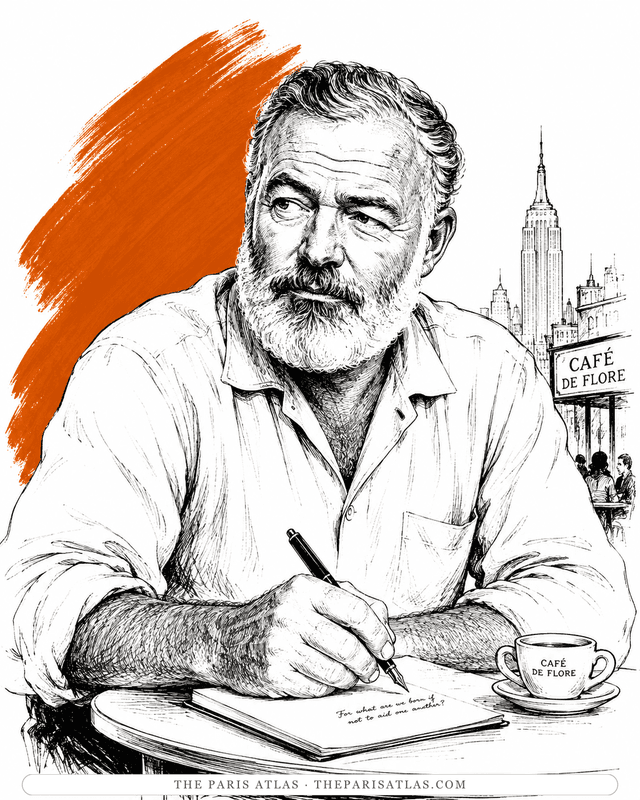
Ernest Hemingway
Anderson's letters of introduction sent him to Paris; In Our Time borrowed the Winesburg shape; The Torrents of Spring paid the debt back in parody.
View author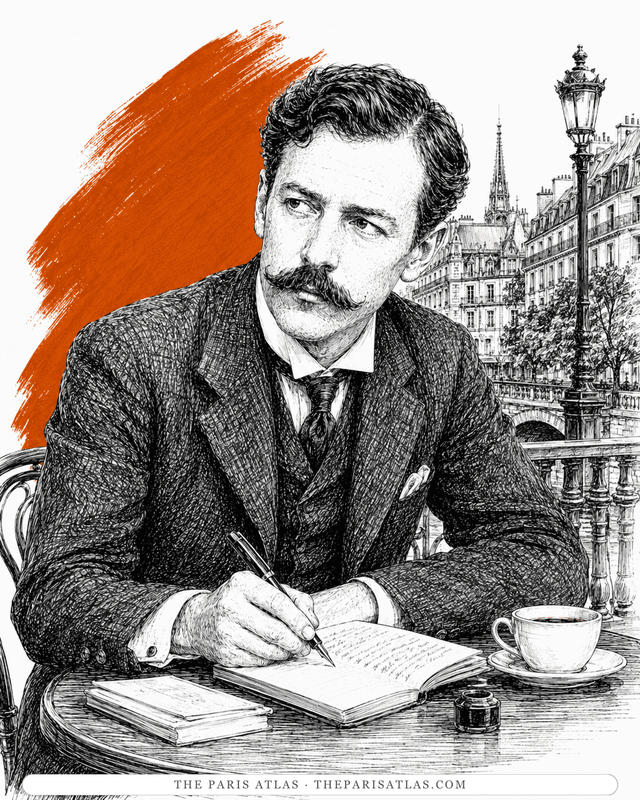
Sisley Huddleston
The witness who recorded Anderson's Paris — the hotel by the Odéon, the Luxembourg walks, and the long conversations about America and art.
View author
F. Scott Fitzgerald
The Jazz Age's laureate — famous at twenty-three, author of Gatsby at twenty-eight, and owner of the longest posthumous comeback in American letters.
View author