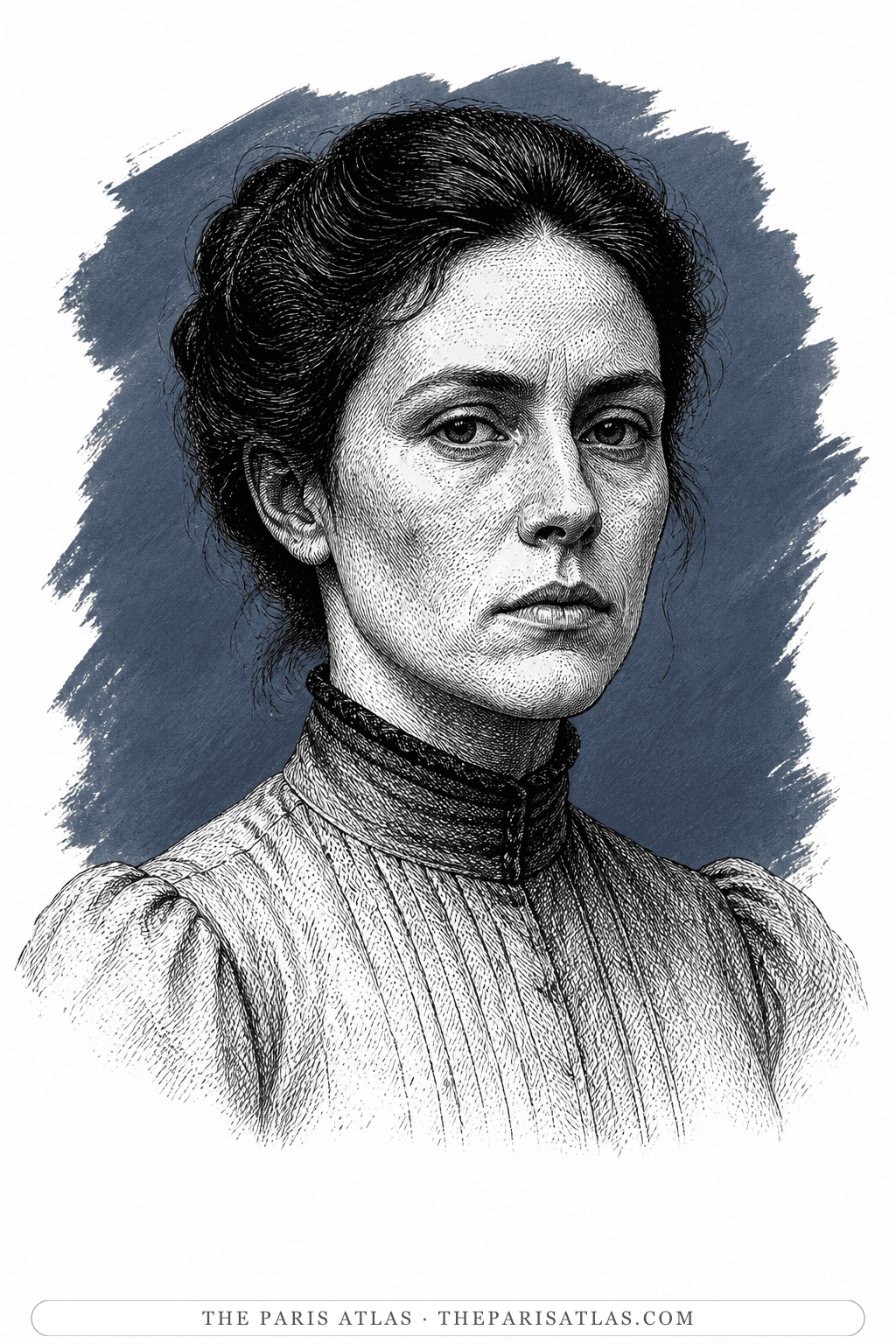
Kate Swift
The town schoolteacher, thirty and sharp-tongued, who tries to tell George Willard what becoming a writer will actually require of him.
To make George Willard understand what writing will cost him before he starts. "You must not become a mere peddler of words." She has told him so four or five times now, and every time he comes away deciding she must be in love with him.
The book

At a glance
- The town schoolteacher, and the subject of 'The Teacher'
- Thirty
- The house next door to the Presbyterian church, with her mother, Aunt Elizabeth Swift
- Travels in Europe and two years in New York City
- George Willard, when he was still a schoolboy
- 'The Strength of God,' from the other side of the fence
Who they are in the book
Spoiler-freeKate Swift teaches school in Winesburg, Ohio, the 1919 book of linked short stories by the American writer Sherwood Anderson. She is thirty and lives next door to the Presbyterian church with her widowed mother. Her complexion is bad, her face is blotched from ill health, and the town does not think her a pretty woman.
In the schoolroom she is silent, cold and stern, and yet oddly close to her pupils. Once in a long while something comes over her and she is happy, and the whole room stops working to look at her. She has been to Europe and lived two years in New York City, and she teaches by inventing. She once told the children intimate little stories about the English essayist Charles Lamb, dead sixty years, with the air of someone who had lived in his house, and they came away assuming he must once have lived in Winesburg.
The town has her filed as a confirmed old maid with a sharp tongue. Anderson says she is the most eagerly passionate soul in it, and that more than once in the five years since she came back from her travels she has had to leave the house and walk half the night to fight something out. In a piece of schoolwork George Willard wrote as a boy she thought she saw a spark, and she wants to blow on it.
How Kate Swift Is Portrayed
- How the town sees herA confirmed old maid who speaks sharply and goes her own way, and is therefore assumed to be short of ordinary human feeling. She has few friends.
- How the book sees her"Alone in the night in the winter streets she was lovely." Behind the cold exterior, Anderson writes, grief, hope and desire fight it out day by day while she works in the schoolroom.
- How she teachesBy making things up. Her invented anecdotes about the Italian goldsmith Benvenuto Cellini made the boys guffaw, and one fat boy laughed so hard he became dizzy and fell off his seat. She laughed with him, and then went cold and stern again.
- Where she has beenEurope, and two years in New York City. She has been back in Winesburg five years. Her mother, a widow with money in the local bank, tells her she is glad she was not born a man.
- The adviceShe takes George Willard out to the Fair Ground one summer day, turns him around by the shoulders so she can look at him, and tells him to stop fooling with words and go and live first. "The thing to learn is to know what people are thinking about, not what they say."
- The night in the printshopAfter a long walk in a snowstorm she comes into the newspaper office at eleven and talks by the stove for an hour. She takes hold of his shoulders again, laughs in a queer hesitating way that is not her usual laugh, and says, "In a moment, if I stay, I'll be wanting to kiss you." She lets him hold her, then beats his face with two small fists and runs out.
- Her healthThe town doctor has told her that afternoon that she is in danger of losing her hearing, and that being out in the storm is foolish and perhaps dangerous. She does not remember the words, and would not have turned back if she had.
- What she never finds outThe Presbyterian minister across the fence has broken a corner out of his study window and spent three nights that winter watching her read in bed. She has no idea he is there, and nothing in the book ever tells her.
If you like Winesburg, Ohio


If you like Sherwood Anderson
Explore authors with a similar voice, perspective, and influence.

Ernest Hemingway
Anderson's letters of introduction sent him to Paris; In Our Time borrowed the Winesburg shape; The Torrents of Spring paid the debt back in parody.
View author
Sisley Huddleston
The witness who recorded Anderson's Paris — the hotel by the Odéon, the Luxembourg walks, and the long conversations about America and art.
View author
F. Scott Fitzgerald
The Jazz Age's laureate — famous at twenty-three, author of Gatsby at twenty-eight, and owner of the longest posthumous comeback in American letters.
View author