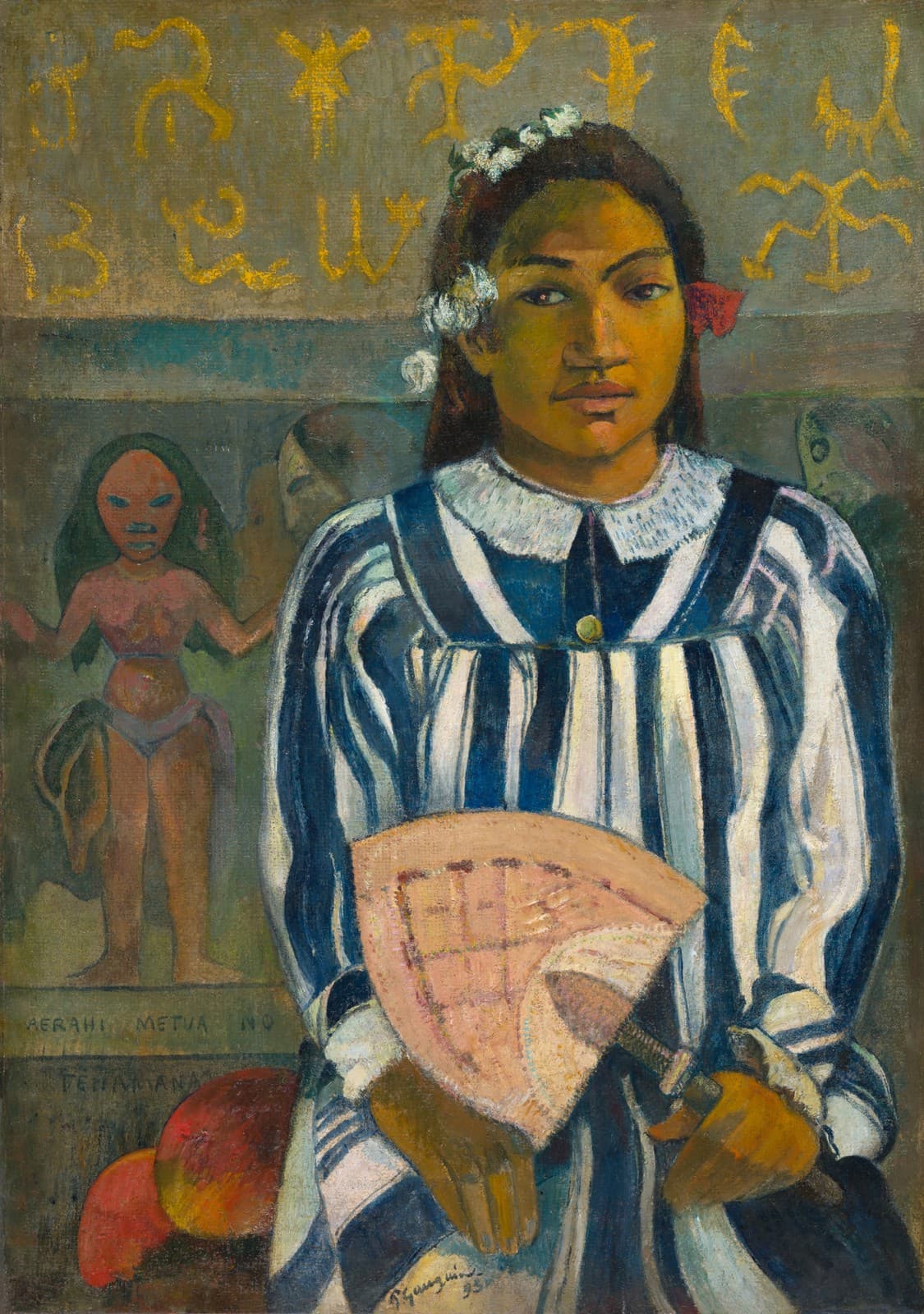
Merahi metua no Tehamana (Tehamana Has Many Parents)
by Paul Gauguin
Gauguin's 1893 portrait of Tehamana, the Tahitian adolescent who lived with him at Mataiea: she sits in a striped missionary dress holding a woven fan, against a background of invented glyphs and a carved goddess. The Art Institute of Chicago, which owns it, gives her age as thirteen. The title translates as Tehamana Has Many Parents.
- 1893
- Oil on canvas
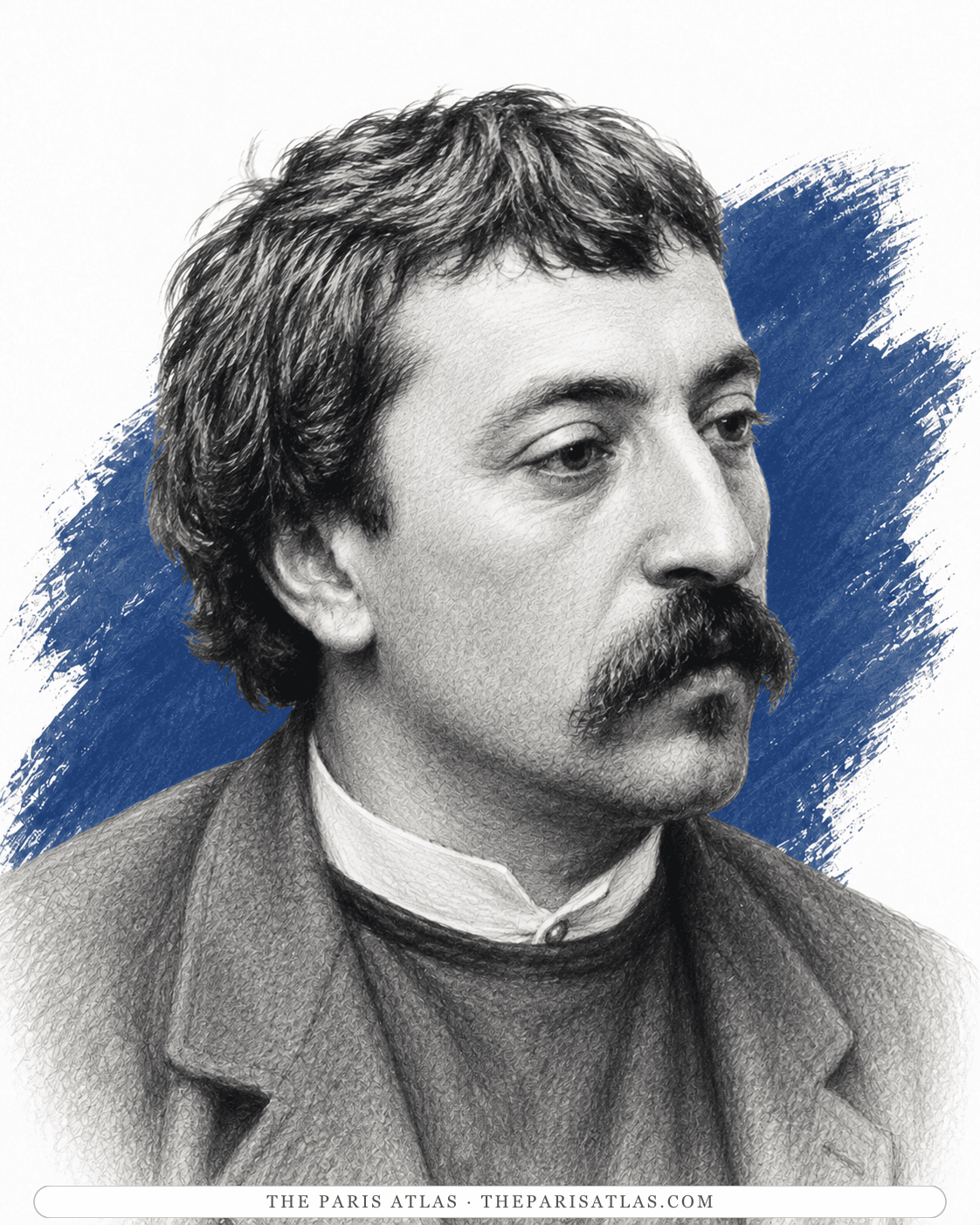
About Paul Gauguin
What the painting shows
A young Tahitian woman sits in three-quarter view in a blue-and-white striped dress with a high collar — mission clothing — holding a plaited fan, two tiare flowers in her hair. Behind her, on a yellow ground, run two rows of glyphs; to the left stands a carved female figure with raised arms, and ripe mangoes lie on the ledge beside her.[1]
The sitter is Tehamana, called Tehura in Gauguin's own writings, the adolescent who lived with him during his first Tahitian stay. The Art Institute of Chicago's collection record identifies her and gives her age as thirteen; the biographer Sue Prideaux, from a birth record located more recently, argues she was about fifteen.[1]
What the background is doing
Nothing behind Tehamana is Tahitian in the documentary sense. The glyphs imitate the rongorongo script of Easter Island — undeciphered then and now, and never used on Tahiti — and the carved goddess is Gauguin's composite of Polynesian and Asian sources. He surrounded the girl in mission dress with an invented 'ancient' Polynesia, the spiritual ancestry the title claims for her: many parents — the gods, the ancestors, the cultures he assembled behind her.[1]
The portrait therefore does two things at once. It records a specific, named person with unusual dignity and calm, and it drafts her into Gauguin's mythology of a pre-colonial Polynesia that the actual, mission-dressed Tehamana did not inhabit. Modern accounts, the Art Institute's included, read it inside the colonial facts: a middle-aged French colonist's portrait of the adolescent girl who lived with him, painted with evident tenderness and unresolvable imbalance. Both are true of the same canvas.[1]
Reading the picture, detail by detail
The portrait holds its two worlds in plain sight. Four details, enlarged from the canvas.
Her glance goes sideways, away from the painter, and gives nothing up. Among all the direct gazes Gauguin painted, Tehamana's is a withholding one — guarded, self-possessed, older than the face around it. Whatever the picture claims about ancestors and gods, the girl herself keeps her own counsel, and the paint respects that.
The script above her head is an invention wearing the look of antiquity: an imitation of rongorongo, the undeciphered writing of Easter Island, which no one on Tahiti ever used. It reads as scripture and says nothing. Gauguin needed an ancient Polynesia for the portrait's title to be true, so he painted one.
The 'many parents' of the title stand at the left edge: a small goddess with green hair and spread arms, Gauguin's composite of Polynesian and Asian sources. She is the spiritual ancestry the painting assigns its sitter — a guardian invented by the man who painted her, which is the portrait's contradiction in a single figure.
At her hands, the two Tahitis meet. The plaited fan crosses a blue-and-white striped dress that the Christian missions put on the island's women — the real, colonial Tahiti of 1893 — while the mangoes ripening on the ledge belong to the timeless Eden of Gauguin's invention. The portrait tells the truth and the fantasy in the same breath, and the fan points at both.
More details
5.The fruit answers the colors of the face
The fruit is crowded into the lower corner, partly hidden by the striped dress. Its rounded patches of red and yellow repeat warmer colors found in Tehamana's face and hands. This small area prevents the blue and white clothing from controlling the portrait's entire lower half.
6.The sleeve bends the straight stripes
The stripes widen and narrow as they follow the sleeve. Blue and white describe the folds more forcefully than a separate cast shadow would. The fabric looks patterned and three-dimensional at once: each long stripe is both decoration and a guide to the arm beneath it.
How it is painted
The portrait is one of Gauguin's most formally composed: the figure pyramidal and still, the fan closing the base, the glyph rows ruling the background like a musical staff. The striped dress is painted with unusual care for a man who generally suppressed detail — its blue verticals lock the figure into the design.
Color runs warm against cool, the yellow ground and mangoes against the blue dress, with the heavy contours and flattened space of the Synthetist manner throughout.
Where it stands
Painted at the end of the first Tahitian stay, the portrait sums its program: the real island and the invented one on a single canvas, with a named sitter carrying both. It has become the focus of the modern reassessment of Gauguin — exhibitions and catalogues now routinely present it alongside the documentation of Tehamana's age — and it anchors the Art Institute of Chicago's Gauguin holdings.[1]
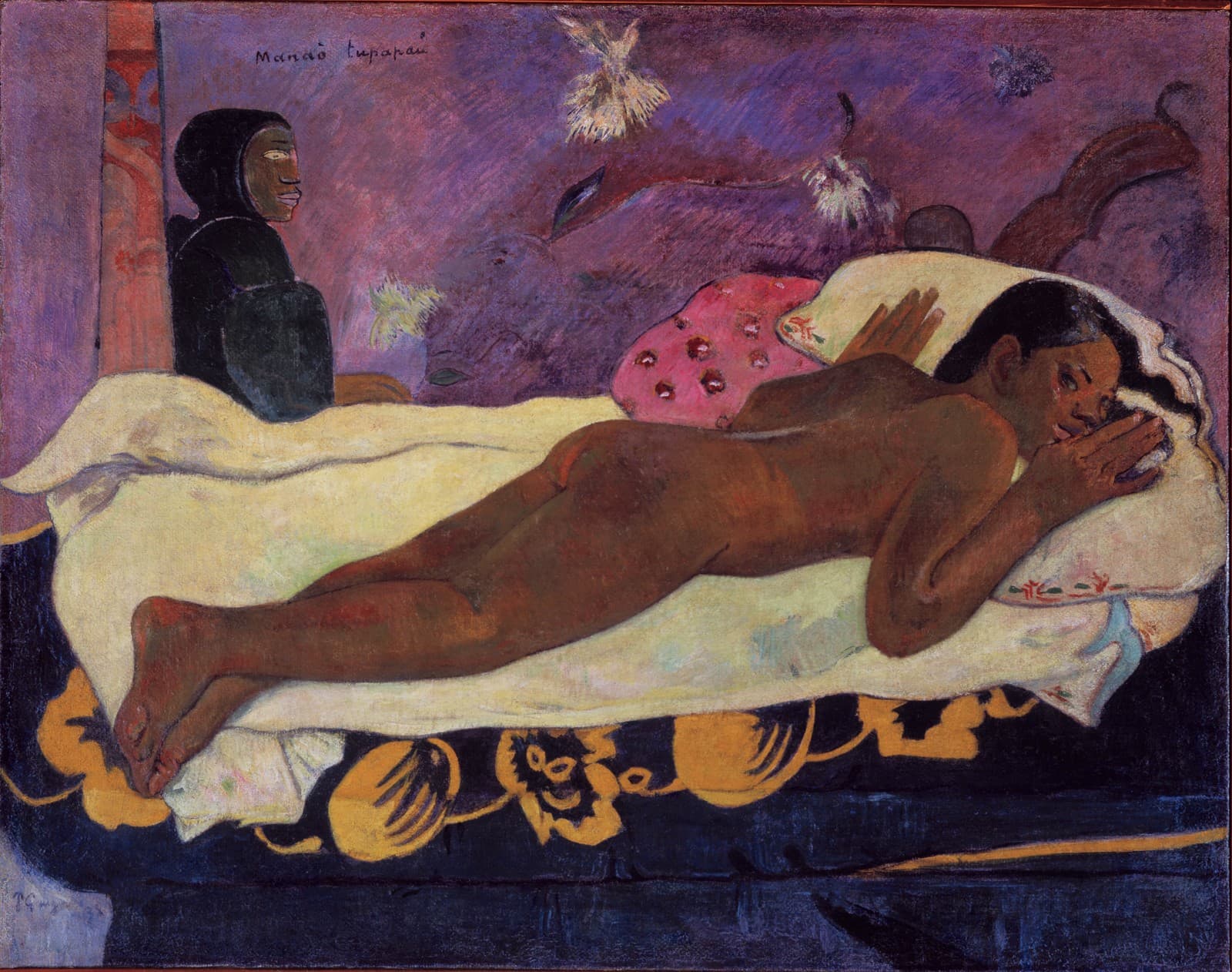
Tehamana herself appears in several other major canvases of the period, including Manao tupapau.
Timeline
1891–1893
Gauguin's first Tahitian stay, at Mataiea, where Tehamana lives with him.
1893
Paints the portrait near the end of the stay, shortly before returning to France.
1980
Enters the Art Institute of Chicago, as 1980.613, a gift of Mr. and Mrs. Charles Deering McCormick.
Where to see it
Art Institute of Chicago
111 South Michigan Avenue, Chicago, IL 60603, United States
Displays and loans can change. Check whether this work is on view before making a special trip.
Plan your visit on the museum’s official website (opens in a new tab)Frequently asked questions
What does Merahi metua no Tehamana mean?
Tehamana Has Many Parents, or The Ancestors of Tehamana. The 'many parents' are the spiritual ancestry Gauguin invented behind her — the carved goddess and the imitation-rongorongo glyphs of the background, an 'ancient' Polynesia assembled from sources that were not Tahitian.
Who was Tehamana?
The Tahitian adolescent who lived with Paul Gauguin at Mataiea during his first Tahitian stay, called Tehura in his writings. The Art Institute of Chicago's record for this portrait gives her age as thirteen; recent biographical research argues about fifteen. She appears in several major canvases of the period, including Manao tupapau.
Where is the painting?
The Art Institute of Chicago, which received it in 1980 as a gift of Mr. and Mrs. Charles Deering McCormick. Its accession number is 1980.613.
What is the writing in the background?
An imitation of rongorongo, the undeciphered script of Easter Island — which was never used on Tahiti. Gauguin copied its look for decorative and mythological effect, part of the invented ancestry the title announces. It says nothing; it was never meant to.
Why is the portrait controversial?
Because of the facts around the sitter: an adolescent girl living with a middle-aged French colonist inside a colonial system that made the arrangement possible. Museums now present the portrait with that context stated plainly, alongside what is also true — that it is one of the most formally careful and tender portraits Gauguin ever painted.
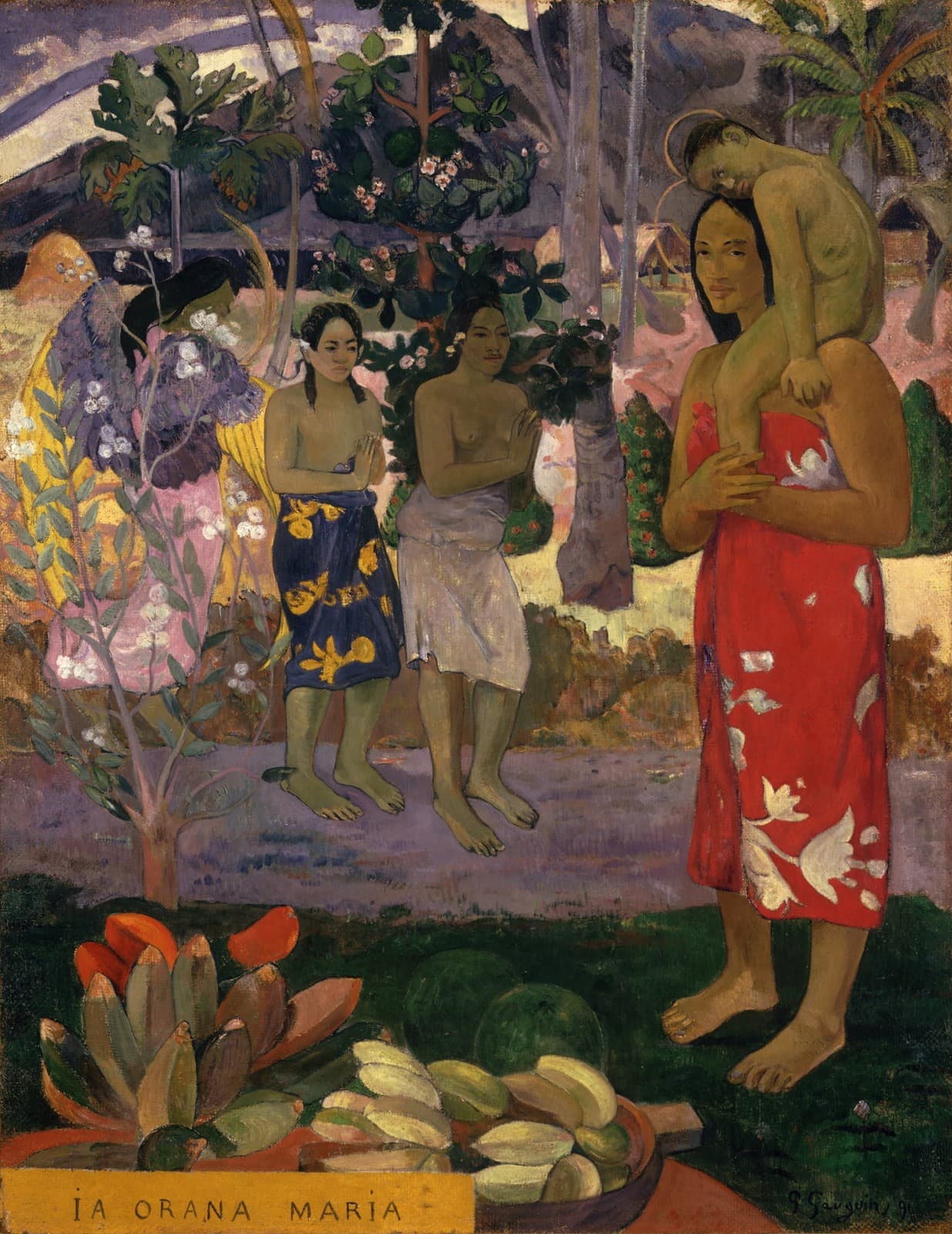
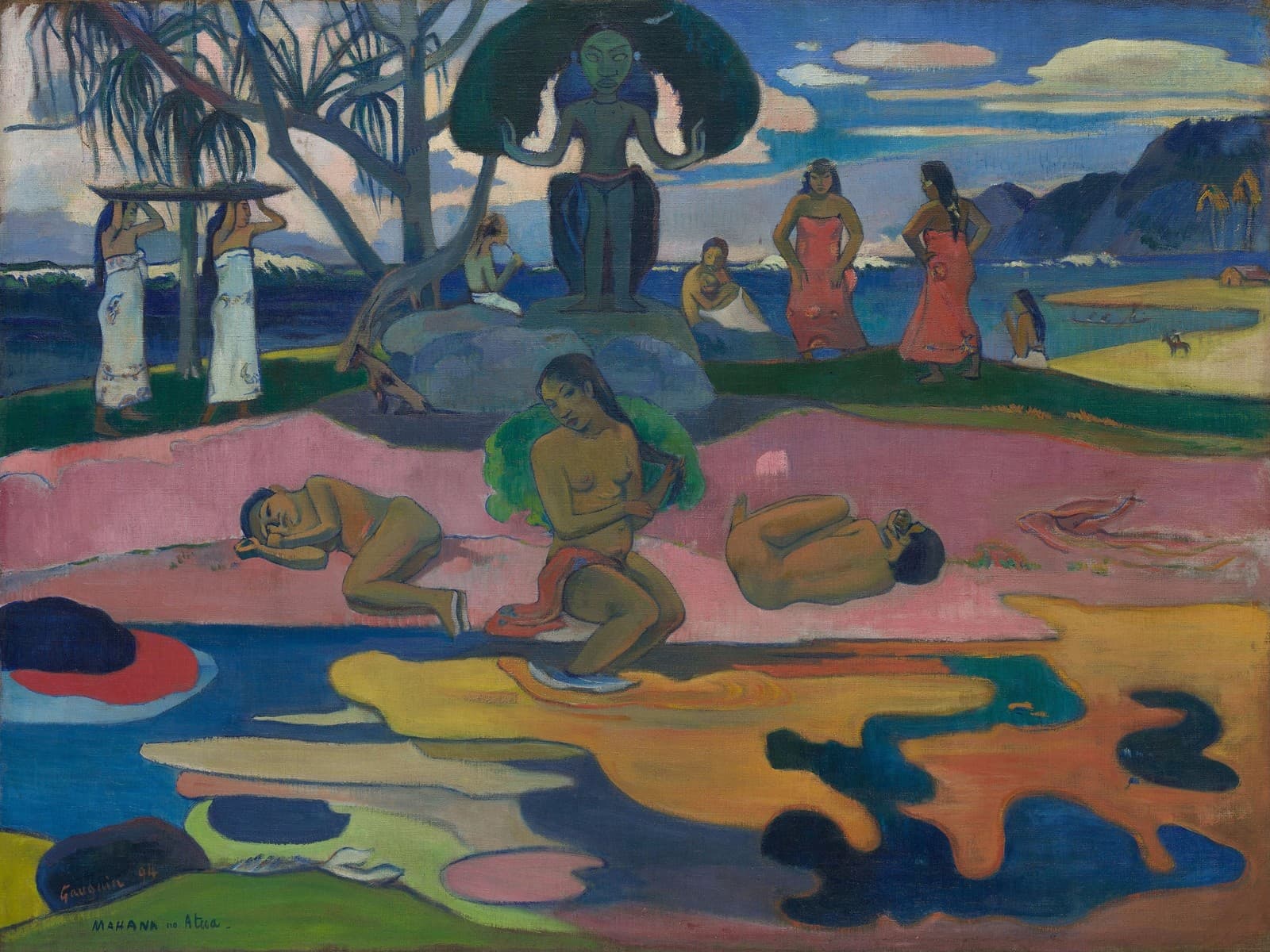
More by Paul Gauguin
If you like Paul Gauguin
Explore painters from the same movements and circles.
Paul Cézanne
Painter between Impressionism and everything after — shown in the independents' exhibitions, emulated by the Cubists, and present at the Orangerie through 15 works in the Walter-Guillaume collection.
View artist
Georges Seurat
Parisian painter who built pictures from small dots of pure colour on optical principle, co-founded the Salon des Indépendants, and detonated the last Impressionist exhibition of 1886 with A Sunday on La Grande Jatte. He died at thirty-one.
View artist
Pierre-Auguste Renoir
Porcelain painter turned co-founder of Impressionism — the painter of the Moulin de la Galette dance and the Luncheon of the Boating Party, whose later classical turn reached Picasso and Matisse.
View artist
In images
References
The sources below include collection records, catalogues, scholarly research, and primary materials that informed this page. They document Merahi metua no Tehamana (Tehamana Has Many Parents), its making, and its place in cultural history.


2Paul Gauguin (1848–1903)
WebsiteNational Gallery, LondonUsed forWeb source consulted for documented facts and historical context presented on the Merahi metua no Tehamana (Tehamana Has Many Parents) page.
3Paul Gauguin (1848–1903)
WebsiteThe Metropolitan Museum of ArtUsed forThe Metropolitan Museum's scholarly essay supplies independent context for Gauguin's Tahitian works and their reception.
4Gauguin – Tahiti, The Workshop of the Tropics
WebsiteMusée d'OrsayUsed forThe Musée d'Orsay resource documents the cultural and studio context of Gauguin's first Tahitian stay.
These references provide the documented foundation for this work's history and interpretation. Claim-level citations remain attached to the specific claims they support.
 Explore more resources