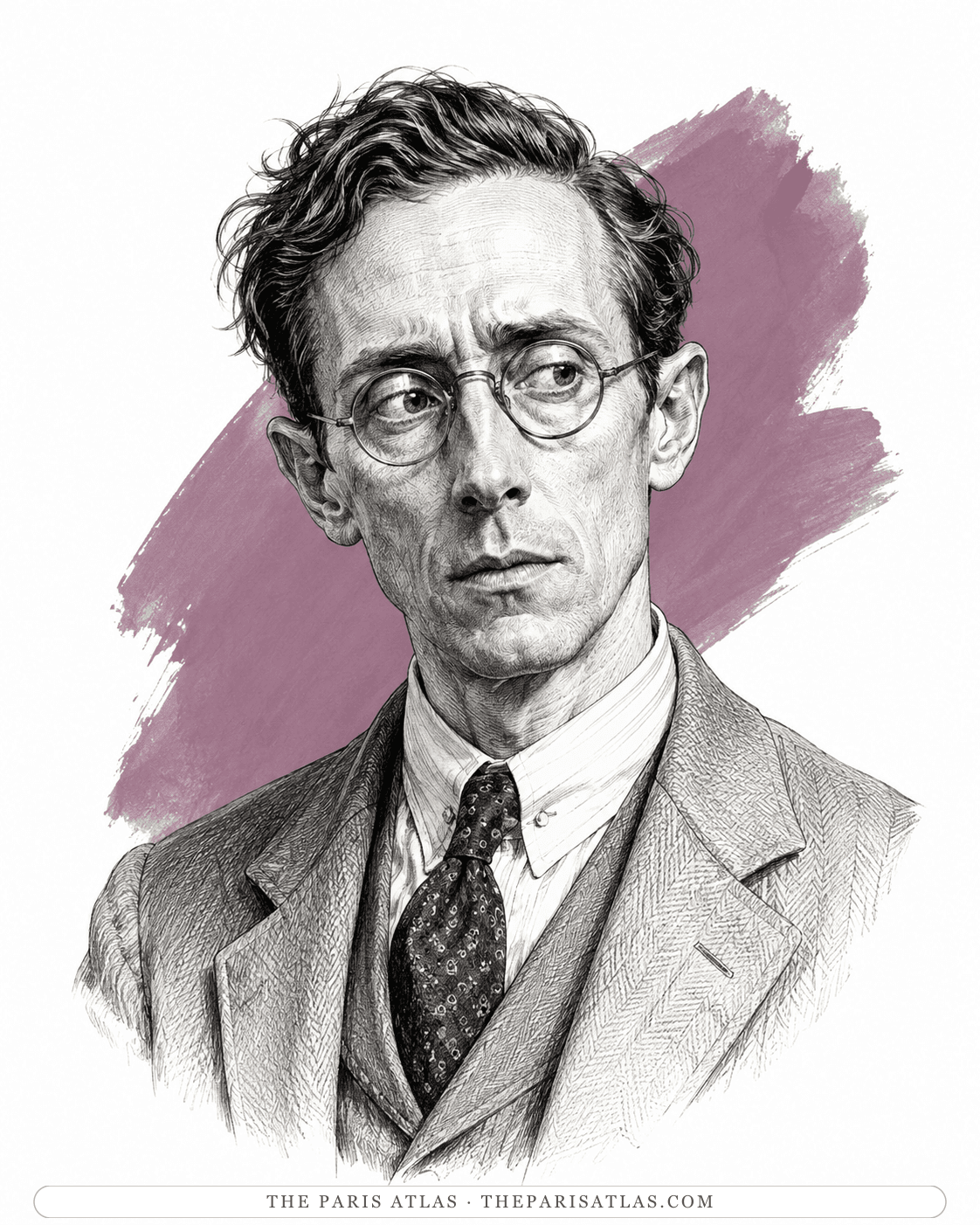
Albert McKisco
A scrawny, combative novelist of thirty who spends the first movement being socially unassimilable, and fights a duel that accidentally makes his career.
To be counted among serious writers. He gets his Ulysses review into the conversation at the first opportunity, and when he does not, his wife does it for him.
The book

At a glance
- American novelist on the Riviera; Violet's husband
- Thirty
- The first criticism of Ulysses to appear in America — as reported by his wife
- Antheil and Joyce
- Twelve years; a daughter who died at seven
- The beach, the Villa Diana dinner, the duel at the golf course, and a transatlantic liner years later
- Robert McAlmon, in part — the American expatriate writer, editor and publisher of the Paris modernist circle · 1895–1956 · Clifton, Kansas
Who they are in the book
Spoiler-freeMcKisco is thirty, scrawny, and freckle-and-red, and he is under an umbrella at the wrong end of the beach with the people Rosemary does not want to sit with. He is a writer. His wife announces that he wrote the first criticism of Ulysses to appear in America, and he supplies his own allegiances unprompted: Antheil's his man, Antheil and Joyce. He cannot swim — he has never quite worked out how people breathe — and he attempts a crawl that is mainly a stiff-armed batting of the Mediterranean.
At a dinner at the Villa Diana, the Divers' house above the sea, he is the one guest who fails to be assimilated, less from ill will than from a determination to sustain with wine the good spirits he arrived in. He lies back between the film director Earl Brady, at whom he directs withering remarks about the movies, and Mrs. Abrams, an elderly good sport from the same beach umbrella, to whom he says nothing, and stares at his host with devastating irony while trying to start a conversation across the table. Trying to break into other people's talk, the book says, is like shaking hands with a glove from which the hand has been withdrawn.
How Albert McKisco Is Portrayed
- Burning visiblyTold by his wife that he is nervous, he denies it while a grayish flush spreads over his face, dissolving all his expressions into a vast ineffectuality.
- The wife's worldThe book notes in one line that he has obviously created Violet's world and allows her few liberties in it. His main instruction to her in public is to drop the subject, for God's sake.
- Out of his depthHe decides Tommy Barban is the end product of an archaic world and therefore worthless, being drunk enough to forget that he is in awe of him. This is what leads directly to the trouble.
- The night beforeFound sitting on his bed at dawn with a glass of champagne, very puny and cross and white, having been writing and drinking all night. He hands Abe a long letter for his wife and worries aloud that he never got around to carrying insurance.
- The first thing he ever didHe says he does not see what it is about or why he is doing it. The book's verdict is flat: it was the first thing he had ever done in his life, and faced with a concrete fact he brought to it a vast surprise.
- Forty pacesReckless with brandy, he purses his lips in a whistle and points his long nose about nonchalantly. Both shots miss. He announces that he did it and wasn't yellow, is told he was pretty drunk, and is then sick in the bushes.
The duel makes him. Dick meets him again years later on a liner out of New York, labelled by the newspapers as its most precious cargo, and finds the annoying sense of inferiority simply gone. His novels are pastiches of the best writers of his time, softened and debased enough that readers find them easy to follow, and he is honest about it: he has done nothing yet and does not think he has any real genius, but if he keeps trying he may write a good book. The book comments that fine dives have been made from flimsier springboards.
The mechanism is named exactly. His success is founded psychologically upon the duel with Tommy Barban — a fight he did not understand, was drunk for, and vomited after — on the basis of which, as the memory withered, he built a new self-respect. He and Violet are invited to the captain's table and decline on the grounds that they cannot stand that bunch. Of everyone on the beach that first summer, he is the one who ends up better off.
If you like Tender Is the Night


If you like F. Scott Fitzgerald
Explore authors with a similar voice, perspective, and influence.
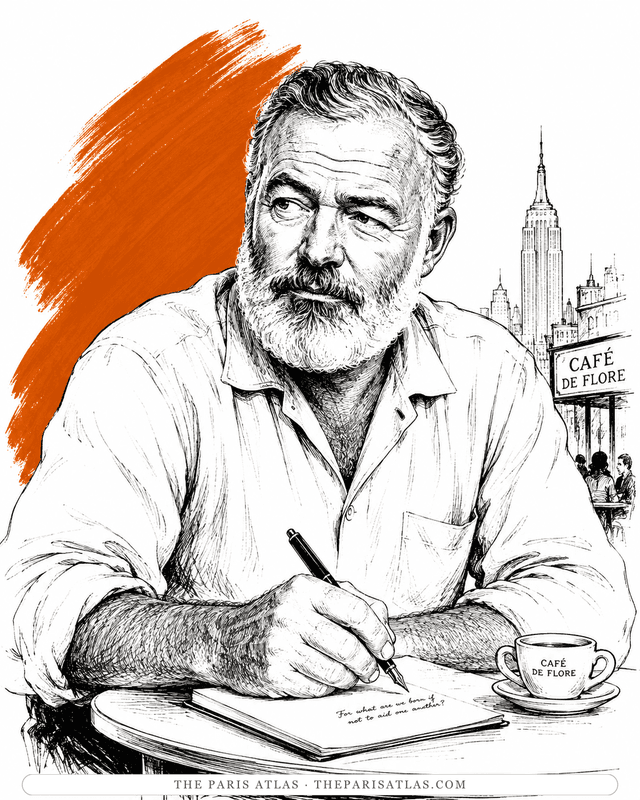
Ernest Hemingway
Fitzgerald vouched for him to Scribner's before they had met, then edited him better than he edited himself; the friendship's five rounds are chronicled in our journal.
View author
Henry Miller
The Brooklyn dropout who arrived in Paris broke at thirty-eight and wrote the exuberant, banned books that ended American censorship.
View author
Louis-Ferdinand Céline
The doctor of the Paris slums who wrote the century's blackest, funniest novel — and changed the sound of French prose.
View author