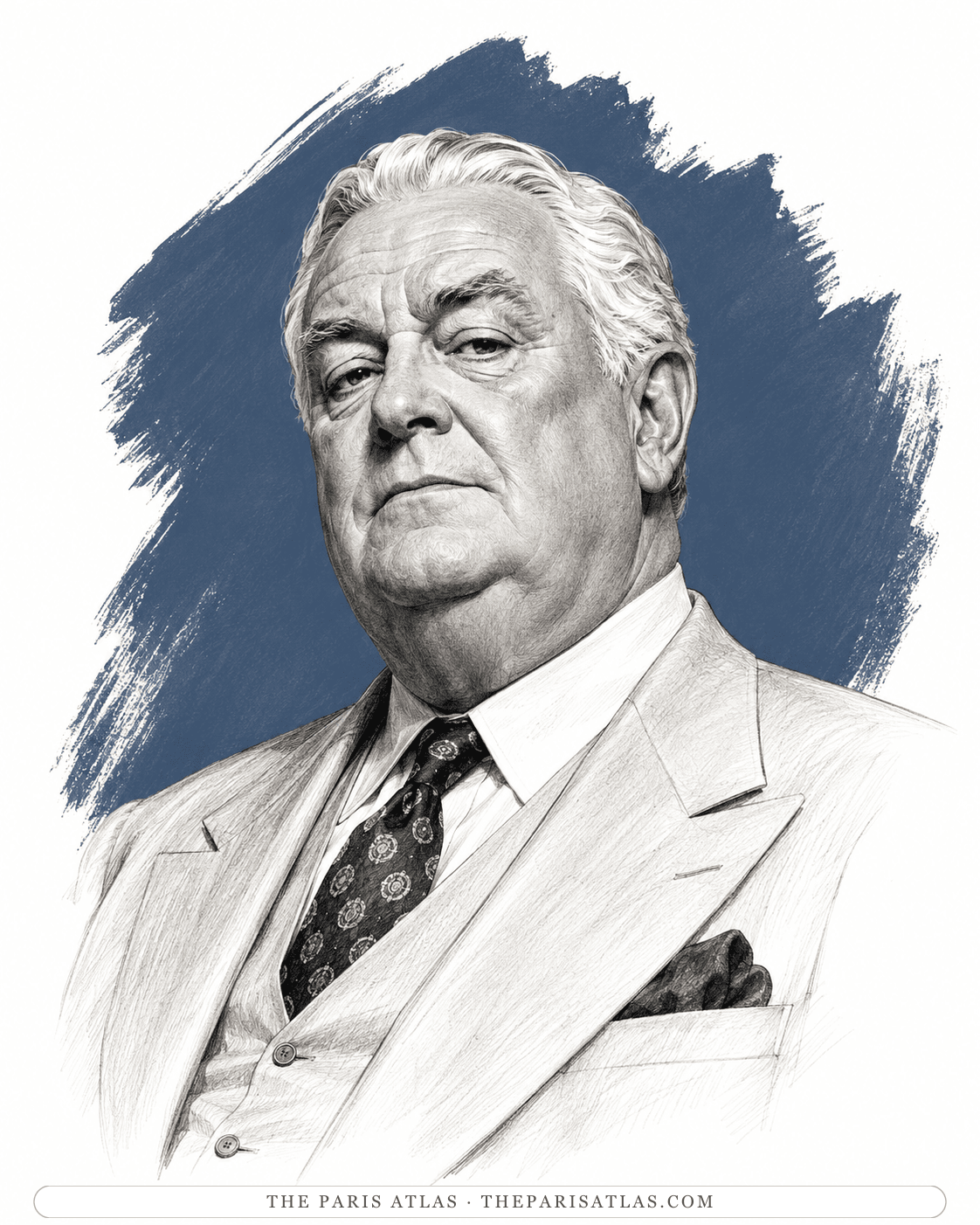
Devereux Warren
Nicole's father — a rich, charming Chicago widower who delivers his daughter to a Swiss clinic and tries very hard to leave before anyone asks him why she is ill.
To hand the problem to somebody qualified and go home. Told that his presence is indispensable, he objects that this is precisely what doctors are for, and that he has a hurry call to get back to America.
The book

At a glance
- Nicole and Baby's father, of the Warren family of Chicago
- Lausanne when the novel's flashback opens; the family places are Chicago and Lake Forest
- Göttingen — the consultation is conducted in German
- When Nicole was eleven
- Through the submarine blockade, on a United States cruiser
- Two scenes: the consultation at Dohmler's clinic, and a hotel room in Lausanne years later
Who they are in the book
Spoiler-freeHe arrives at Doctor Dohmler's clinic on the Zürichsee with his sixteen-year-old daughter and a nurse to walk her round the grounds while he has his consultation. He is strikingly handsome and looks less than forty: tall, broad, well-made, with large grey eyes sun-veined from rowing on Lake Geneva and the air of a man who has known the best of this world. Dohmler's private summary is un homme très chic. The conversation is in German, because Warren was educated at Göttingen. He is nervous, and there is whiskey on his breath.
His account of Nicole's illness has a shape Dohmler recognises immediately. There is no insanity in the family on either side. Her mother died when she was eleven and he has been father and mother both to her, which he says twice, with tears in the corners of his eyes. The first sign of trouble was an idea she got about a valet — Swiss, by the way — whom Warren dismissed at the time and now knows was innocent. He ran the submarine blockade to bring her to Switzerland on a United States cruiser, which he was able to arrange by a stroke of luck, and he mentions that money is no object.
How Devereux Warren Is Portrayed
- The handsome surfaceSprawling in tweeds with a sportsman's ease, entirely at home. Dohmler spends the interview wondering what the man is lying about, or failing that, what falsity is pervading the whole room.
- Twice overHe says he has been father and mother both to her, and then says it again in the same breath. The repetition is the first thing in the room that does not fit.
- The valetHis explanation of where it started, offered readily. Dohmler nods his venerable head as though, like Sherlock Holmes, he had expected a valet and only a valet at exactly this point.
- Money is no objectSaid apologetically, with a smile, as if it settled something. Dohmler agrees dryly that it certainly is not.
- The exitHe promises a second visit and does not come. After a fortnight Dohmler writes, then telephones the Grand Hotel at Vevey, and learns from the valet that Mr. Warren is packing to sail for America.
- The breakdownGot to the telephone and given an ultimatum, he yields. Half an hour after his second arrival his fine shoulders are shaking inside his easy-fitting coat and his eyes are redder than the sun on Lake Geneva.
What he finally says is the fact the whole novel is built over. Dohmler and Franz enter the diagnosis on her card in French, with the note that her fear of men is a symptom of the illness and is not at all constitutional.
He reappears once, at fifty, dying of a liver that has stopped restoring itself. In a darkened Lausanne suite, nursed by a nun, an emaciated hand stirring a rosary on the sheet, he tells Dick that a man gets a lot of understanding at the end of life. He says he has been a bad man and knows how little right he has to see Nicole, and asks for ten minutes so that he can go happy out of the world. Dick puts the decision to a colleague.
It is the pattern of his whole life in one gesture: he gets close enough to confession and consequence to be seen approaching them, and then leaves before either can land.
If you like Tender Is the Night


If you like F. Scott Fitzgerald
Explore authors with a similar voice, perspective, and influence.
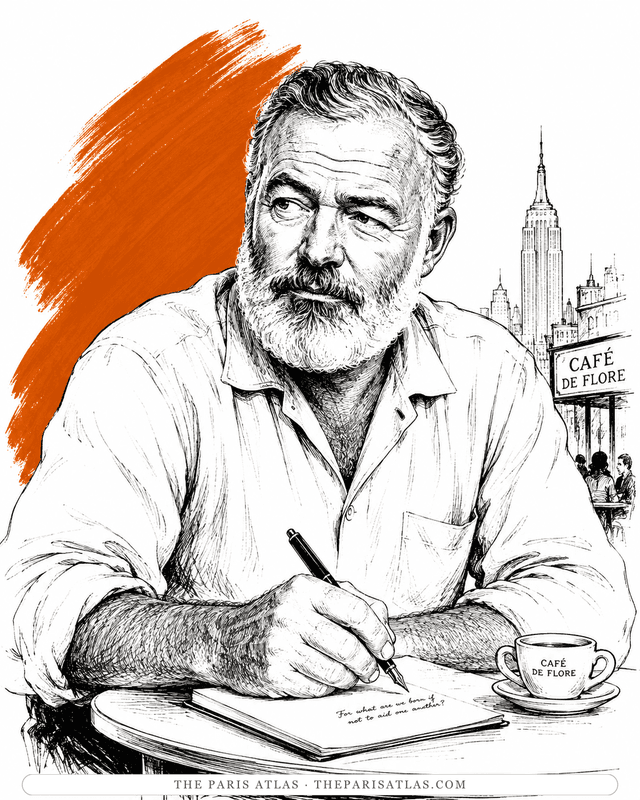
Ernest Hemingway
Fitzgerald vouched for him to Scribner's before they had met, then edited him better than he edited himself; the friendship's five rounds are chronicled in our journal.
View author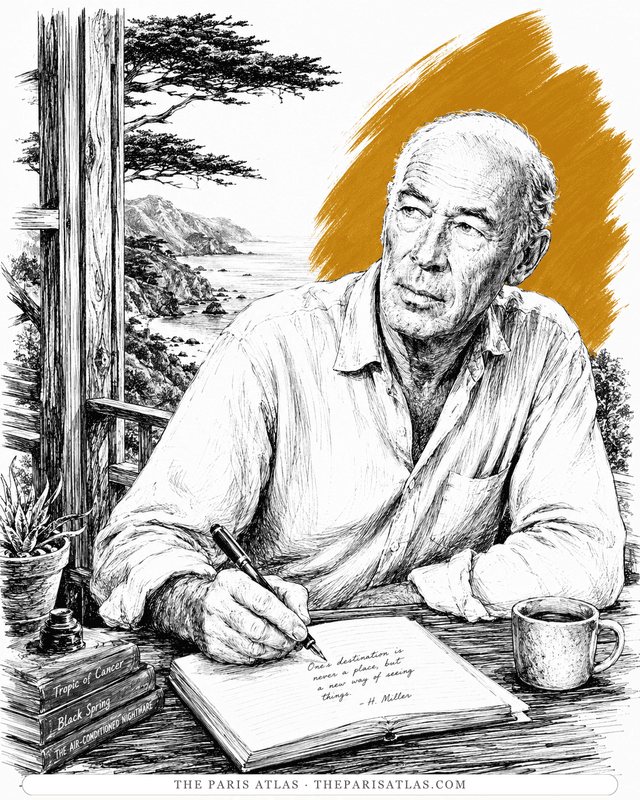
Henry Miller
The Brooklyn dropout who arrived in Paris broke at thirty-eight and wrote the exuberant, banned books that ended American censorship.
View author
Louis-Ferdinand Céline
The doctor of the Paris slums who wrote the century's blackest, funniest novel — and changed the sound of French prose.
View author