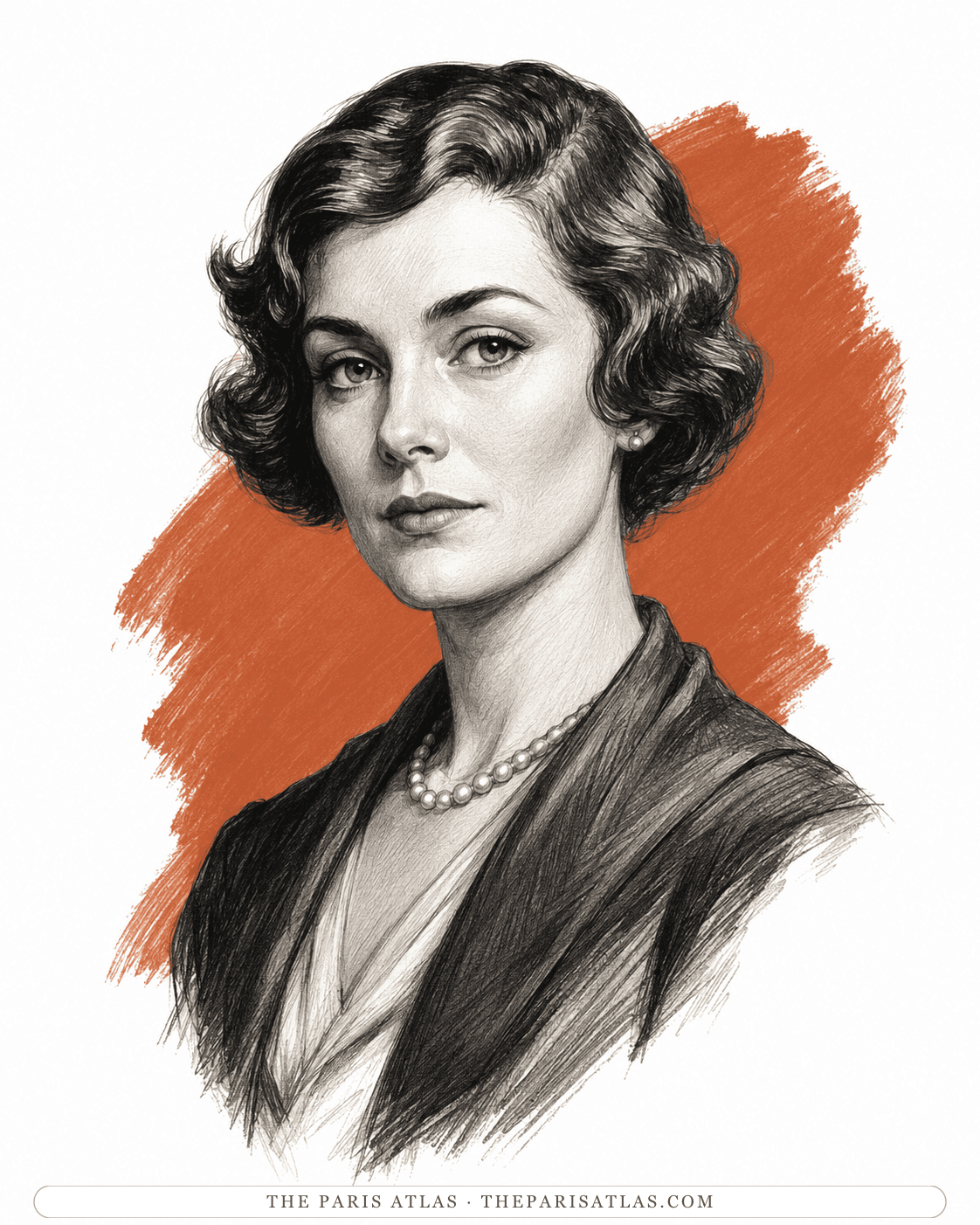
Mary North
Abe's wife — very tanned, very merry, and quietly managing a husband's drinking; later the Contessa di Minghetti.
To sing. She is going to Munich to work at it, on the understanding that when she and Abe are both working again there will be nothing they cannot do.
The book

At a glance
- Abe North's wife; later the Contessa di Minghetti
- A room over a paperhanger's shop in Newark, New Jersey
- A journeyman paperhanger and President Tyler
- Munich, to study singing — while Abe sails for America
- Conte di Minghetti — a papal title; the money comes from manganese deposits in southwestern Asia
- The first Riviera summer, the Paris chapters, the Minghetti household, and the last movement at Antibes
Who they are in the book
Spoiler-freeMary North is the woman Rosemary met on the raft on her first morning: very tanned, with a smile that arrives as a rakish gleam, and a face so merry it is impossible not to smile back. She has straight dark hair brushed back until it meets a natural cascade, and she is the one who names the McKiscos 'Mr. and Mrs. Neverquiver'. She is also quiet — so quiet, apart from frequent laughter, that Rosemary learns almost nothing about her over several weeks.
What the quiet is doing becomes clear in Paris. 'We'll turn in early to-night, Abe, after this drink,' she says, her voice light but holding a flicker of anxiety, and she adds that he doesn't want to be poured on the boat. She speaks about their plans — he will write music in America, she will study singing in Munich — like someone tired of saying things that have stopped meaning anything. Her father was a journeyman paperhanger and she is a descendant of President Tyler, and she is one of three women at a Paris lunch table the book uses to sketch the whole flux of American life.
How Mary North Is Portrayed
- The teethThe book keeps returning to her mouth: the whole area around her parted lips is a lovely little circle of delight, and her smile is a set of white mirrors you smile back into.
- Mr. and Mrs. NeverquiverHer name for the McKiscos, delivered on the beach with a gleam, immediately after coming in from a swim. She grants that they are very attractive and then says she does not think they are attractive.
- The light voiceHer management of Abe is done entirely in a cheerful register with the anxiety just audible underneath. She never raises it and it never works.
- The plansShe recites the future — his score, her singing — in the tone of someone repeating a formula. The book says she speaks as if the course she and her husband follow has become merely an intention.
- The paperhanger's daughterHer origins are given exactly, and without apology: a journeyman paperhanger for a father, President Tyler somewhere behind that, and a room over a shop in Newark to start from.
- Grand, laterWhen the Divers next meet her she has a major-domo with a staff, turbaned retainers on motorcycles, and two half-veiled attendants who salaam at Nicole and make her jump. Mary finds the whole greeting faintly comic too, and says so with an apologetic gesture.
Her remarriage is the book's one straightforwardly upward story, and it is told with a raised eyebrow. The journey from the room over the paperhanger's shop ends with the villagers watching her household's arrival with the awe once reserved for Byron, and the Divers' splendour looking like pioneer simplicity beside it. The visit is cut short over a quarrel about a bathtub and a sick child, which is a small thing that ends a long friendship.
She and Lady Caroline Sibly-Biers are later arrested at Antibes . Dick gets Gausse, the old hotel-keeper, out of bed, empties his cash drawer, and buys the matter closed. Mary flings herself at Dick's stomach imploring him to do something; Lady Caroline calls it merely a lark. Afterward Mary tells Dick he always knew more about her than anyone, which is true, and is not enough.
If you like Tender Is the Night


If you like F. Scott Fitzgerald
Explore authors with a similar voice, perspective, and influence.

Ernest Hemingway
Fitzgerald vouched for him to Scribner's before they had met, then edited him better than he edited himself; the friendship's five rounds are chronicled in our journal.
View author
Henry Miller
The Brooklyn dropout who arrived in Paris broke at thirty-eight and wrote the exuberant, banned books that ended American censorship.
View author
Louis-Ferdinand Céline
The doctor of the Paris slums who wrote the century's blackest, funniest novel — and changed the sound of French prose.
View author