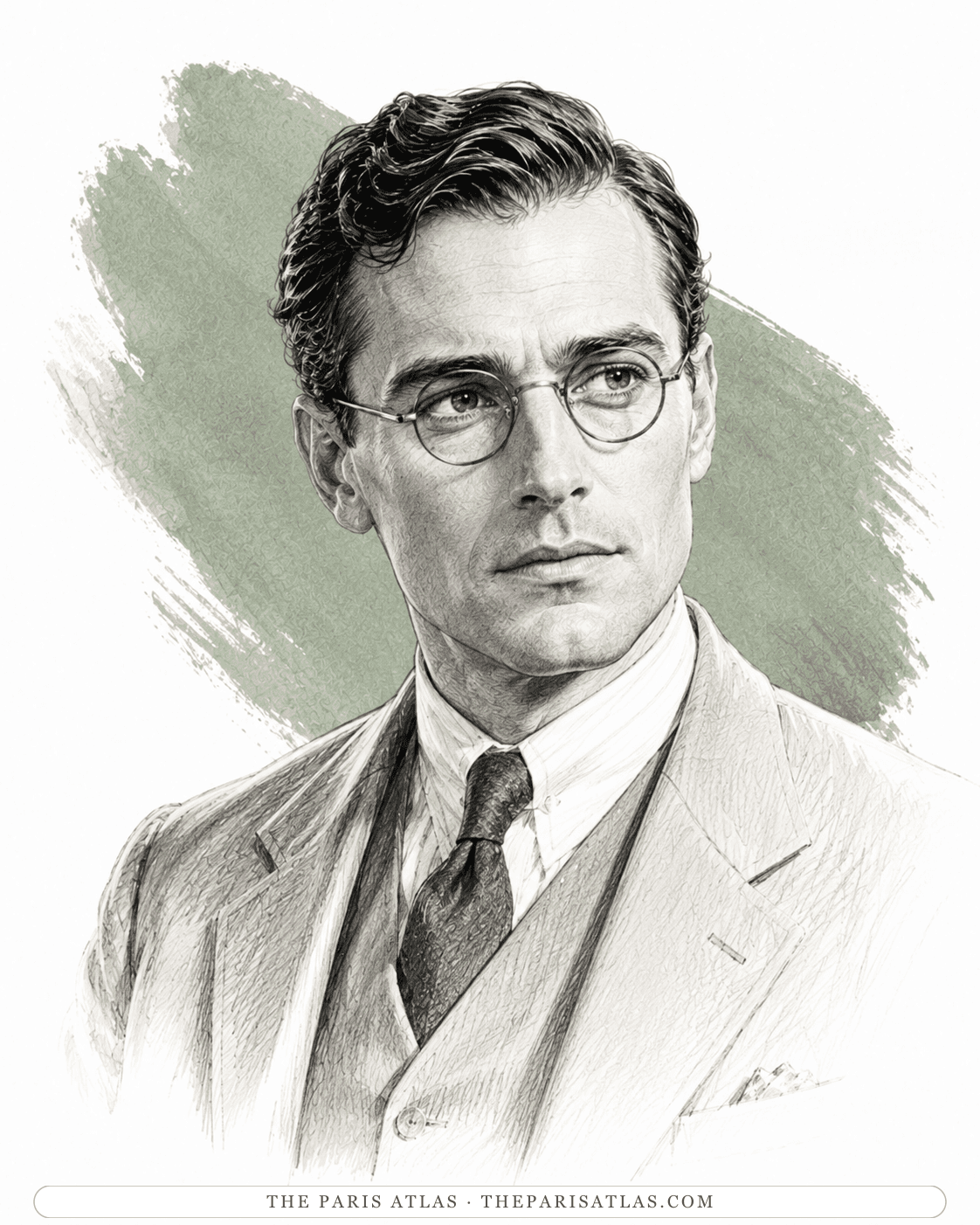
Franz Gregorovius
The third of the Gregoroviuses — Dick's Swiss colleague, later his clinic partner, and finally the man who has to tell Dick Diver the arrangement is over.
A clinic of his own to run properly. He wants the standing his name is supposed to carry, and he is willing to spend years of steady administration to get it.
The book

At a glance
- Swiss psychiatrist; resident pathologist under Dohmler, later Dick's partner in the clinic on the Zugersee
- A Vaudois — a few years older than Dick
- The third Gregorovius in psychiatry; his grandfather taught Kraepelin
- Doctor Gregory, by the English and American patients
- Kaethe Gregorovius; they live on the clinic grounds with their children
- The Zurich chapters, Gstaad, and the clinic years
- Oscar Forel, in part — director of Les Rives de Prangins, the Swiss clinic where Zelda Fitzgerald was treated in 1930–31 · 1891–1982 · Morges, Switzerland
Who they are in the book
Spoiler-freeFranz is resident pathologist at Doctor Dohmler's clinic on the Zürichsee, a Vaudois by birth and a few years older than Dick. The book gives him a dark and magnificent aspect of Cagliostro offset by holy eyes, and then gives him his lineage: he is the third of the Gregoroviuses, and his grandfather instructed Kraepelin when psychiatry was just emerging from the darkness of all time. In personality he is proud, fiery, and sheep-like, and he fancies himself as a hypnotist. The book's verdict is that if the original genius of the family has grown a little tired, Franz will without doubt become a fine clinician.
It is Franz who hands Dick the Nicole case, having read her first letters as a matter of course and then stopped out of delicacy once the tone changed — by which point, as he says, it had really become Dick's case. He has charge of most of the English and American patients, who call him Doctor Gregory. Years later he proposes that the two of them buy a clinic together: Franz supplying the administration and the institutional ambition, Dick supplying the reputation. For a while it looks like the permanent structure Dick's talent has never had.
How Franz Gregorovius Is Portrayed
- The official bassoHe has a voice for professional occasions and knows it. Dick decides the sonorous cadences that discipline a nurse or a patient come not from his nervous system but from a tremendous and harmless vanity.
- Doctor GregoryWhat the English and American patients shorten him to. He reports it without complaint, and Nicole, at her lowest, says flatly that she hates Doctor Gregory.
- A rich person's clinicHe is unembarrassed about the economics. They have shell-shock cases who merely heard an air raid from a distance and a few who merely read newspapers, and at a rich person's clinic one does not use the word nonsense.
- The warningWhen Dick admits he has thought about marrying Nicole, Franz does not hesitate: devote half your life to being doctor and nurse and all — never. He knows what these cases are, and reckons it finishes well one time in twenty.
- The chosen smaller worldHis scientific heredity might have given him a wider life, and the book says he seems to have deliberately picked the standpoint of a humbler class — a choice it says is typified by his selection of a wife.
- Most at home in safetyHe is happiest in a somewhat stuffy security from which he can look down on the broken rich he re-educates. He is forty when Dick sees him at Gstaad, and his healthy maturity carries a set of pleasant official manners.
The partnership ends because Franz finally says what Kaethe said first. He confronts Dick about the drinking and the unreliability, . There is no triumph in it and the book does not stage it as a defeat inflicted on Dick.
What Franz has is not brilliance but durability, and in the end that is what the work requires. The clinic goes to the lesser partner because the lesser partner can still turn up in the morning after the other man can no longer sustain being Doctor Diver.
If you like Tender Is the Night


If you like F. Scott Fitzgerald
Explore authors with a similar voice, perspective, and influence.
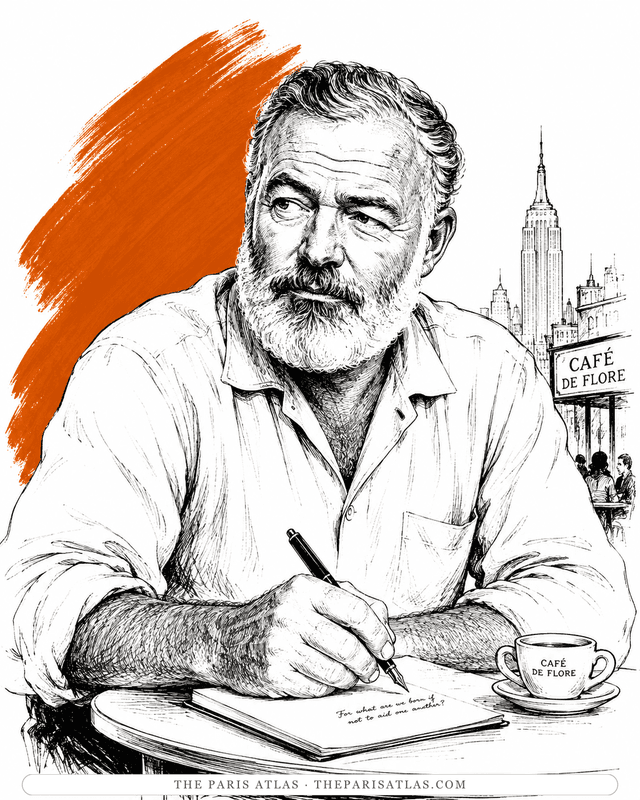
Ernest Hemingway
Fitzgerald vouched for him to Scribner's before they had met, then edited him better than he edited himself; the friendship's five rounds are chronicled in our journal.
View author
Henry Miller
The Brooklyn dropout who arrived in Paris broke at thirty-eight and wrote the exuberant, banned books that ended American censorship.
View author
Louis-Ferdinand Céline
The doctor of the Paris slums who wrote the century's blackest, funniest novel — and changed the sound of French prose.
View author