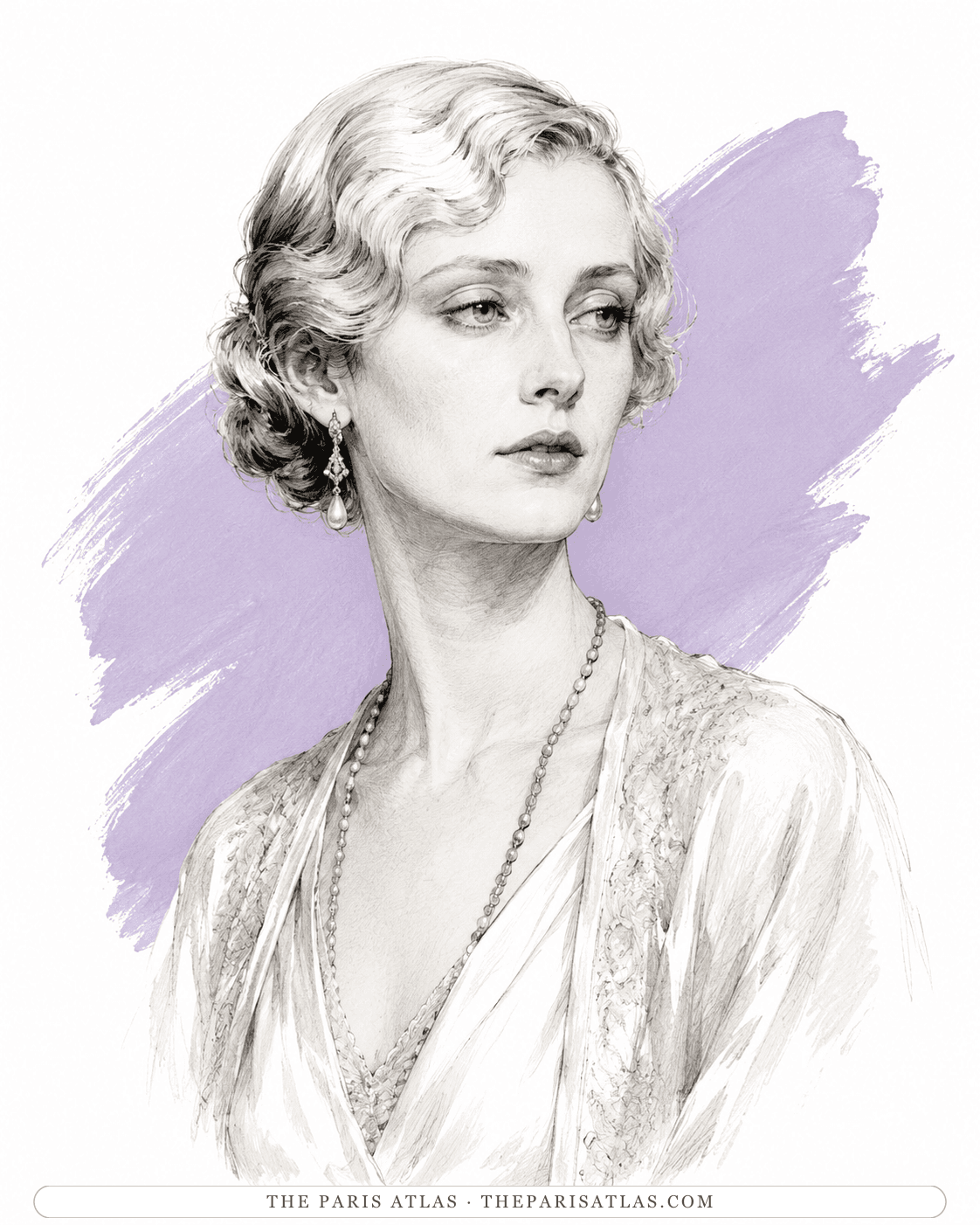
Nicole Diver
The heiress at the center of the marriage-as-case — a fictional composite, not Zelda under another name, though Nicole's illness, her clinics, and the doctor-husband bound to her were transposed from the Fitzgeralds' own marriage.
The ordinary life she inventories in her own words — the tranquil beach, her husband, the two children, a few friends who like her — and to be trusted to keep hold of it.
The book

At a glance
- Nicole Diver, born Nicole Warren of Chicago — wife of Dick Diver, mother of Lanier and Topsy
- Every movement — the beach and the Villa Diana, Paris, the Swiss clinics of the flashback, and the last summer on the Riviera
- The Villa Diana, built above the sea at the hill village of Tarmes
- A self-made American capitalist and a Count of the House of Lippe-Weissenfeld
- Love birds, a rubber alligator, a guest bed, a gold-and-ivory travelling chess set, and three yards of cloth the colour of prawns
- On the beach at midday, pearls over a sunburned back
- Zelda Fitzgerald (née Sayre) — in part; Nicole is a composite, her surface borrowed from Sara Murphy · 1900–1948 · Montgomery, Alabama
Who they are in the book
Spoiler-freeRosemary sees her first on the beach — a sun-browned back bent over the sand, a string of pearls worn into the sea air — and takes her for the still center of the most attractive world she has ever entered. Nicole is the quiet half of the Divers: mistress of the Villa Diana and its terraced garden above the beach, mother of Lanier and Topsy, keeper of the lists and schedules that run the household's shining machinery while Dick runs its charm. She speaks less than anyone in the circle and is watched more — by Rosemary with worship, by the crowd with speculation, and by her husband with an attention the first movement lets you mistake for simple devotion.
She is also the richest person in the book, and the novel is exact about what that means: born Nicole Warren of the Chicago Warrens, she moves through shops and seasons trailed by a whole economy the famous Paris passage stops to tally. The summary's open secret — that this marriage is also a case, husband and psychiatrist the same man — is hers to carry; what the book withholds for most of its length is how the arrangement began, and which of the two of them it is slowly consuming.
How Nicole Diver Is Portrayed
- The pearlsThe first image the book gives her: pearls over a sunburned back on the beach at midday — composure worn casually, in a setting where no one else would risk them.
- The gardenThe terraced garden at the Villa Diana is her territory; the book walks her through it alone, at work among the vines and flowers, before it lets her say very much.
- The buyingIn Paris she purchases from a list that runs to two pages, and the novel pauses for its famous audit — the trains, factories, and laboring men whose work streams toward her purchases. Wealth, in this book, is a system that produces a Nicole.
- The reserveHard, lovely, and guarded: her talk in company is brief and slightly aslant, and the book keeps noting what she chooses not to say.
- The glimpsesOnce or twice in the dazzled first movement something surfaces and is quickly curtained — a scene in a bathroom, a look held too long — the wrongness at the center that Rosemary's eyes can't yet read.
- The lineageGranddaughter of a self-made American capitalist on one side and of a Count of the House of Lippe-Weissenfeld on the other. The book gives the pedigree in one sentence and lets the two halves explain most of her.
The flashback gives her history its true shape: Nicole Warren at sixteen, committed to Dr. Dohmler's clinic on the Zürichsee , her cure built partly out of the letters she writes to a kind young American doctor — and the Warren money, steered by her sister Baby, converting the doctor into a husband the family can own. The relapses are the book's most harrowing scenes: the bathroom at the Villa Diana party, the breakdown at the fair, the day she seizes the steering wheel with the children in the car. Then the seesaw completes — healing into her own hard Warren clarity, she takes Tommy Barban as a lover and then a husband, and the divorce is almost gentle: the case closed, the doctor discharged, Nicole watching from the beach she owns as Dick blesses it and goes.
The Zelda in Nicole is documented, and partial. Fitzgerald transposed the clinics from Zelda's breakdowns at Prangins and Phipps, and biographers since Nancy Milford's Zelda (1970) have traced Nicole's clinic letters to the ones Zelda wrote him from her own care — a borrowing Zelda had already answered in advance: Save Me the Waltz (1932) is the same marriage told first, from her side of the table. But the composite cuts both ways: the trauma behind Nicole's illness is invented, the poise is Sara Murphy's, and the ending is the greatest liberty of all — Fitzgerald wrote Nicole a complete recovery, the one outcome Zelda was never granted. She remained in and out of care and died in the fire at Highland Hospital in 1948, eight years after Scott.
If you like Tender Is the Night


If you like F. Scott Fitzgerald
Explore authors with a similar voice, perspective, and influence.
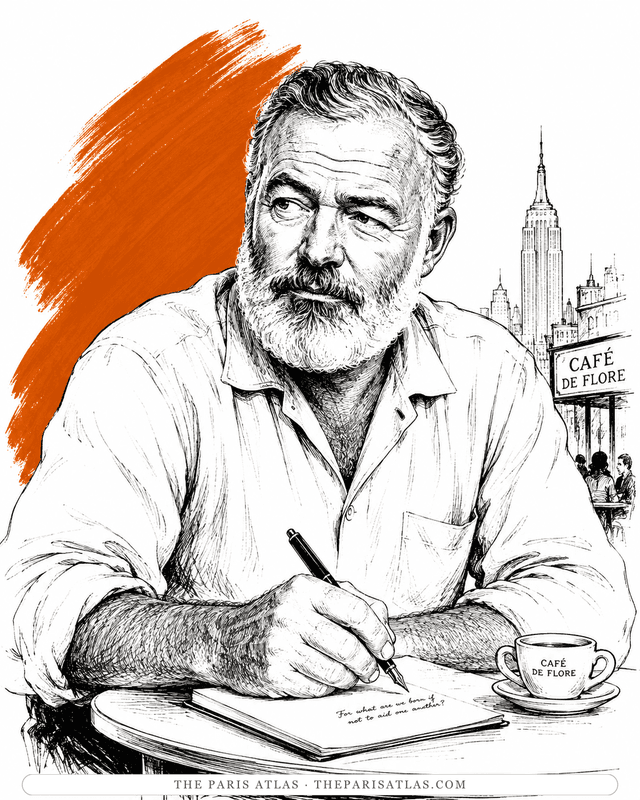
Ernest Hemingway
Fitzgerald vouched for him to Scribner's before they had met, then edited him better than he edited himself; the friendship's five rounds are chronicled in our journal.
View author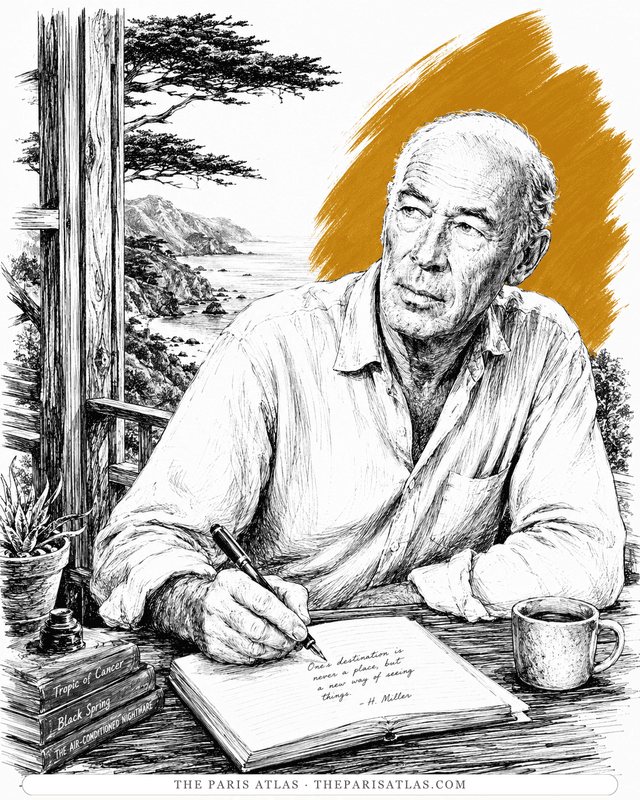
Henry Miller
The Brooklyn dropout who arrived in Paris broke at thirty-eight and wrote the exuberant, banned books that ended American censorship.
View author
Louis-Ferdinand Céline
The doctor of the Paris slums who wrote the century's blackest, funniest novel — and changed the sound of French prose.
View author