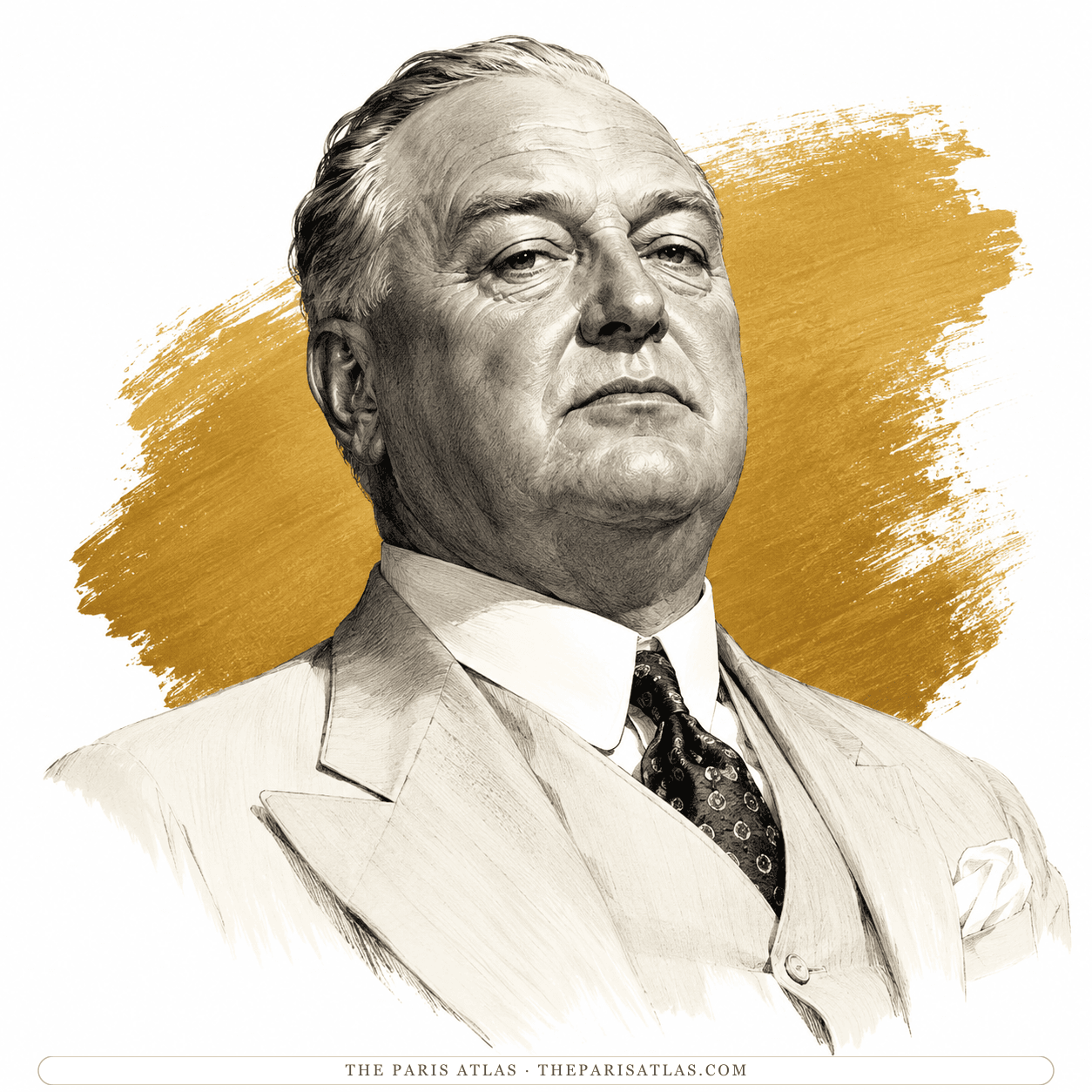
Royal Dumphry
A tow-headed young man from the beach group who remembers the Villa Diana dinner as the most civilized gathering he has known — and who years later says the one thing Dick Diver most needed not to hear.
To be kept, and to be counted in — and to have the one perfect evening of his life acknowledged by the man who gave it.
The book

At a glance
- Young expatriate in the original beach group at Gausse's
- Campion at first; later seen in Lausanne with a young man named Francisco
- The Villa Diana dinner as the most civilized gathering he has ever known
- The beach and the Villa Diana dinner, and a hotel veranda in Lausanne years later
Who they are in the book
Spoiler-freeRoyal Dumphry is introduced on the beach in the same breath as the McKiscos and the elderly Mrs. Abrams: a tow-headed young man whom the book describes with a deliberately androgynous prettiness, and whose girl's comeliness it says is less startling in the pleasure world of evening. Campion is attached to him and Royal's attention has gone elsewhere. At a dinner at the Villa Diana, the Divers' house above the sea, he sits next to a fellow guest, Mrs. Abrams, and puts Rosemary through an inexhaustible curiosity about Hollywood; on the beach he and Campion are the two young men Dick spots reading the Book of Etiquette together.
He reappears many years later on a hotel veranda in Lausanne, swaying out of the shrubbery towards Dick and a young man named Francisco with feeble resolution. Dick's private reaction is that he has stirred up a nest. Royal wants to say only one thing before Dick goes: that he has never forgotten that evening in the garden, that it is one of the finest and happiest memories of his life, and that he has always thought of it as the most civilized gathering of people he has ever known.
How Royal Dumphry Is Portrayed
- Tow-headedThe book's first word for him, and it keeps returning to his looks rather than anything he says. He is someone other characters notice, want, discuss, or resent.
- Don't be too ghastlyHis first line on the beach is a joke about Mrs. Abrams being a plot in herself, and Campion shakes his monocle at him and tells him not to be too ghastly for words.
- Curiosity about HollywoodAt the Villa Diana he is the guest Rosemary has to answer patiently while she waits for Dick, and the curiosity is described as inexhaustible.
- No laggardShy for about a sentence, and then, in the book's phrase, no laggard with his pick and spade. Francisco is ashamed of him and joins Dick in trying to freeze him away.
- The finest memoryWhat he has carried for a decade is one dinner in somebody else's garden. He offers it as a gift and Dick receives it in a crab-like retreat toward the nearest door.
- Same physicianThe reason he knows what he knows, and the reason he says it: he and the dying man share a doctor. He begins to suspect he should not have mentioned it only after he has.
His accidental disclosure restarts the worst machinery in the book. He tells Dick, sympathetically and by mistake, that — information Dick did not have, and which pulls him straight back into the role of the man who manages the Warren family's damage. He mentions it because they use the same doctor.
Then he goes. Like Campion, he is used to carry emotional and narrative freight and granted very little inner life of his own, and the last thing the book gives him is the memory of an evening in 1925 that the man who hosted it can barely stand to discuss.
If you like Tender Is the Night


If you like F. Scott Fitzgerald
Explore authors with a similar voice, perspective, and influence.

Ernest Hemingway
Fitzgerald vouched for him to Scribner's before they had met, then edited him better than he edited himself; the friendship's five rounds are chronicled in our journal.
View author
Henry Miller
The Brooklyn dropout who arrived in Paris broke at thirty-eight and wrote the exuberant, banned books that ended American censorship.
View author
Louis-Ferdinand Céline
The doctor of the Paris slums who wrote the century's blackest, funniest novel — and changed the sound of French prose.
View author