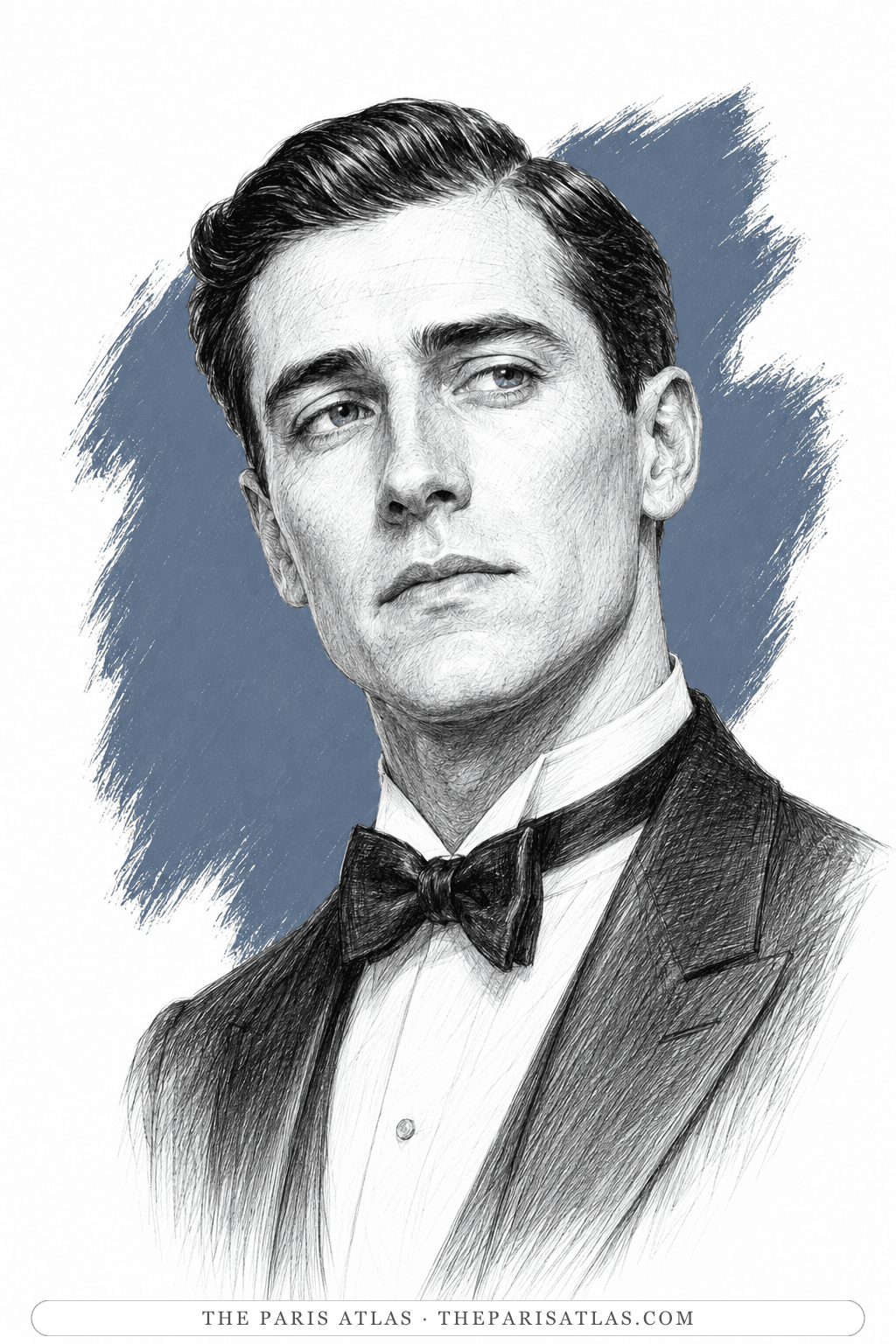
Anthony Patch
The novel's main character: a Harvard-educated New Yorker of twenty-five who does not work, lives on a small inherited income, and expects to inherit his grandfather's millions.
To go on living exactly as he does, without a job, until his grandfather dies and the money arrives. He states the position plainly to Gloria the first time they talk properly: 'I do nothing, for there's nothing I can do that's worth doing.'
The book

At a glance
- The main character of all three parts, from 1913 to the early 1920s
- Twenty-five when the novel opens; thirty-three near the end, and by his own account in the mirror he looks forty
- Anthony Comstock Patch, named by his grandfather after the anti-vice campaigner Anthony Comstock. He dropped the middle name at Harvard
- Only grandson of Adam Patch of Tarrytown. His father, Adam Ulysses Patch, and his mother, the singer Henrietta Lebrune, were both dead by the time he was eleven
- An apartment on Fifty-second Street in New York, then a rented gray house at Marietta in the Connecticut countryside, then progressively cheaper New York flats
- None, apart from a few weeks selling bonds for Wilson, Hiemer and Hardy, and a wartime spell as a private in a Southern training camp
Who they are in the book
Spoiler-freeAnthony Patch is the main character of The Beautiful and Damned, a novel F. Scott Fitzgerald published in 1922. He is twenty-five when the book opens in 1913. He lives alone in a rented apartment on Fifty-second Street in New York, he has been educated at Harvard and in Europe, and he does not have a job. His own money is the interest on what his mother left him, slightly under seven thousand dollars a year. The fact that matters to everyone who meets him is a different one: he is the only grandson of Adam Patch, a Wall Street millionaire, and the fortune is expected to come to him.
He tells people he is writing a history. His grandfather asks what it will be about, and Anthony says the Middle Ages, then privately decides on the popes of the Renaissance instead. A year later he has made lists of authorities and tried out chapter titles, and the narrator states the result without softening it: 'not one line of actual writing existed at present, or seemed likely ever to exist.'
Then he meets Gloria Gilbert, the cousin of his friend Richard Caramel, and the rest of the novel is their marriage. Anthony is charming, well read, funny in company, and almost completely unable to make himself do anything. He is also afraid — of noises at night, of illness, of being alone — and his wife discovers it within a month of the wedding.
How Anthony Patch Is Portrayed
- What he lives onHis income is just under seven thousand dollars a year, the interest on money inherited from his mother, and his grandfather considers that sum sufficient. Every Christmas the old man sends a five-hundred-dollar bond, which Anthony usually sells, being 'always a little, not very, hard up.'
- The book he never writesAfter his grandfather tells him to accomplish something, Anthony announces a history of the Middle Ages, then decides on the popes of the Renaissance. He borrows half a dozen books on the Italian Renaissance from the public library on Richard Caramel's card and never opens them; they sit on his desk running up twelve cents a day in fines.
- His bathroomThe room he is proudest of in the apartment. Framed on the walls are photographs of four stage actresses of the day, and between two of them hangs a print of a snowfield under a cold sun, which Anthony says stands for the cold shower. The bathtub is fitted with a bookholder.
- Orphaned by elevenHis mother, a Boston concert contralto, died when he was five. His father died in a hotel in Lucerne when Anthony was eleven, on the one trip abroad the two of them ever took together. What the boy took away from it was a horror of death, the habit of reading in bed to calm himself, and a stamp collection that ate his allowance every month.
- The dandy at HarvardHe arrived young, lived alone in a high room, and spent freely: first editions of Swinburne, Meredith, and Hardy, a yellowed autograph letter of the poet John Keats that he later found he had been badly overcharged for, and a collection of silk pajamas and dressing-gowns he paraded in privately before his own mirror. He graduated in 1909, aged twenty.
- The night in the San Francisco hotelA week into the marriage a shutter rattles at the window after midnight. Anthony leaps out of bed, shouts 'Who's there?', and telephones the desk. The night clerk arrives with three bell-boys and the house detective, opens the window and points out that it is a sheer fall of fifty feet and the noise was the wind. Gloria, hiding under the sheet, works out that her husband never went near the window.
- The afternoon on the station platformDrunk after an afternoon of Scotch at a friend's house, he decides to stop Gloria taking the train home and holds her by both arms on the platform while the other passengers watch. She calls him a coward, then bites his thumb until it bleeds. He gets what he wanted and never afterward believes it was worth it.
- Drinking as a daily factBy the last stretch of the novel he drinks at a place called Sammy's on Forty-third Street, where you knock and are looked over through a grating. Fitzgerald puts it in one line: 'Anthony, the courteous, the subtle, the perspicacious, was drunk each day.'
Old Adam Patch arrives unannounced at the gray house in the middle of a very wet party, says five words to his secretary and leaves. He dies that November and the will leaves Anthony nothing. The lawsuit to overturn it runs four and a half years. Anthony is drafted, spends the war at a training camp in the South and a camp on Long Island, is broken from corporal after an affair with a local girl named Dorothy Raycroft, and comes home to shabbier and shabbier rooms.
The end comes in two pieces. Outside a dance restaurant on Forty-fifth Street, drunk and trying to borrow money, he insults Joseph Bloeckman, the film executive who once wanted to marry Gloria, and is knocked down, thrown into the street and robbed of a tooth and his watch. Weeks later, on the day the appeal is decided, an old girlfriend turns up at the apartment and he throws a chair at her. Gloria and Richard Caramel come home to find him sitting on the bedroom floor sorting his boyhood stamps, telling them to get out or he will tell his grandfather.
They win. Thirty million dollars, and Edward Shuttleworth, who lost it, shoots himself in a hotel room. The last page has Anthony wrapped in a rug in a wheel chair on the deck of a liner bound for Europe, a private physician in attendance, crying quietly and telling himself: 'It was a hard fight, but I didn't give up and I came through!'
If you like The Beautiful and Damned


If you like F. Scott Fitzgerald
Explore authors with a similar voice, perspective, and influence.
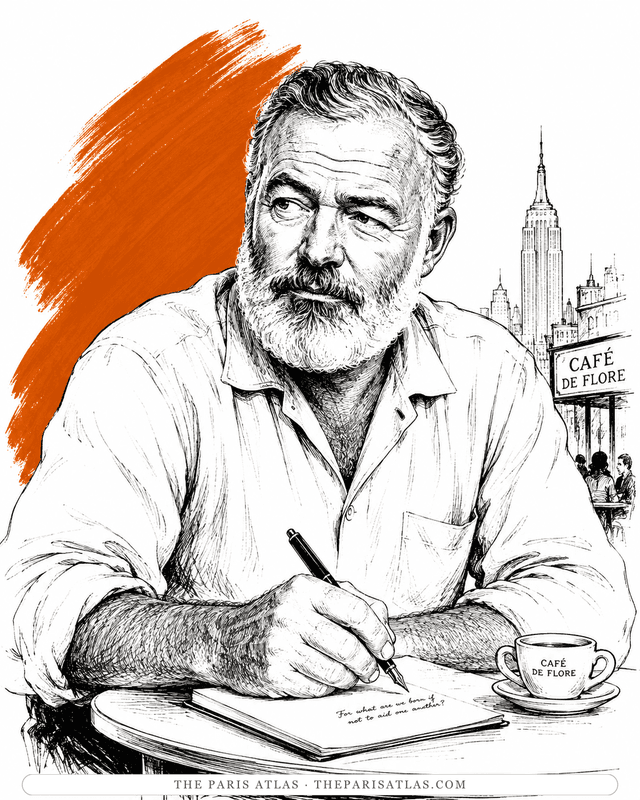
Ernest Hemingway
Fitzgerald vouched for him to Scribner's before they had met, then edited him better than he edited himself; the friendship's five rounds are chronicled in our journal.
View author
Henry Miller
The Brooklyn dropout who arrived in Paris broke at thirty-eight and wrote the exuberant, banned books that ended American censorship.
View author
Louis-Ferdinand Céline
The doctor of the Paris slums who wrote the century's blackest, funniest novel — and changed the sound of French prose.
View author