Tana
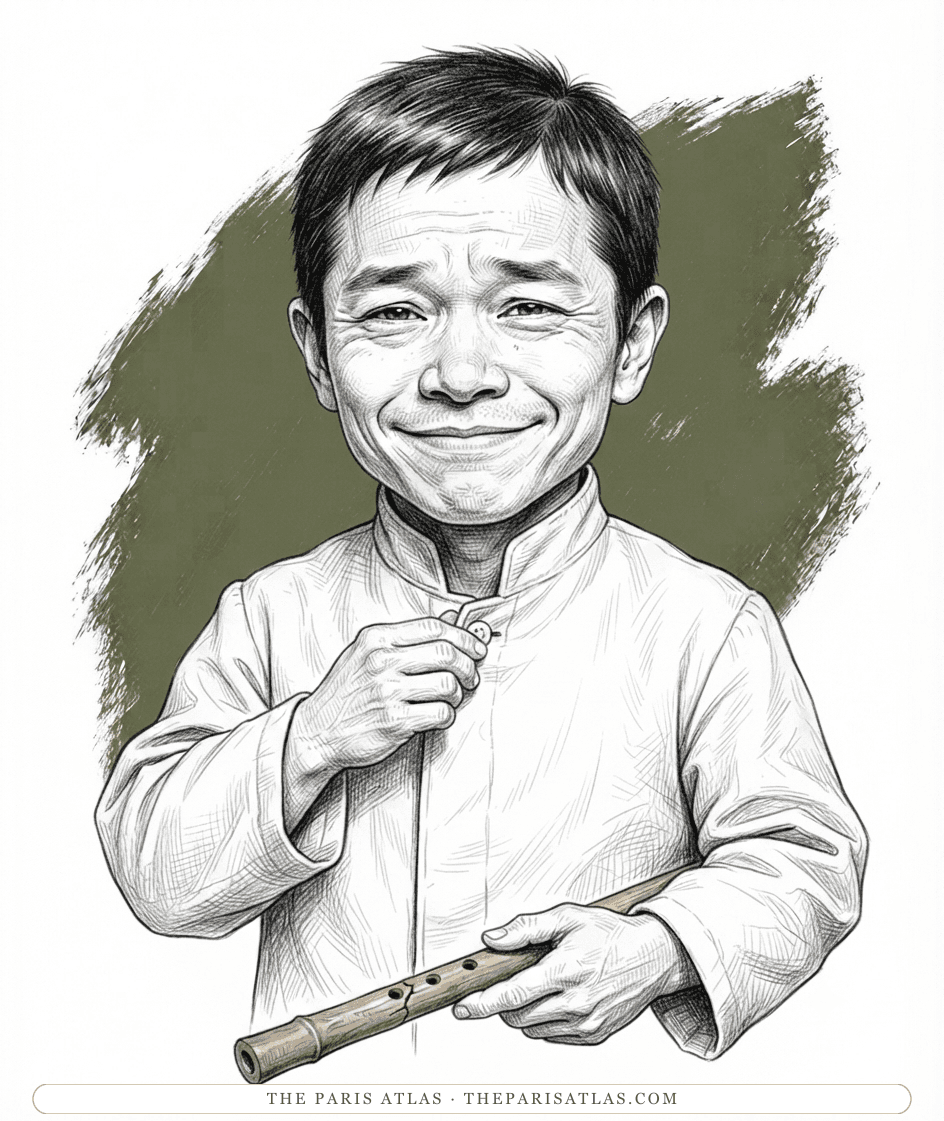
The Japanese houseman who cooks and waits at the Patches' country house: talkative, inventive, and treated as a joke by everyone he works for.
To be allowed to finish explaining something. 'Wait. I tell —' is his standing phrase, and nobody in the house ever does wait.
The book

At a glance
- The summers at the Patches' rented house in the Connecticut countryside, and the party that ends them
- Tanalahaka; he answers to any summons containing 'Tana'
- Cook, waiter and man of all work, hired through the 'R. Gugimoniki, Japanese Reliable Employment Agency'
- Reads the newspaper comic sections on Sunday and Monday afternoons, plays a flute he made himself, and designs a faster typewriter
- Tannenbaum, after Maury Noble's invented story that he is a German agent
Who they are in the book
Spoiler-freeTana is the fictional Japanese servant who cooks, waits and does everything else at the gray house in the Connecticut countryside that Anthony and Gloria Patch rent for their summers. He arrives from an employment agency at the start of their second summer there and is still in the kitchen for the party that ends the arrangement. His full name is Tanalahaka, and he tells his new employer that he will answer to any call containing the syllables 'Tana'.
F. Scott Fitzgerald gives him more space than a servant usually gets in this kind of novel and uses almost all of it for comedy at his expense: his English is written phonetically, his stories are cut off in the middle, and the guests invent a running joke that he is a German spy. What comes through the joke is a man who works hard, talks constantly because nobody will let him finish, and is the only person in the house building anything.
The contempt in these scenes belongs to the people in them. Maury Noble invents the spy story, the visiting guests pour drinks into him for entertainment, and Gloria calls him 'that awful little man'. The narration's own summary of the arrangement is this: 'they dared not dismiss him. Such a step would have been abhorrent to their inertia. They endured Tana as they endured ill weather and sickness of the body and the estimable Will of God — as they endured all things, even themselves.'
How Tana Is Portrayed
- What he unpacks on his first dayHe calls Anthony into his room to be shown the contents of his trunk: a large collection of Japanese postcards he wants to explain one by one, a pair of American trousers he made himself, two suits of solid silk underwear, a good copy of an etching of Abraham Lincoln to whose face he has given an unmistakably Japanese cast, and a flute he made and broke and means to fix.
- The typewriter he is inventingAnthony finds him at the kitchen table with cigar boxes, knives, pencils, can tops and sheets of diagrams. He has worked out that many English words end the same way, so his machine will have one key for 'ing' and save time. Anthony says it is a great idea and then, three sentences later, interrupts to ask where his wife is.
- The joke about his nameMaury Noble announces to the other guests that Tana's real name is Tannenbaum and that he is a German agent placed in Westchester County to spread propaganda. Letters then start arriving from Philadelphia addressed to 'Lt. Emile Tannenbaum', signed 'General Staff' and decorated with fake Japanese script. Anthony hands them over without a smile; hours later Tana can be found in the kitchen studying them and insisting that the symbols are not Japanese, nor anything like it.
- How the household treats himGloria takes against him after coming home early and finding him lying on Anthony's bed working through a newspaper. He is afraid of her and answers back sideways, asking his employer 'What Miz Pats want dinner?' while she is standing there, or remarking on the selfishness of "'Merican peoples" in a way that leaves no doubt who is meant.
- The night the guests get him drunkAt a dinner where nothing is going well, Maury Noble starts filling a glass for him — 'Please don't, Maury!' Gloria says, and is ignored — and a guest she dislikes keeps it up. Tana ends the evening in his white coat, reeling around the room on Maury's arm, playing a tune the men call the Japanese train song. He is found later asleep and soaked in the porch hammock and carried in to dry by the kitchen stove.
- The guest who thinks he knows all about himA Harvard acquaintance of Anthony's called Frederick E. Paramore arrives early and questions him at the door with, as the stage directions put it, 'the entire burden of uplifting the godless Oriental' in his eyes. He assumes the flute is a Japanese instrument playing a Japanese melody. Tana explains that it is a train song, a children's song, and imitates the whistle: 'It go so-o-o; that mean whistle; train start.'
- Still playing when the room goes silentAt the party that wrecks the Patches, Tana has already gone to bed and is fetched back down in his pyjamas, wrapped in a blanket and set on a chair on top of a table to provide the music. When Anthony's grandfather walks in unannounced and the room stops dead, the last sound in it is the train song dribbling out of the end of Tana's flute.
If you like The Beautiful and Damned


If you like F. Scott Fitzgerald
Explore authors with a similar voice, perspective, and influence.

Ernest Hemingway
Fitzgerald vouched for him to Scribner's before they had met, then edited him better than he edited himself; the friendship's five rounds are chronicled in our journal.
View author
Henry Miller
The Brooklyn dropout who arrived in Paris broke at thirty-eight and wrote the exuberant, banned books that ended American censorship.
View author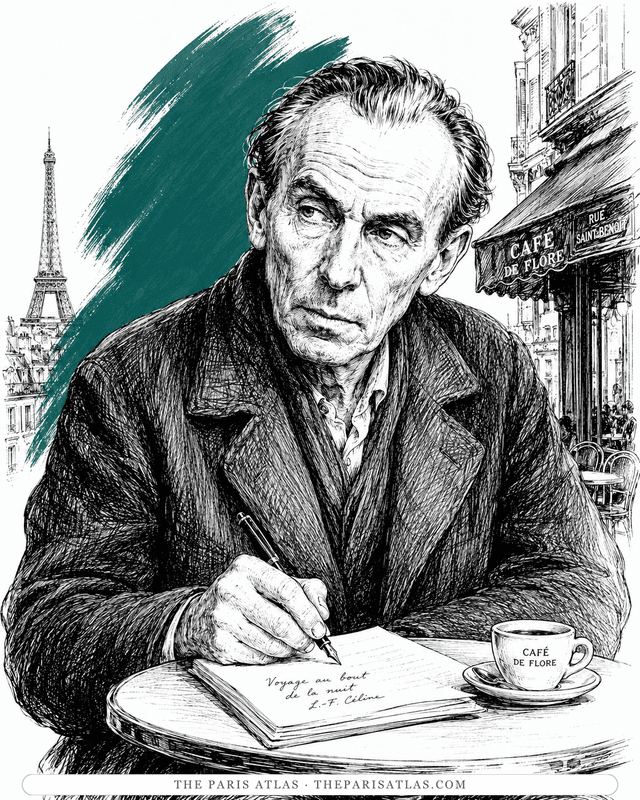
Louis-Ferdinand Céline
The doctor of the Paris slums who wrote the century's blackest, funniest novel — and changed the sound of French prose.
View author