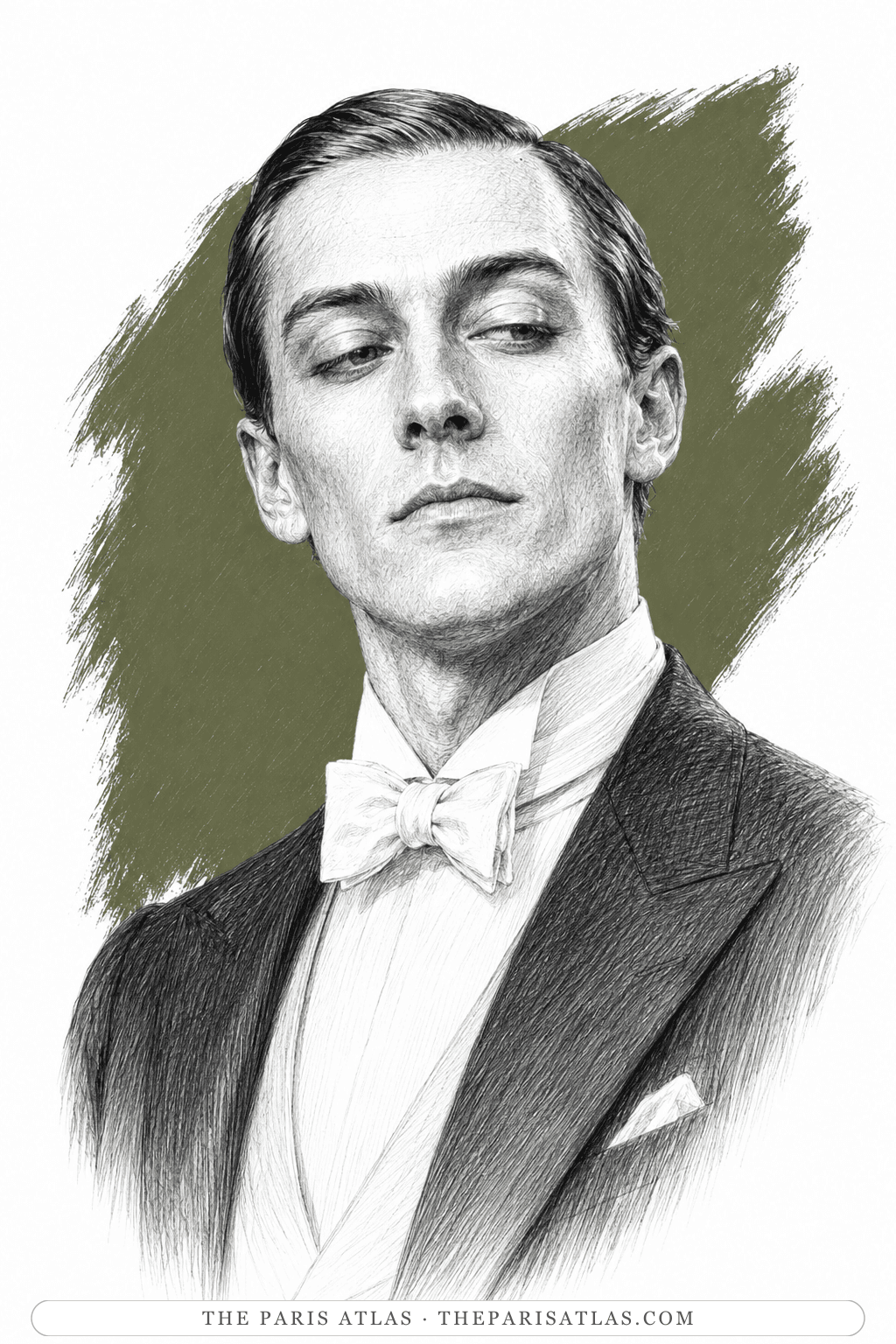
Maury Noble
Anthony Patch's closest friend and the cleverest man he knows: a rich Philadelphian who has travelled the world, feels almost nothing, and intends to make a great deal of money as soon as he gets round to it.
The schedule he announced in college and has not changed since: 'to use three years in travel, three years in utter leisure — and then to become immensely rich as quickly as possible.'
The book

At a glance
- Anthony Patch's closest friend, from the opening dinner at the Ritz to a late meeting in the street
- Twenty-seven at the start of the novel, and unhappy about it: 'Three years to thirty, and then I'm what an undergraduate calls a middle-aged man'
- Three rooms on Forty-fourth Street in New York; his mother lives in Philadelphia with his married brother, and he goes down most weekends
- Three years of travel, three years of leisure, and then money — stated in college and kept to
- The one Anthony envies, the one Richard Caramel argues with, and the one Gloria Gilbert is compared to as an equal
Who they are in the book
Spoiler-freeMaury Noble is the third member of the group of friends at the centre of The Beautiful and Damned, alongside Anthony Patch and the novelist Richard Caramel. He is from Philadelphia, he was at Harvard with the other two, and Anthony calls him his best friend and admits privately that he envies him.
The description of him is a cat: 'a large slender and imposing cat', with narrow, slowly blinking eyes and hair so smooth it looks licked flat. He is unhurried, funny, and hard to get a reaction out of, and behind the manner there turns out to be a plan he formed as an undergraduate and has been carrying out ever since.
He is also the one Fitzgerald gives the book's longest speech to, delivered at four in the morning from the roof of a railway station while the other three sit on the platform below him, and it is where the novel comes nearest to saying outright what it thinks.
How Maury Noble Is Portrayed
- The cleverest man in his classAt Harvard he was 'considered the most unique figure in his class, the most brilliant, the most original — smart, quiet and among the saved.' Anthony's own verdict, given in the first chapter, is that Maury is the only man he knows whom he admires and, more than he likes to admit, envies.
- Three years going round the worldHe spent them travelling with a thoroughness the narrator says would have looked pedantic in anyone else, 'almost the self-editing of a human Baedeker', going everywhere there was to go and looking at everyone there was to look at. He spent two months of it in Rome with Anthony, not long after they left Harvard.
- He taught himself to drinkHaving never taken more than a few cocktails at a sitting, he set out to learn drinking 'as he would have taught himself Greek — like Greek it would be the gateway to a wealth of new sensations, new psychic states, new reactions in joy or misery.'
- The list at the switchboardHe keeps three rooms in a bachelor apartment on Forty-fourth Street and is seldom in them. The telephone girl has strict instructions: nobody reaches him without giving a name first. She holds two lists of half a dozen names each, one of people to whom he is never at home and one of people to whom he always is. Anthony Patch and Richard Caramel head the second.
- 'Nothing — quite — stirs me'Standing at a window watching the snow one December night, he tells Anthony that at twenty-seven he is old, and that he expects to sit still for a generation while Anthony and Dick and Gloria Gilbert dance past him 'being eternally moved.' Then: 'It's me who tries again and again to be moved — let myself go a thousand times and I'm always me.'
- The night on the station roofWaiting for the five-thirty train after a bad party, he climbs onto the roof of the train shed and tells the three below the story of his education, from praying as a child through school, poets and philosophers, and ends with a parable about sceptics who wrote a book to mock the credulity of man and accidentally wrote the Bible. Asked whether he had ever really tried any of the things he lists, he answers: 'Not I. I was born tired.'
- The joke about TanaThe Patches' Japanese houseman is called Tana. Maury announces one afternoon that his real name is Tannenbaum and that he is a German agent spreading propaganda through Westchester County. Letters then start arriving from Philadelphia addressed to Lt. Emile Tannenbaum, signed 'General Staff' and decorated with mock Japanese, and Tana spends hours in the kitchen insisting the symbols are not Japanese at all.
- He does not remember peopleA guest at the country house recognizes him at once. Maury shakes his hand warmly, calls him old boy, and has no idea who he is; the man has to supply his own name, Fred Paramore, and the history class they shared. Maury covers it by praising the professor, whose name he also gets wrong.
The third part of the plan arrives on time. He takes a job in Philadelphia, stops drinking almost entirely, makes a great deal of money and becomes engaged to an heiress. Anthony, hearing this secondhand, finds it hard to picture: 'I used to think he was so brilliant.' The last thing Maury had said to him, he remembers, was that he was going to work so as to forget that there was nothing worth working for.
The friendship simply stops. Late in the book Anthony, drunk and looking for ten dollars, sees him outside the Biltmore Hotel putting a woman into a taxi and runs across the street shouting his name. Maury shakes his hand, says he is in a hurry, does not introduce his companion, gets into the cab and nods from the window with no change of expression at all.
If you like The Beautiful and Damned


If you like F. Scott Fitzgerald
Explore authors with a similar voice, perspective, and influence.

Ernest Hemingway
Fitzgerald vouched for him to Scribner's before they had met, then edited him better than he edited himself; the friendship's five rounds are chronicled in our journal.
View author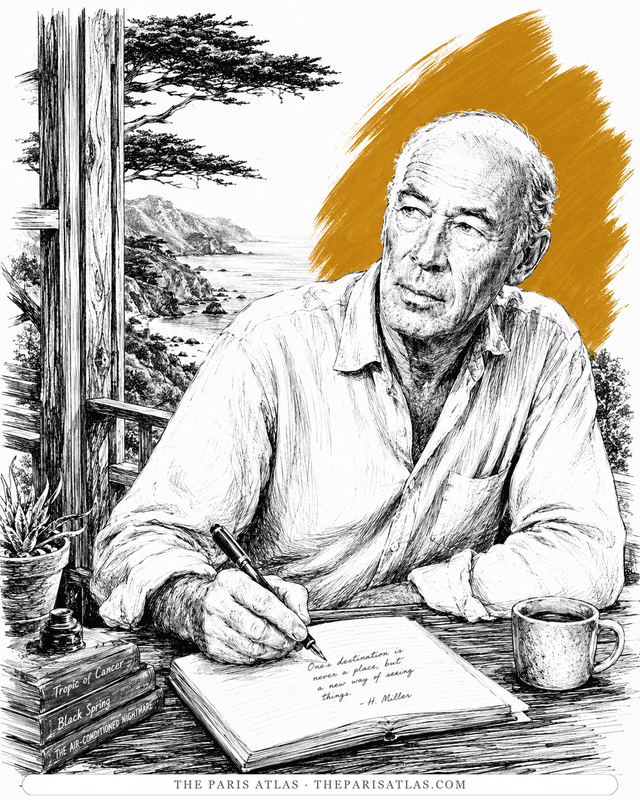
Henry Miller
The Brooklyn dropout who arrived in Paris broke at thirty-eight and wrote the exuberant, banned books that ended American censorship.
View author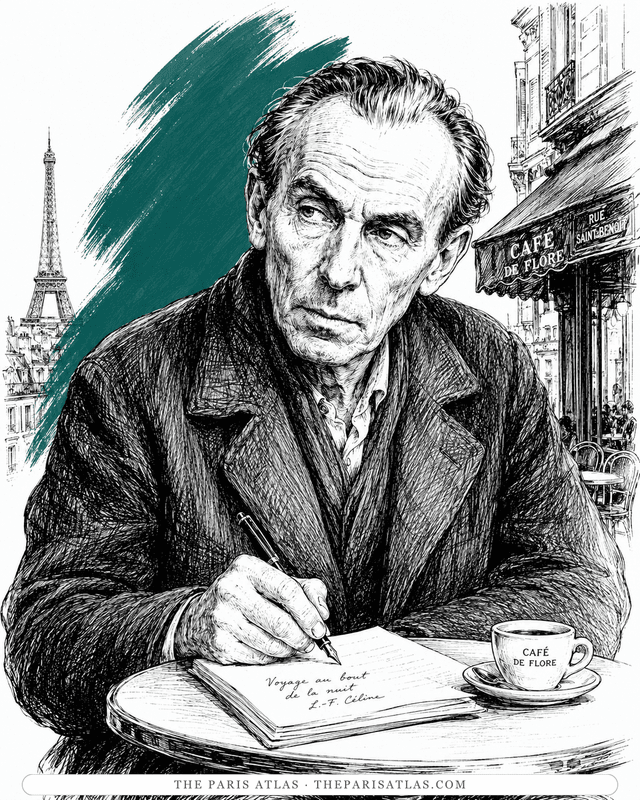
Louis-Ferdinand Céline
The doctor of the Paris slums who wrote the century's blackest, funniest novel — and changed the sound of French prose.
View author