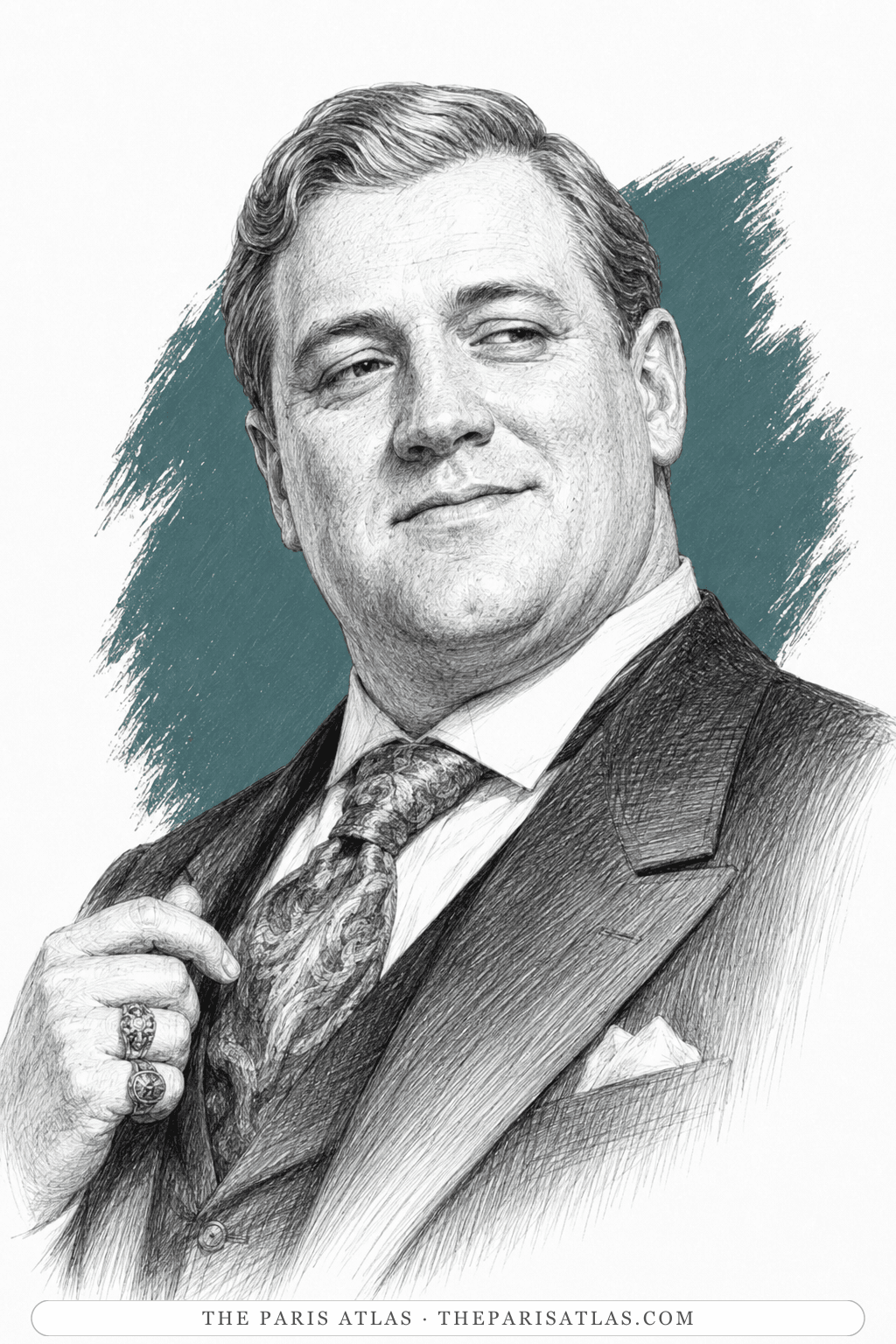
Joseph Bloeckman
The film producer who wanted to marry Gloria Gilbert before Anthony Patch did: a man who came up from a travelling circus and is treated as a joke by men who have never worked.
To marry Gloria Gilbert. He proposes within a month of meeting her, and long after she has refused him he is still, in the book's phrase, 'figuratively following along beside her as she walked the fence, ready to catch her if she should fall.'
The book

At a glance
- Present from the first dinner party to the final chapter, always at the edge of Anthony and Gloria Patch's marriage
- Vice-president of the film company Films Par Excellence; before that, circus and vaudeville work
- About thirty-five when the novel opens, and past forty by the end
- Munich, Germany; he came up through the American show business
- New York, and a place he buys near Cos Cob, Connecticut, five miles from the house the Patches rent at Marietta
- Block-house, then Blockhead, to his face and in front of other people
Who they are in the book
Spoiler-freeJoseph Bloeckman is a fictional film producer, a vice-president of a company called Films Par Excellence, and the man Gloria Gilbert might have married instead of Anthony Patch. He does business with Gloria's father. They met when Gloria walked over to his table at the New York restaurant Delmonico's out of curiosity, and within a month he had asked her to marry him, offering her anything from a villa in Italy to a career in the movies. She laughed in his face. He laughed too, and kept coming back for years.
He worked for everything he has, which almost nobody else in the novel can say. Born in Munich, he started his working life in America as a peanut vender with a travelling circus. At eighteen he was a side show ballyhoo — the man out front shouting people in — then the manager of the side show, then the owner of a second-class vaudeville house. He was twenty-six and had some money to invest at the moment when moving pictures stopped being a curiosity and became an industry, and the industry carried him up with it. He is about thirty-five when the book opens.
Anthony Patch and his Harvard friends treat him as a joke, and the novel keeps showing them how expensive that is. Anthony's private opinion of him at their first dinner is this: 'I detest these underdone men, he thought coldly. Boiled looking! Ought to be shoved back in the oven; just one more minute would do it.' Part of that is jealousy, part is snobbery about a man who had to earn his money, and part of it is that Bloeckman is Jewish, which Anthony eventually says to his face. Over the years the novel covers, Bloeckman becomes richer, better dressed and harder to condescend to, and Anthony becomes the opposite.
How Joseph Bloeckman Is Portrayed
- The dinner where nobody helps himHe first appears at a dinner Gloria gives at the Biltmore Hotel in New York, where 'that person Bloeckman' arrives to find three younger men waiting in a group and not inclined to make it easy. He introduces himself, asks whether Anthony is related to the millionaire Adam Patch, and tries the Harvard men with hockey scores. They have been out of college three years and follow only the big football games. Fitzgerald's aside on the failure: 'Unfortunate man. He had drawn another blank.'
- From a travelling circus to the moviesThe dinner scene stops to give his whole career in a paragraph: peanut vender with a circus, side show ballyhoo at eighteen, manager of the side show, proprietor of a second-class vaudeville house, then an ambitious twenty-six-year-old with money to invest just as the film business opened. Nine years later he is a vice-president of Films Par Excellence.
- He talks about his business plainlyRichard Caramel, the novelist at the table, asks whether the new novels really are sold to the movies as soon as they appear. Bloeckman says they are, and explains what he buys: 'Of course the main thing in a moving picture is a strong story.... So many novels are all full of talk and psychology. Of course those aren't as valuable to us.'
- The line he memorizedInto a pause at the same dinner he delivers a prepared compliment to the women present: 'When a man speaks he's merely tradition. He has at best a few thousand years back of him. But woman, why, she is the miraculous mouthpiece of posterity.' Anthony, choking on an oyster, works out what it is: 'It's a subtitle from one of his movies. The man's memorized it!'
- The nickname Gloria will not dropShe puns on his surname, first 'Block-house' and then the worse 'Blockhead', and says it in front of company. He has asked her, with irony, to use his first name instead, and she manages it a few times before sliding back. Fitzgerald does not let it pass as comedy: 'It was a very sad and thoughtless thing.'
- He does not danceAt Gloria's dinner he sits out the music watching the others 'with the bored tolerance of an elder among children', waiting for her to come back to the chair on his right and wishing she would hurry, because the oysters have been standing some minutes.
- He improves every time he appearsEach reappearance finds him a little more finished: the heavy rings gone from his hand, the loud ties replaced by a sturdy dark pattern, a large foreign car at the end of the path, a house bought near Cos Cob in Connecticut. Fitzgerald gives the reason in one sentence: 'having been fawned upon financially, he had attained aloofness; having been snubbed socially, he had acquired reticence.'
- The wedding presentWhen Gloria marries Anthony, the gifts arrive by the roomful. Bloeckman, whom she turned down the night before the engagement was announced, sends 'a simple and exquisite travelling clock, with his card.'
Three years after Gloria last sees him she telephones Films Par Excellence to ask for a screen test, and the switchboard tells her that Joseph Bloeckman has changed his name to Black. He takes the call, is courteous, tells her she has not changed a bit, walks her round the studio and arranges the test himself. The studio's answer arrives by letter on her twenty-ninth birthday: the director needs a younger woman, but there is a small part available as a haughty rich widow. She never asks Bloeckman for anything again.
The last scene between him and Anthony is the worst thing either of them does. Anthony, drunk and out of money, tracks him to a Forty-fifth Street dancing place called the Boul' Mich', accuses him of keeping Gloria out of pictures, blocks his way and says, 'Not so fas', you Goddam Jew.' Bloeckman, who is forty-five and takes exercise every day, knocks him down with three punches, tells the manager 'This bum tried to blackmail me!', declines to call the police and has him thrown into the street.
If you like The Beautiful and Damned


If you like F. Scott Fitzgerald
Explore authors with a similar voice, perspective, and influence.
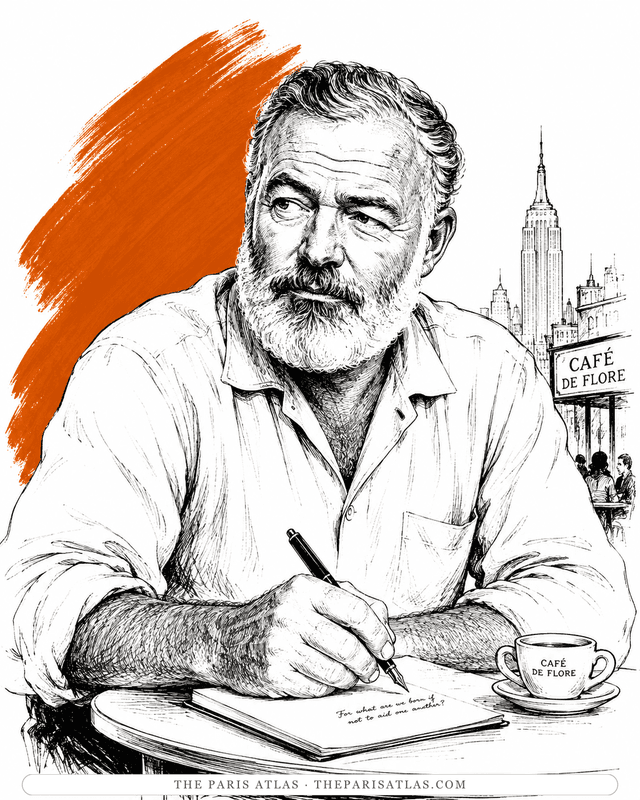
Ernest Hemingway
Fitzgerald vouched for him to Scribner's before they had met, then edited him better than he edited himself; the friendship's five rounds are chronicled in our journal.
View author
Henry Miller
The Brooklyn dropout who arrived in Paris broke at thirty-eight and wrote the exuberant, banned books that ended American censorship.
View author
Louis-Ferdinand Céline
The doctor of the Paris slums who wrote the century's blackest, funniest novel — and changed the sound of French prose.
View author