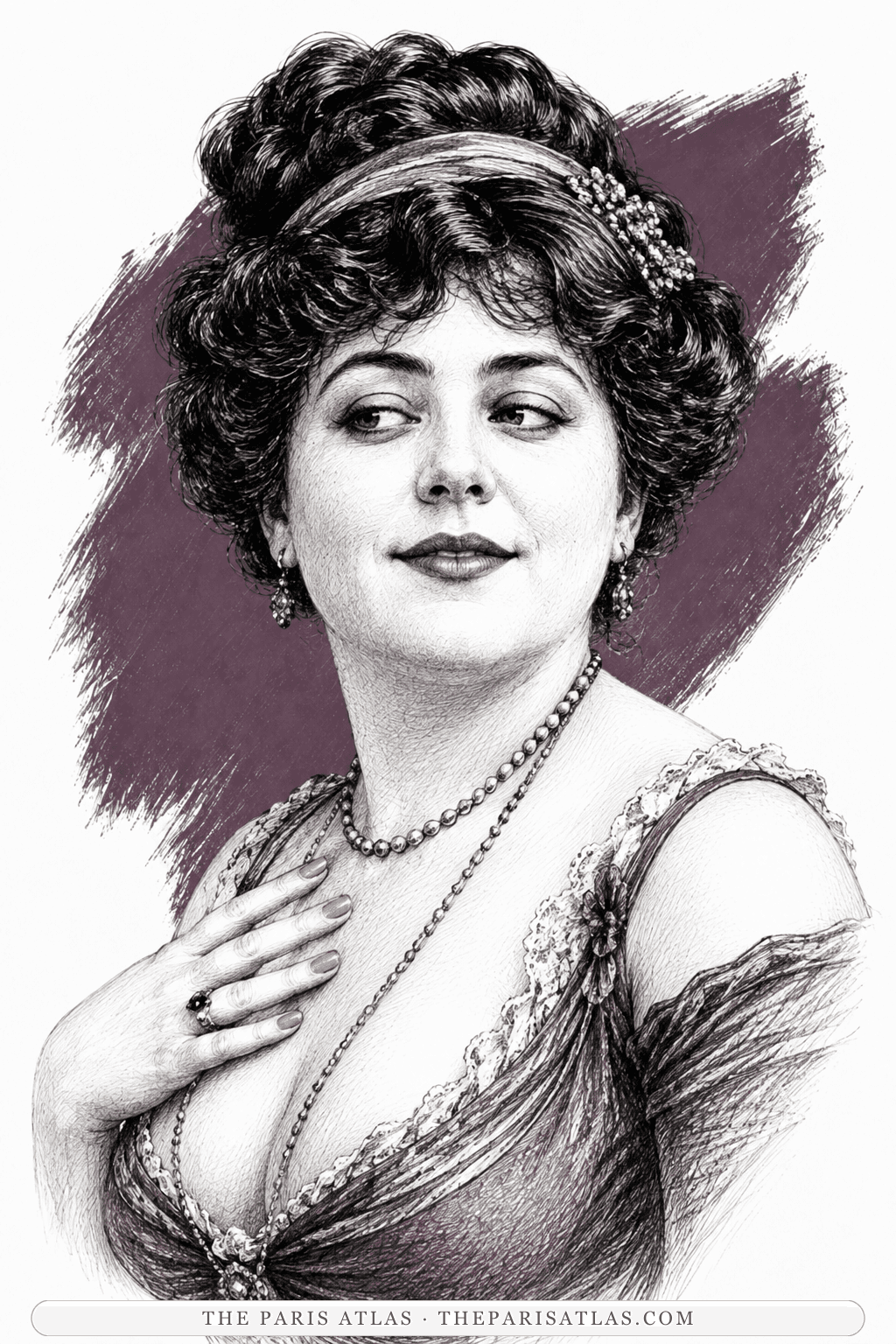
Muriel Kane
Gloria Gilbert's most loyal and least admired friend: a girl from New Jersey who dresses as a screen vamp, knows every new song, and repeats everything she hears.
To be found dangerous, and to be married. She keeps getting herself invited to college dances years after her own set has stopped going, 'imagining vaguely that at the next party would occur the flirtation which was to end at the romantic altar.'
The book

At a glance
- From Gloria Gilbert's first chapters to the last Harlem apartment: the dinner at the Biltmore, the wedding, the summers in the country, the visits nobody else makes
- A rising family of East Orange, New Jersey
- A drifter through parties, proms and hotels, on the strength of knowing Gloria
- Red Cross work in the city, then a hospital in New Jersey; Fitzgerald calls her 'the martial Muriel'
- 'Now I think she's attractive, 'cept not very'
Who they are in the book
Spoiler-freeMuriel Kane is a fictional young woman from what F. Scott Fitzgerald calls 'a rising family of East Orange', in New Jersey, who has come to New York to be around people who matter. She is Gloria Gilbert's friend, bridesmaid at Gloria's wedding, and one of only two or three people still calling on the Patches after everyone else has stopped.
She is also the novel's standing joke about trying to seem interesting. Her hair is black and elaborately arranged, her lips are over-red, and the effect is deliberately modelled on Theda Bara, the silent film actress famous for playing dangerous women. People tell Muriel she is a 'vampire' and she believes them. Fitzgerald's verdict is not kind: 'Her clothes were too tight, too stylish, too vivid, her eyes too roguish, her smile too coy. She was almost pitifully overemphasized from head to foot.'
Gloria keeps her anyway, and is candid about why. Asked whether she likes Muriel, Gloria says, 'I don't very much,' and then, asked why she goes about with her: 'Just for some one to go with. They're no exertion, those girls. They sort of believe everything I tell them.' That verdict gets harder to agree with as the book goes on. By the last chapters the Patches are broke and everyone else has dropped them, and Muriel is one of the very few people who still comes to the door.
How Muriel Kane Is Portrayed
- Made up as a screen vampBlack hair, handsome bovine eyes, over-red lips, fingernails 'too long and ornate, polished to a pink and unnatural fever'. The look is copied from Theda Bara, and Muriel works at it: she suspects hopefully that people are afraid of her and does her utmost, under all circumstances, to give the impression of danger.
- She knows all the latest songsWhen one comes on the phonograph she stands up, rocks her shoulders and snaps her fingers, and if there is no music she hums her own. Her talk is stocked to match: 'I should worry and lose my figure', 'I can't make my feet behave when I hear that tune. Oh, baby!' Years later her friends are still keeping score of her slang — 'her latest is "I'll say so!"'
- The book she would writeIntroduced to Richard Caramel, who is a novelist, she offers the line every novelist has heard: 'I always say that if I ever had time to write down all my experiences it'd make a wonderful book. But I don't see how you can sit down and do it. And poetry! Lordy, I can't make two lines rhyme.'
- Why Gloria puts up with herAt the wedding a guest asks about the bridesmaid who will not stop swaying to imaginary music. Richard Caramel's explanation is secondhand and he says so: 'She's a sort of debt of honor, I believe. Once saved Gloria from drowning, or something of the sort.'
- She repeats everythingGloria's description of her is the sharpest thing anyone says about her: 'Muriel doesn't mean to tell every one she knows, but she thinks every one she tells is the only one she's going to tell.' She is the reason the story of the ruined party in the country gets into a gossip sheet, and she is the one who comes to the apartment to report the rumour going round that the party killed Anthony's grandfather.
- Her adviceNothing she is told ever changes what she recommends. 'You ought to have a baby.' Gloria: 'We can't afford it.' Muriel: 'All the people in the slums have them.' Years on, in a shabby flat in Harlem, she tries 'why don't you go to work, you la-azy!' and, when Anthony explains at length why he will not, answers: 'Well, that may be clever but it isn't common sense.'
- The war improves herShe does Red Cross work in New York and is then sent to a hospital in New Jersey, which leaves Gloria with almost nobody to have lunch with. By the last time she calls on the Patches she has given up drinking altogether — 'Not me, thanks. I don't use it anymore' — which is more than either of them can say.
- The visit where she stops laughingOn that last visit Anthony walks out mid-quarrel and slams the front door. Muriel asks what the matter is. Gloria says he is drunk; Muriel says he seemed perfectly sober; Gloria explains that he no longer shows it, and has been drinking in the chair all day except for the walk to the corner for a newspaper. Muriel's eyes fill with tears. It is the one moment in the book where the novel stops treating her as a joke.
If you like The Beautiful and Damned


If you like F. Scott Fitzgerald
Explore authors with a similar voice, perspective, and influence.

Ernest Hemingway
Fitzgerald vouched for him to Scribner's before they had met, then edited him better than he edited himself; the friendship's five rounds are chronicled in our journal.
View author
Henry Miller
The Brooklyn dropout who arrived in Paris broke at thirty-eight and wrote the exuberant, banned books that ended American censorship.
View author
Louis-Ferdinand Céline
The doctor of the Paris slums who wrote the century's blackest, funniest novel — and changed the sound of French prose.
View author