
Richard Caramel
Anthony Patch's friend, Gloria's cousin, and the only one of the group who works: a novelist who writes a successful first book and then spends years turning out things he knows are worse.
To write something that lasts, and to be recognized for it. He tells Gloria's mother, without irony, that his book 'is going to start a new prose movement, a sort of renaissance.'
The book

At a glance
- Anthony Patch's friend from Harvard onward, and the man who introduces him to his wife
- First cousin of Gloria Gilbert; nephew of Mr. and Mrs. Gilbert of Kansas City
- Editor of The Harvard Crimson, then a slum charity, then a reporter for The Sun, then a novelist
- The Demon Lover, then A Shave-tail in France, The Land of Strong Men, and several dozen short stories
- Dick by his friends; 'the Caramel' when Anthony is being affectionate about him behind his back
Who they are in the book
Spoiler-freeRichard Caramel, called Dick, is one of the two close friends of Anthony Patch, the main character of The Beautiful and Damned. He is also the first cousin of Gloria Gilbert, and it is he who takes Anthony up to the Plaza Hotel to meet her, which sets the novel going.
He is the working writer of the group and the butt of most of its jokes. He carries a notebook, takes down other people's remarks in the middle of conversations, talks about his own book to anyone who will stand still, and asks his friends for reassurance far more often than they want to give it. Anthony and Maury Noble agree in private that his gift is narrower than theirs and more useful: 'Dick doesn't necessarily see more than any one else,' Maury says. 'He merely can put down a larger proportion of what he sees.'
His first novel, The Demon Lover, makes him briefly famous. What the book then does with him over the next decade is the closest thing it has to an argument about work: he is the one who tries, and the trying does not save him either.
How Richard Caramel Is Portrayed
- What he looks likeShort and fair, and, the narrator says, due to be bald at thirty-five. He has yellow eyes, one of them 'startlingly clear, the other opaque as a muddy pool', and a bulging forehead 'like a funny-paper baby.' His dinner-coat pockets bulge too, with a dog-eared collection of time-tables, programmes and scraps of paper.
- The notesThe scraps are what he writes on. He takes them down mid-conversation with one hand raised for silence, which drives his friends to distraction; when Anthony says something good and then cannot remember it, Dick demands that he concentrate. Freezing on a New York street corner, he tells Anthony he has just spent half an hour taking notes on his landlady while she complained about the coal, holding the pad out of her sight.
- The handshakeHe is one of those men who shake hands every time, 'even with people whom they have seen an hour before.' It is the first thing the reader is told about his manner, before he has said a word.
- The year in the slumsHe edited The Harvard Crimson as an undergraduate, then came out of college convinced that certain men were set aside for service and spent more than a year as secretary of an 'Alien Young Men's Rescue Association' in the New York slums. He concluded that any amiable young man could have done as much, and quit to write.
- How he lost his newspaper jobHe reported for The Sun for a year. Sent one February afternoon to cover a cavalry parade, he went to sleep in front of a hot fire instead and wrote a smooth column about the muffled beat of hoofs in the snow. The squadron had also seen the snow coming and postponed the parade. A marked copy reached the city editor with a note attached: 'Fire the man who wrote this.' A week later he started The Demon Lover.
- The Demon LoverHis first novel: a long, overwritten description of a Don Juan of the New York slums, published in April and slow to start before it takes off. The Salvation Army denounces it, the public library of Burlington, Iowa, bans it, a press agent spreads a false rumor that a preacher is suing, and a Midwestern columnist hints that the author is drying out in a sanitarium.
- What success does to his conversationFor months the book is three-quarters of everything he says. He goes into stores and orders books in a loud voice so a clerk might recognize his name, knows to the town where it is selling best and exactly what he clears on each printing, and sinks into gloom whenever he meets someone who has not heard of it.
- 'An ancient soul'Gloria's mother, who follows a mystical system called Bilphism, decides that Dick is an ancient soul and tells him so at every visit. He stops arguing and submits, deciding privately that he must be so old as to be absolutely rotten, and changes the subject each time it comes up.
- The fear underneathStaying at the couple's house in the country, he tells Anthony what frightens him. It is not the days when he thinks he cannot write. 'They're when I wonder whether any writing is worth while at all — I mean whether I'm not a sort of glorified buffoon.'
He keeps working and gets steadily worse at it, and knows it. He writes faster, sells to the movies, and finds that reviewers have started calling him 'Mr.' Richard Caramel with a smile. His publishers advertise him as the Thackeray of America. Visiting the apartment, Anthony finds the wall of American books Dick has collected, and, wedged in between Mark Twain and Dreiser, his own eight volumes: The Demon Lover, and seven that are, in Anthony's judgment, execrably awful.
He is also the one who keeps turning up. He catches Anthony on Forty-second Street in a frayed shirt and lectures him about the drinking, then takes him home for one; and on the day the lawsuit is finally decided he takes Gloria driving in Central Park because she has been in bed for a week. Fitzgerald adds one cold detail to that kindness: he never forgave Gloria for announcing, seven years earlier, that she did not intend to read his book, and he had remembered it every year since.
If you like The Beautiful and Damned


If you like F. Scott Fitzgerald
Explore authors with a similar voice, perspective, and influence.

Ernest Hemingway
Fitzgerald vouched for him to Scribner's before they had met, then edited him better than he edited himself; the friendship's five rounds are chronicled in our journal.
View author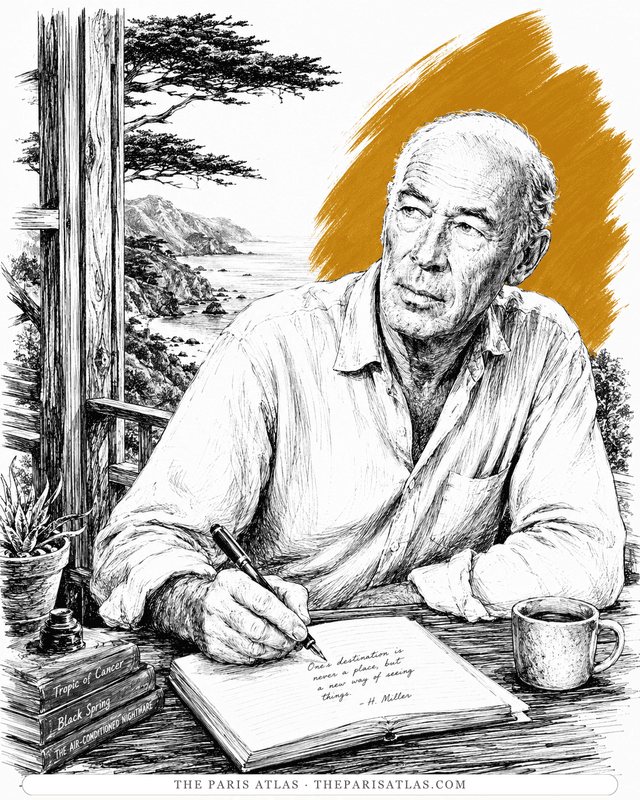
Henry Miller
The Brooklyn dropout who arrived in Paris broke at thirty-eight and wrote the exuberant, banned books that ended American censorship.
View author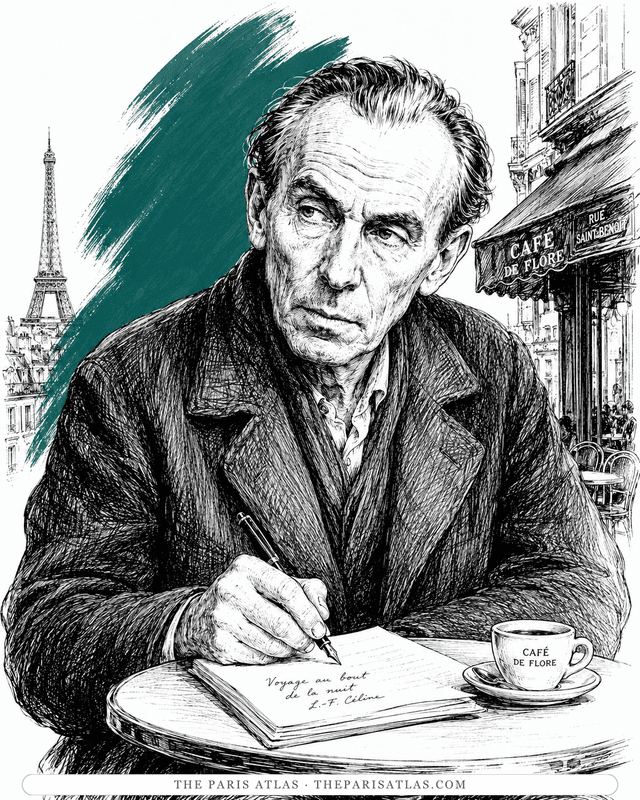
Louis-Ferdinand Céline
The doctor of the Paris slums who wrote the century's blackest, funniest novel — and changed the sound of French prose.
View author