
Brimmer
A Communist Party organiser sent from New York to work on the studio's writers, and the man Monroe Stahr asks to meet so he can size up the opposition.
To organise the studio's writers, and past that to take the industry over intact rather than break it. Told that Stahr does not want to throw anybody out, he answers: "We'd like to take you over as a going concern."
The book

At a glance
- Chapter VI, the last chapter Fitzgerald completed. He appears in no other
- Brimmer. He is announced as the Party Member and is given no first name anywhere in the novel
- Communist Party organiser sent from New York to work on the Hollywood screenwriters
- American for several generations. His father was a Baptist minister
- The Navy, where he says he did his drinking. At the Trocadero he takes his first drink in a week
- "I like your friend," he tells Cecelia Brady, halfway through the afternoon
Who they are in the book
Spoiler-freeBrimmer is a Communist Party organiser working on the screenwriters at Monroe Stahr's film studio, and he holds the stage for most of the last chapter F. Scott Fitzgerald finished. The book never gives him a first name. He is in the novel because Stahr telephones the narrator, Cecelia Brady, and asks her to produce one: "I mean one of their organizers—from New York." Stahr's brief is that the man should be worth listening to, and he asks that Brady keep the meeting from her father, who is Stahr's partner in the studio.
What follows is an afternoon of tea and ping-pong at the Brady house, then dinner at the Trocadero, then a return to the garden. Brimmer is polite throughout and gives no ground. He knows the studio's payroll better than Stahr does, he refuses the tour Stahr offers him, and he keeps returning the argument to the same place: that Stahr is the harder opponent precisely because he is a decent employer.
The evening ends with Stahr drinking for the only time in the book and swinging at him.
How Brimmer Is Portrayed
- Ordered up like a serviceStahr rings Cecelia Brady and asks her to find him a Communist Party member, any one, so long as he is an organiser from New York. His instruction is: "Get one that can talk—tell him to bring one of his books along." Brady, who had been political the summer before, takes a while to find anybody at all.
- What he looks likeCecelia Brady sizes him up as a good-looking man built along the lines of the actor Spencer Tracy, with a stronger face and more going on in it. Indoors he seems ordinary. Out in the garden she revises the estimate: "He opened up big outside—inches taller than I thought and broad-shouldered."
- Writers are the farmersStahr says writers are children who cannot keep their minds on their work. Brimmer answers with the comparison he has clearly used before: "They grow the grain but they're not in at the feast. Their feeling toward the producer is like the farmers' resentment of the city fellow."
- He knows the payrollTold that nobody on the lot is paid thirty dollars a week, Brimmer names two men in the shorts department: "Man named Ransome—man named O'Brien." Stahr's reply is that they are not writers at all, they are relatives of his partner, and he and Cecelia Brady both laugh.
- He turns down the tourStahr invites him to spend a day at the studio and watch how it is run. Brimmer laughs and declines at length: "No, Mr. Stahr. But I don't doubt but that I'd be impressed. I've heard you're one of the hardest working and most efficient men in the entire West. It'd be a privilege to watch you, but I'm afraid I'll have to deny myself."
- Why Stahr is the difficult oneStahr says he would like to put Brimmer in a room with his partners, who all want the organisers run out of town. Brimmer takes the protection and hands the compliment back edged: "Frankly we do find you difficult, Mr. Stahr—precisely because you are a paternalistic employer and your influence is very great."
- Who is overthrowing whomThe sharpest exchange of the afternoon is four lines long. Stahr tells him that at the bottom of it he cannot really believe any of this; Brimmer says he does. Stahr says: "You don't really think you're going to overthrow the government." Brimmer answers: "No, Mr. Stahr. But we think perhaps you are."
- One punch, and an apologyLate in the evening Stahr, drunk and exhausted, announces that he is going to handle the labour question personally. Brimmer's first response is a joke, and he asks whether Stahr cannot pay somebody to do it. When Stahr comes at him he backs around the ping-pong table, hits him once, and stands looking down at him: "I always wanted to hit ten million dollars, but I didn't know it would be like this." He offers to help and is sent home.
Nothing more of Brimmer was written. Edmund Wilson's synopsis of the unfinished chapters, assembled from Fitzgerald's notes and outline, has Stahr travel East soon after this meeting to argue against a wage cut, and come back to find his partner Pat Brady has pushed a fifty percent cut through anyway. The labour argument Brimmer opens is what the rest of the novel was to have been built on, with Stahr ending up sponsoring a company union and finding, in a line from Fitzgerald's notes, that the Reds now read him as a conservative and Wall Street as a Red.
In the drafted chapter itself, Cecelia Brady looks away before the punch lands and never sees it. Afterwards she tells Stahr he hit Brimmer badly, which is a lie, and Stahr works out for himself that he must have frightened the man into swinging first. He does not hold it against him, on the grounds that he was drunk.
If you like The Love of the Last Tycoon


If you like F. Scott Fitzgerald
Explore authors with a similar voice, perspective, and influence.
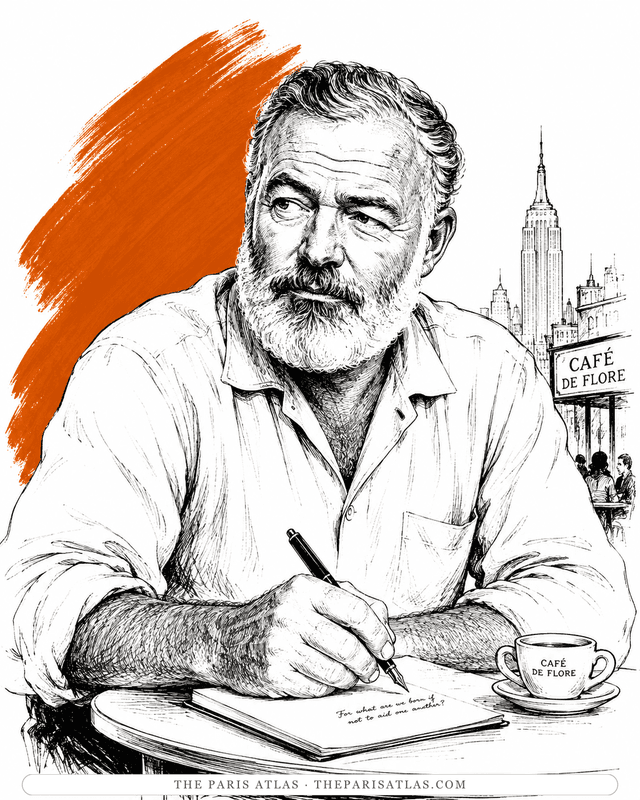
Ernest Hemingway
Fitzgerald vouched for him to Scribner's before they had met, then edited him better than he edited himself; the friendship's five rounds are chronicled in our journal.
View author
Henry Miller
The Brooklyn dropout who arrived in Paris broke at thirty-eight and wrote the exuberant, banned books that ended American censorship.
View author
Louis-Ferdinand Céline
The doctor of the Paris slums who wrote the century's blackest, funniest novel — and changed the sound of French prose.
View author