
Jane Meloney
A studio screenwriter of fifty on three thousand dollars a week, who has been in pictures longer than almost anyone and reads a room faster than any of them.
To stay on a script all the way to the end instead of being pulled off it and replaced, which is how the studio normally works. Arguing with a supervisor down the phone, she says: "I want to go right through to the end."
The book

At a glance
- The story conference in Chapter III, and her own office and a lunch in Chapter V
- Fifty
- Screenwriter. The trade opinion of her that Fitzgerald records first is that she is the best writer on construction in Hollywood
- Over a hundred thousand dollars a year. Cecelia Brady puts it at three thousand a week
- Stomach ulcers
- More than once. Cecelia Brady says her husbands all drank and beat her nearly to death
- A nephew, Ned Sollinger, who works as Stahr's office boy
- She had been a great friend of his dead wife, Minna Davis. Fitzgerald adds that Stahr had spent years suppressing what amounted to a sharp physical revulsion toward her
- Long enough to be reputed to have been on the set the day D. W. Griffith invented the close-up
Who they are in the book
Spoiler-freeJane Meloney is a screenwriter at Monroe Stahr's studio and the most experienced writer in the novel. She is fifty, small, blonde and dried-up, she has stomach ulcers, and she is paid more than a hundred thousand dollars a year, which by the narrator's arithmetic is three thousand a week. She has been in the business long enough that people say she was on the set the day D. W. Griffith invented the close-up.
Fitzgerald introduces her by listing what Hollywood says about her, and the point of the list is that the opinions cancel out. She is a sentimental dope and the best writer on construction in Hollywood. She is a veteran, an old hack, the smartest woman on the lot and the cleverest plagiarist in the business. On her private life the town is equally certain and equally divided: she is called a nymphomaniac, a virgin, a pushover, a Lesbian and a faithful wife. What Fitzgerald says on his own account is narrower and more useful. She is adaptable, quick, trustworthy, she knows the game, and she has no ego in it at all.
The narrator, Cecelia Brady, grew up around her and calls her a friend, in the way a child is friendly with a family retainer. "I found her as lovable as a cheap old toy. She made three thousand a week, and her husbands all drank and beat her nearly to death."
How Jane Meloney Is Portrayed
- She is the only one not frightenedAt the story conference Stahr announces that he is shelving the picture. The supervisor pleads, the director changes sides, the other writer takes the blame. Meloney says nothing and watches. "Jane Meloney, who had never taken her eyes off Stahr, knew it was going to be all right now. If he had really been going to abandon the picture, he wouldn't have gone at it like this." She is right.
- How she talks in a room of menWhen an actor leaves Stahr's office in a state, her whole comment is a piece of trade slang: "Somebody been catching flies on him?" Later, told that a woman shown unfaithful for a third of a picture will read to the audience as one-third whore, she asks: "Is that a big proportion?" The room laughs, which is plainly the intention.
- Her lunch hour"Out of the window Jane Meloney watched the trickle streaming toward the commissary. She would have her lunch in her office and knit a few rows while it came. The man was coming at one-fifteen with the French perfume smuggled over the Mexican border." Fitzgerald adds that she considered the smuggling no sin, on the same footing as drinking under prohibition.
- How she actually writesCecelia Brady once watched her and a young man take a story out of The Saturday Evening Post, change the characters and start over. "Then they began to write it, making each line answer the line before it." Brady says the result sounded exactly like people who are straining to be funny or gentle or brave.
- Twenty minutes on the phone with a supervisorA junior supervisor calls to ask, again, whether she has ever written a picture. She keeps two conversations going at once. "While he talked she groaned silently, writhed, made faces into the receiver, held it all in her lap so that the voice reached her faintly." To the phone she is courteous. To the room she reports that he is reading names out of a casting directory to fill the time, and that she has two scenes to write before lunch.
- The nephewHer source for studio gossip is Ned Sollinger, Stahr's office boy, who is also her one disappointment. "He had been her pride and hope." She put him through New York University, where he played football. In his first year of medical school a girl turned him down, so he cut a piece out of a female cadaver and posted it to her, and he has been starting again at the bottom ever since.
- Where she sits in the studioHer office is in the old writers' building, one of the rows of cells every lot kept from the silent days. Fitzgerald reports the standing joke about them: a new producer walked the corridor, watched the writers for ten minutes, and came back to report that two of them had not written a line.
If you like The Love of the Last Tycoon


If you like F. Scott Fitzgerald
Explore authors with a similar voice, perspective, and influence.
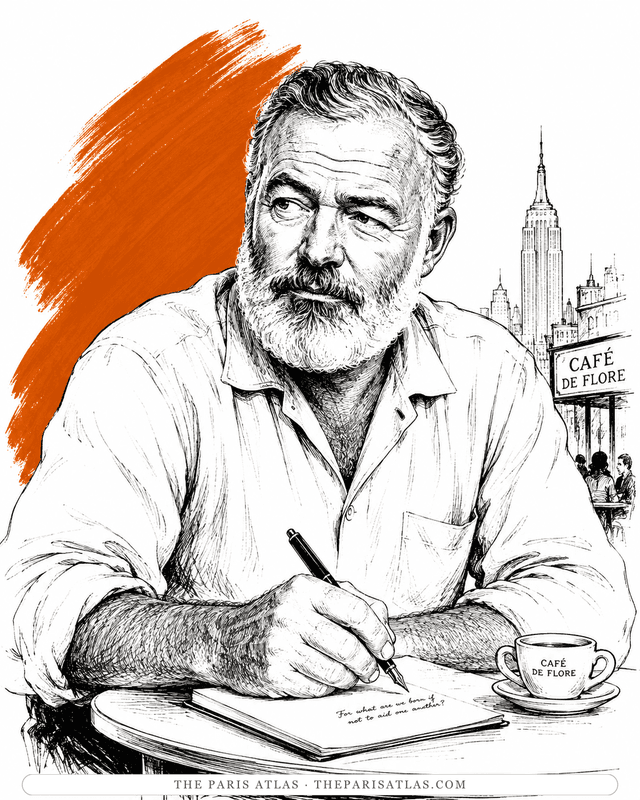
Ernest Hemingway
Fitzgerald vouched for him to Scribner's before they had met, then edited him better than he edited himself; the friendship's five rounds are chronicled in our journal.
View author
Henry Miller
The Brooklyn dropout who arrived in Paris broke at thirty-eight and wrote the exuberant, banned books that ended American censorship.
View author
Louis-Ferdinand Céline
The doctor of the Paris slums who wrote the century's blackest, funniest novel — and changed the sound of French prose.
View author