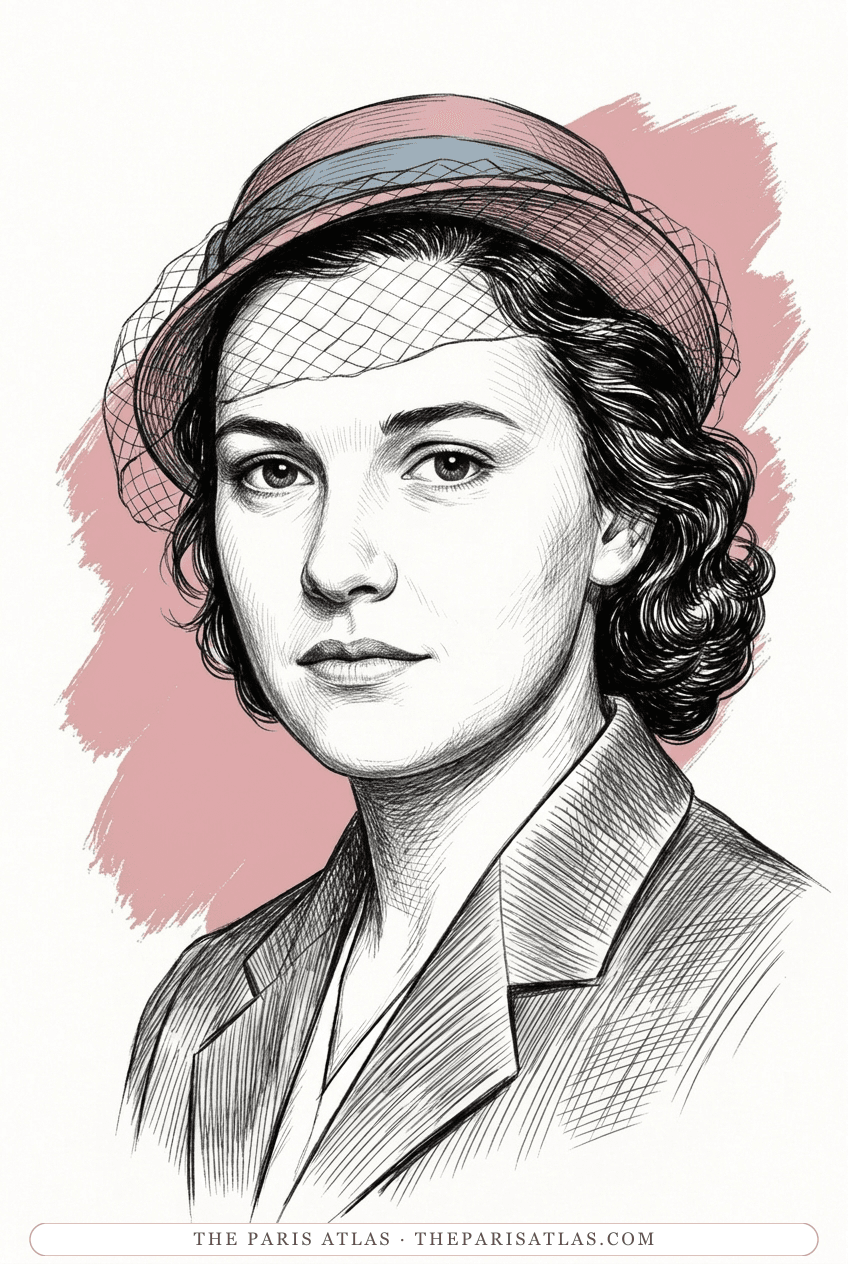
Kathleen Moore
The Irishwoman Stahr sees during the flood on the studio's back lot, because she has the face of his dead wife.
A life she has chosen herself. She got out of the one she had in Europe by running away from it, and late one night in the car she tells Stahr: 'This doesn't seem to be quite the girl who came out to California for a new life.'
The book

At a glance
- Chapters II to VI: the woman Stahr falls in love with
- About twenty-five
- Ireland; she lived in London for years and reached Los Angeles a few weeks before the story opens
- A small rented house under a willow tree on a canyon road northwest of Sunset, with no telephone
- None. A note left in her house reads: 'Leave the dress. Have gone looking for a job. Will drop by tomorrow.'
- Shot by the Black and Tans in 1922. He wrote a book called Last Blessing, which still pays her ten shillings a year
- Years in Europe with a deposed king who set her a reading list and drank
- The face of Minna Davis, the film star he was married to, who died three years earlier
Who they are in the book
Spoiler-freeKathleen Moore is an Irishwoman of about twenty-five who has been in Los Angeles a few weeks when the novel begins. She has no telephone, no job and almost no money. She lives in a small rented house half roofed over by a willow tree on a canyon road, and the one room a visitor sees is as bare and formal as a hotel. Monroe Stahr, the studio's head of production, sees her by accident during a flood on the back lot and spends the best part of a week finding out her name.
What she has instead of money is a history, and she gives it to him in pieces, on a drive and then over a night in a car. Her father was shot in Ireland in 1922, when she was a child. From sixteen to twenty-one, she says, the whole problem was eating. Then she met a deposed king, lived with him in Europe for years while he educated her and drank, and finally ran away.
She is also the character the unfinished book leaves least settled. She has agreed to marry an American who has not yet arrived in California, she keeps telling Stahr that seeing him is impossible, and she keeps seeing him. What she would have done with either of them is in Fitzgerald's notes and nowhere else.
How Kathleen Moore Is Portrayed
- The face on the idolOn the night of the earthquake, burst water mains flood the studio's back lot. She and a neighbour drift past on the head of a prop idol that has come loose from a set of Burma. Stahr, standing four feet away when she slides down off it, sees the face of his dead wife. The two women explain that they followed a truck in through a gate, and a policeman puts them off the lot.
- Hard to findShe has no telephone. The policeman remembers nothing; the technician who fished the women out remembers a name, Smith, which turns out to be wrong. Stahr has his office ring every Smith who took a new telephone in Los Angeles that month. What he finally reaches is the other woman, who lives up the same road.
- How she talks to himShe is direct in a way nobody at the studio is, and it is what he cannot get past. 'When I'm with you, I don't breathe quite right,' she says in the middle of a dance, and then leaves the ball. A week later, when he tries on the telephone to sound wounded, she laughs at him until he gives it up.
- Her father's book'My father was shot by the Black-and-Tans in twenty-two when I was a child.' He had written a book called Last Blessing, which still brings her ten shillings a year, and she asks Stahr to buy it for the movies. He tells her he does not read.
- The years she was hungryOn the day her stepmother presented her at Court they had one shilling between them to eat on, sixpence each, and the stepmother watched her eat it. Friends in Ireland sent butter. There was a soup kitchen, and an uncle who made advances and then paid her fifty pounds for not telling his wife. Work was almost impossible for a woman in her position to get: 'I sold cars. Once I sold a car.'
- She lived with a king'You see, I ran away from a king.' Not the King of England — a king without a job, of whom she says there were several in London. He was married, learned and a heavy drinker. He set her schedules, sent her to courses at the Sorbonne and round museums so that she would eventually be able to read Spengler, and she left before they got to Spengler. 'It was just in place of babies.'
- The SundayHe drives her up the coast to the house he is building on a point past Malibu, which has no roof on it yet. 'Perhaps it's for me,' she says, when he tells her he does not know why he is building it. A telephone rings in the tool shed and it is Hollywood, calling about an orang-utan that can say hello. They eat at a drug-store counter because she asks to, and that night they walk barefoot through the grunion, the little fish that come in with the tide on a schedule printed in the newspaper.
- The letter she tries to take backShe had written to him before that afternoon, meaning to hand it over when they said goodbye. Instead it falls out of the car, and she goes through the seat cushions in the dark without telling him what she has lost. His butler finds it and brings it in. Stahr, rather proud of not opening it, leaves it beside a pile of scripts until three in the morning.
At the end of the fifth chapter Stahr comes back from lunch on a Saturday to a stack of telegrams: a company ship lost in the Arctic, a star in disgrace, a writer suing for a million dollars. The last one is from Kathleen, telling him she was married at noon that day. The American had got off the train a week earlier than his wire said and walked her to the registry office at eight in the morning, without a flicker of doubt that it was what she wanted. She wrote the telegram at the table while he watched, hoping he could not read upside down.
The novel stops one chapter later. Fitzgerald's outline, printed by Edmund Wilson in 1941, has her go on seeing Stahr; her husband, a studio technician named W. Bronson Smith, is active in his union, and Pat Brady works on the man's jealousy to get at Stahr. The last picture Fitzgerald planned for her is the one he described to his publisher in 1939: Kathleen standing outside the studio after Stahr's death, knowing that she was never once inside it and never will be.
In that same letter she is a twenty-six-year-old widow named Thalia Taylor. The name and the history both changed while he worked.
If you like The Love of the Last Tycoon


If you like F. Scott Fitzgerald
Explore authors with a similar voice, perspective, and influence.
Ernest Hemingway
Fitzgerald vouched for him to Scribner's before they had met, then edited him better than he edited himself; the friendship's five rounds are chronicled in our journal.
View author
Henry Miller
The Brooklyn dropout who arrived in Paris broke at thirty-eight and wrote the exuberant, banned books that ended American censorship.
View author
Louis-Ferdinand Céline
The doctor of the Paris slums who wrote the century's blackest, funniest novel — and changed the sound of French prose.
View author