
Monroe Stahr
The head of production at a Hollywood film studio: in his middle thirties, in bad health, and running every department of the place himself.
To go on making pictures himself, department by department, for as long as his body allows. When Cecelia Brady tells him she is in love with him, his answer is: 'Pictures are my girl.'
The book

At a glance
- The subject of all six drafted chapters, seen mostly through Cecelia Brady's narration
- Head of production at a Hollywood studio and a partner in it, holding a large block of stock and a profit-sharing contract
- Almost thirty-five, by his own count; he was made a partner at twenty-two
- A poor childhood in the Bronx, and a night-school course in stenography, which is the whole of his education
- To Minna Davis, a film star, who died three years before the story opens
- Weekly cardiograms, benzedrine to keep working and pills to sleep; two doctors have told him he has not long
- He sleeps about five hours and often stays at the studio: 'He seldom left the studio before eleven.'
- A house on a point up the coast past Malibu, unfinished, with no roof on it
- Irving Thalberg — the head of production at MGM, whose working life Fitzgerald had watched from inside the studios · 1899–1936 · Brooklyn, New York
Who they are in the book
Spoiler-freeMonroe Stahr is the head of production at a Hollywood film studio in the middle 1930s, and he is the subject of the novel. He grew up poor in the Bronx, and someone who knew him then remembers a frail boy who walked at the head of his gang of kids, throwing orders back over his shoulder. His only schooling was a night-school course in stenography. He was made a partner in the studio at twenty-two, and by the time the story opens he decides which pictures get made, who directs them, which scenes are shot again and which are thrown away. His name appears on none of them.
The story is told by Cecelia Brady, the daughter of his business partner, who has been in love with him since she was a child, so most of Stahr reaches the reader through her. What she keeps returning to is how tired he is. He sleeps about five hours, often on the couch in his office, works most Sundays, takes benzedrine in the late afternoon to keep going and pills at night to stop. His wife, the film star Minna Davis, died three years before the story opens. A doctor comes to the studio every week with a portable cardiograph, and the reader is told what the doctor concludes long before anyone at the studio is.
Fitzgerald makes the case for Stahr out of an ordinary working day: a script conference, a firing, the day's film in the projection room, a lunch with the men who own the company. The same day makes the case against him. He carries the whole business in his own head, hires men well below him, and cannot hand any of it over. Asked by a visiting novelist what holds a picture together when a dozen writers have worked on it, he says: 'I'm the unity.'
How Monroe Stahr Is Portrayed
- He travels under another nameOn the flight west he is booked as Mr. Smith and has the aeroplane's private compartment to himself. Cecelia Brady, who has known him since she was seven, takes half the trip to work out that Mr. Smith is Stahr. His name is not on his films either. 'It's never on any pictures,' she says.
- What he looks likeNot a tall man, thin, with delicate hands, arched eyebrows and dark curly hair, and eyes his narrator calls kind, aloof and slightly superior. He wears a gold nugget ring with the letter S on it and hands it to Cecelia Brady on the plane because he has half a dozen more.
- How he decides thingsHe tells one of the pilots that running a studio is like choosing where to put a railway through a mountain when every route the surveyors bring you is as good as the others. 'So you just do it.' Then: 'You choose some one way for no reason at all — because that mountain's pink or the blueprint is a better blue.'
- The night of the earthquakeHe is asleep on the couch in his office when the quake hits, and thinks it funny until the telephones start. Water mains have burst across the back lot. Out in the flood, two women drift past on the head of a prop idol that has come loose from a set of Burma, and one of them has the face of his dead wife.
- How he explains a film to a novelistThe English novelist George Boxley complains that pictures are all duels and men falling down wells. Stahr answers with a scene: a stenographer comes into your office, empties her purse on a table, leaves a nickel on the desk, puts a pair of black gloves in the stove, tells someone on the telephone that she has never owned black gloves, and then you notice a second man in the room watching her. Boxley asks what happens next. 'I don't know,' said Stahr. 'I was just making pictures.'
- He fires a director in the middle of a takeStahr decides the director Red Ridingwood has given up on a difficult star and is letting her walk through the part. 'You've been photographing crap,' he tells him, then walks him off the stage and into a car. The replacement is already shooting: Stahr had him read the script the night before.
- The day's film, twice a dayHe stops a scene because the camera was set so that it caught the top of Claudette Colbert's head the whole time she was talking, and has a dismantled water tank rebuilt so it can be shot again. In the same hour he spots a hair in the frame and tells the art director that a set cost plenty and still looks cheap.
- The picture he wants to lose moneyAt the owners' lunch table he is told that a South American picture is budgeted out of all proportion. Stahr agrees that it will not make its money back, and says he is making it anyway. 'It's time we made a picture that'll lose some money.' The room goes silent.
- What he does about a rumourA camera man, Pete Zavras, gets onto the lot with an old pass and dives off the balcony at dawn, breaking an arm. Stahr, who had heard the man was going blind, has the story traced, finds Zavras has never been to an eye doctor, sends him to his own, and has the report photostated so Zavras can carry it around. 'He was the best camera man in town.'
- The weekly cardiogramA doctor comes to the studio each week with a portable cardiograph in a case, which Stahr calls the lie detector. Stahr says he will rest in about six weeks. The doctor's private conclusion is handed straight to the reader: 'He was due to die very soon now. Within six months one could say definitely.'
- The night he takes a swing at someoneCecelia Brady introduces him to a Communist Party organizer named Brimmer. Stahr, who says he has never been drunk, has three cocktails before dinner and more after it, and announces that he is going to beat Brimmer up and put him on a train. 'I do my own dirty work,' said Stahr. Brimmer holds him off with one arm and knocks him out beside the ping-pong table.
The manuscript stops after the fight in the Bradys' garden, roughly halfway through the book Fitzgerald had planned. Everything after that survives only as his outline and working notes, which Edmund Wilson summarised and printed in 1941, so none of it happens in the novel. In that plan Stahr goes east to see the stockholders and to look at Washington, comes down with summer grippe and moves around the city in a daze of fever without ever seeing it properly, and returns to find that his partner Pat Brady has used his absence to cut wages by half.
The two men then set about destroying each other, each holding something on the other and neither able to prove it. Stahr, expecting to be murdered, goes to gangsters and arranges Brady's murder first, then books a trip to New York so as to be elsewhere when it happens. On the plane he is disgusted with himself and decides to call it off at the next stop. The plane crashes into a mountain before it gets there. Stahr is killed, the murder of Brady goes ahead, and children on a hike find the wreck months later and rifle the bodies.
Wilson's summary of the funeral Fitzgerald meant to write: 'Stahr's funeral, which was to have been described in detail, is an orgy of Hollywood servility and hypocrisy.' A forgotten cowboy actor is invited by mistake, carries the coffin, and finds himself deluged with work afterwards.
If you like The Love of the Last Tycoon


If you like F. Scott Fitzgerald
Explore authors with a similar voice, perspective, and influence.
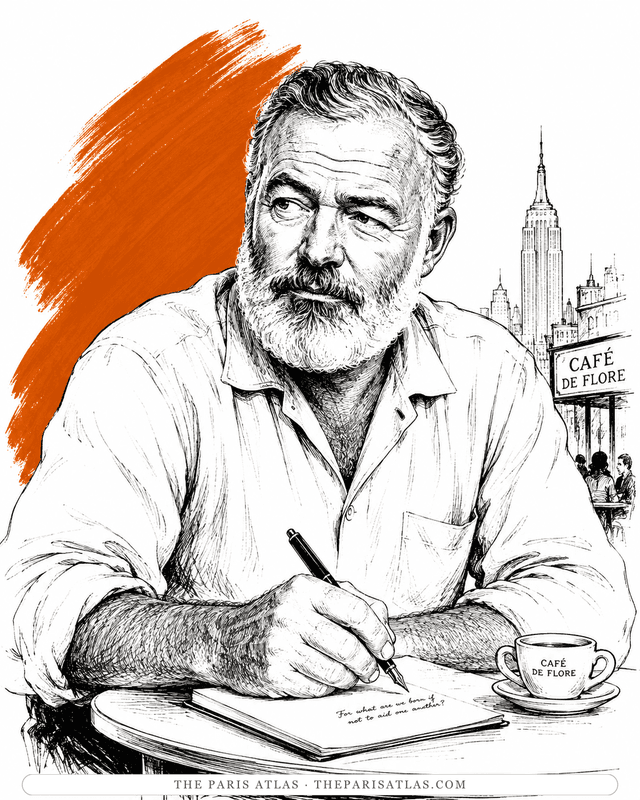
Ernest Hemingway
Fitzgerald vouched for him to Scribner's before they had met, then edited him better than he edited himself; the friendship's five rounds are chronicled in our journal.
View author
Henry Miller
The Brooklyn dropout who arrived in Paris broke at thirty-eight and wrote the exuberant, banned books that ended American censorship.
View author
Louis-Ferdinand Céline
The doctor of the Paris slums who wrote the century's blackest, funniest novel — and changed the sound of French prose.
View author