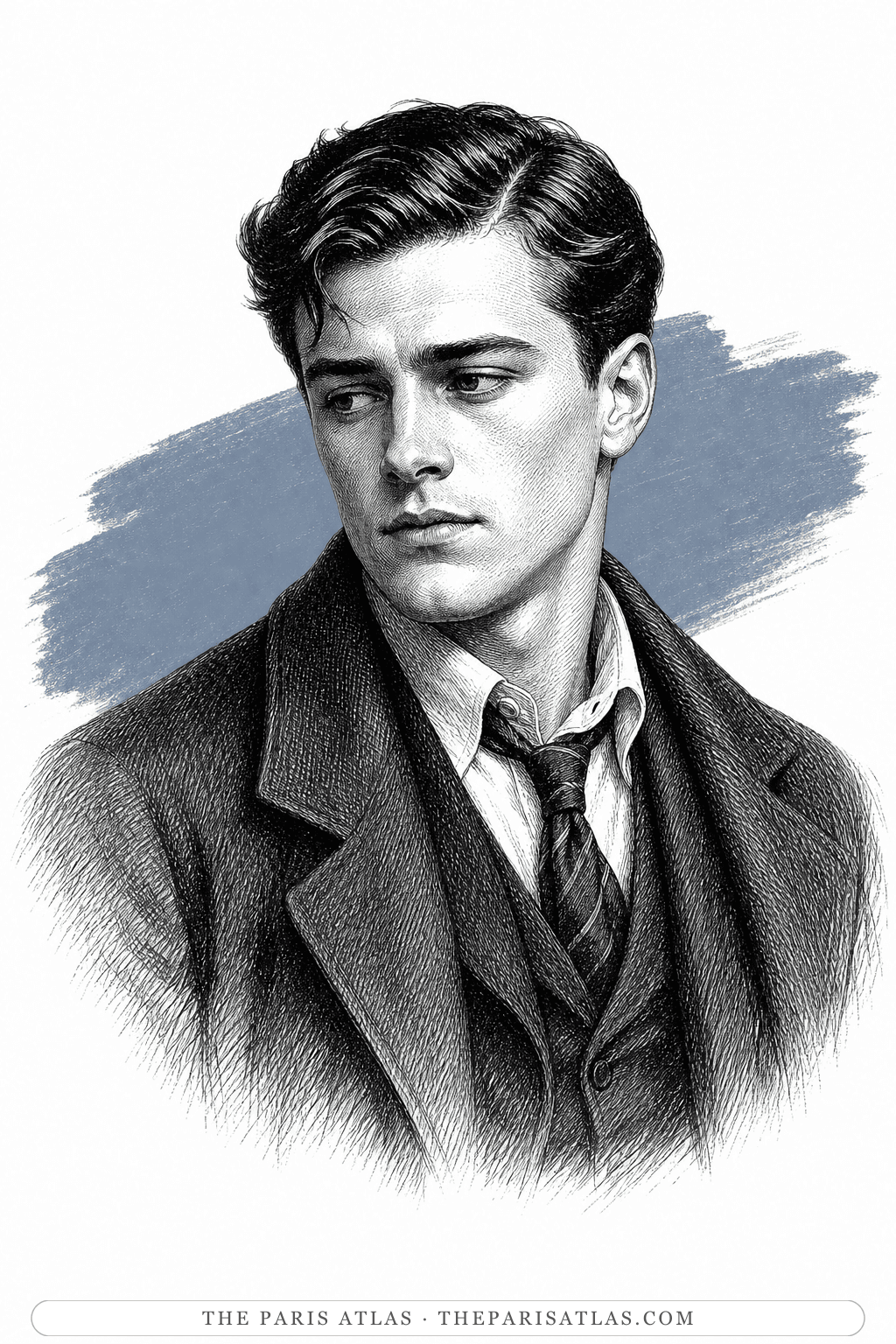
Amory Blaine
The novel's fictional hero: handsome, vain, certain he is destined for something great, and educated mainly by losing the things he was certain of.
To be always on the way to becoming something. 'It was always the becoming he dreamed of, never the being,' the narrator says in the first chapter. From the middle of the book onward the wish has one object: Rosalind Connage.
The book

At a glance
- The main character of both halves, 'The Romantic Egotist' and 'The Education of a Personage'
- Minneapolis, the St. Regis' boarding school, Princeton, New York, Maryland and the road back to Princeton; the war happens off the page
- Advertising copywriter, briefly and badly; he quits during the three-week drinking bout after Rosalind Connage leaves him
- Isabelle Borgé, Clara Page, Rosalind Connage (the one who damages him) and Eleanor Savage
- Monsignor Darcy, the priest whose distinction between a personality and a personage gives the book its terms
- F. Scott Fitzgerald — the author's own Princeton years, rearranged · 1896–1940 · St. Paul, Minnesota
Who they are in the book
Spoiler-freeAmory Blaine is the whole book. It follows him from childhood to about twenty-four, and almost nothing happens in it that does not happen to him. He starts out as his mother's product. The novel's opening sentence says he inherited from her 'every trait, except the stray inexpressible few, that made him worth while.' After that he loses one role after another: the prep-school social strategist, the Princeton literary man, the army officer, the advertising man, the fiancé. Whatever is left of him on the road back to Princeton at the end is the book's answer to what he actually is.
He is vain, he knows it, and the novel runs on that. Its two halves are named after him: 'The Romantic Egotist' first, then 'The Education of a Personage.' The second title comes from Monsignor Darcy, the priest who advises him, who separates a personality, meaning what you appear to be, from a personage, meaning what you build up by doing things. Amory's education comes through books, girls, a war he never reaches, one real heartbreak and a long stretch of drinking, roughly in that order.
How Amory Blaine Is Portrayed
- Raised by his motherBeatrice Blaine brought him up in hotels and private railway cars, on her nerves and her religion. The book opens by declaring him her inheritance, worthwhile traits and all.
- Why he chose PrincetonHe picks his university the way he picks everything else at that age. Princeton drew him 'with its atmosphere of bright colors and its alluring reputation as the pleasantest country club in America.'
- Educated by a borrowed bookTom D'Invilliers offers to lend him Oscar Wilde's The Picture of Dorian Gray. Amory takes it, 'for a month was keen on naught else', starts looking at Princeton through Wilde's eyes and reads enormously every night.
- Romantic rather than sentimentalHe explains himself to Rosalind Connage in the chapter written as a stage play: 'a sentimental person thinks things will last — a romantic person hopes against hope that they won't.'
- The night he sees the devilIn the strangest episode in the book, a pale man in pointed medieval shoes follows him out of a New York party; it is the feet that frighten him. Back in their Princeton room, Tom D'Invilliers looks up, shouts 'look behind!' and says something was watching. The novel plays it completely straight.
- Questioning himselfIn the final chapter he interrogates himself in a written question-and-answer: 'I don't want to repeat my innocence. I want the pleasure of losing it again.'
- The last sceneBroke, on foot and stripped of every pose, he walks back to Princeton, stretches his arms out to the sky and closes the novel: 'I know myself,' he cried, 'but that is all.'
Amory Blaine quotes
a new generation dedicated more than the last to the fear of poverty and the worship of success; grown up to find all Gods dead, all wars fought, all faiths in man shaken....
“I know myself,” he cried, “but that is all.”
I don’t want to repeat my innocence. I want the pleasure of losing it again.
If you like This Side of Paradise


If you like F. Scott Fitzgerald
Explore authors with a similar voice, perspective, and influence.
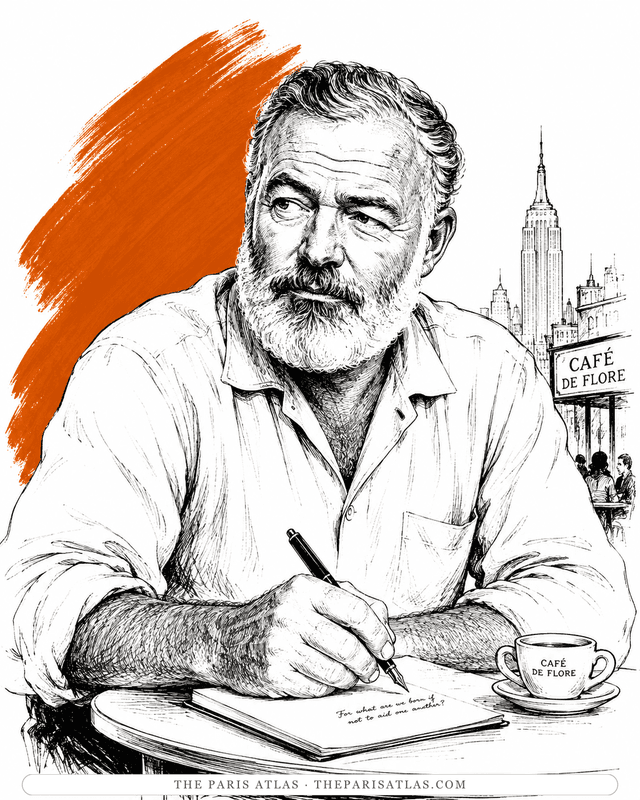
Ernest Hemingway
Fitzgerald vouched for him to Scribner's before they had met, then edited him better than he edited himself; the friendship's five rounds are chronicled in our journal.
View author
Henry Miller
The Brooklyn dropout who arrived in Paris broke at thirty-eight and wrote the exuberant, banned books that ended American censorship.
View author
Louis-Ferdinand Céline
The doctor of the Paris slums who wrote the century's blackest, funniest novel — and changed the sound of French prose.
View author