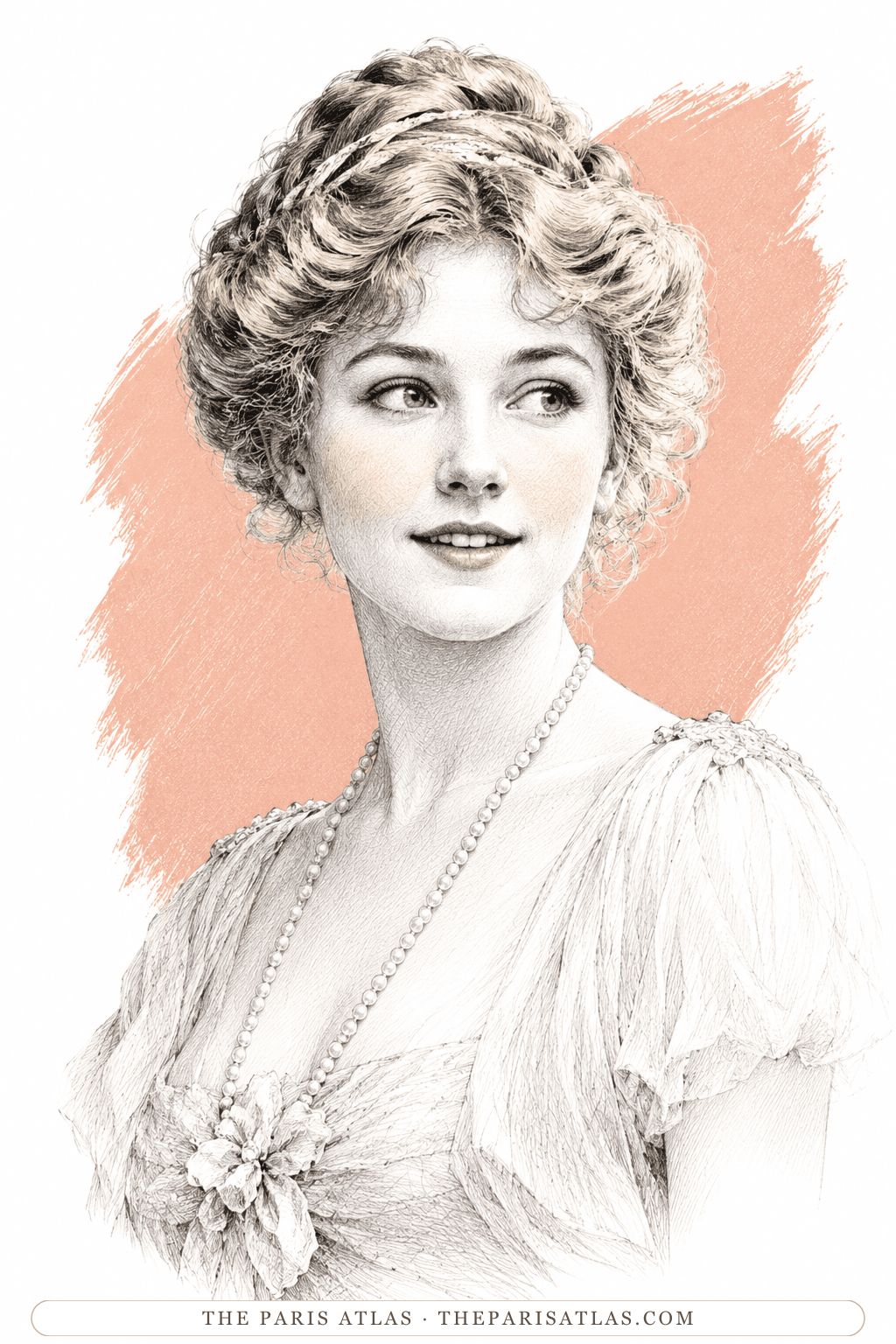
Rosalind Connage
The nineteen-year-old New York debutante at the novel's center: dazzling, honest about wanting money, in love with Amory, and unwilling to be poor.
What she wants, when she wants it, which is the script's own formula for her. The one condition she never hides is that she will not be poor: 'I like sunshine and pretty things and cheerfulness—and I dread responsibility.'
The book

At a glance
- The center of Book Two: the chapter written as a stage play, 'The Débutante', and the break-up that follows
- Nineteen, 'just'; Amory is almost twenty-three
- The Connages of Sixty-eighth Street, New York: an old name and failing money. Her brother Alec is the friend who brings Amory home
- Dawson Ryder, twenty-six and 'floating in money', produced by her mother on the night of her coming-out party. 'He'd be a—a background,' Rosalind concedes
- Zelda Sayre, in part — Fitzgerald reworked Rosalind to resemble her, and told her the heroine resembled her 'in more ways than four' · 1900–1948 · Montgomery, Alabama
Who they are in the book
Spoiler-freeRosalind Connage gets the novel's most famous entrance. The chapter that introduces her, 'The Débutante,' is written as a stage play, and before she has spoken a line the script announces: 'ROSALIND is—utterly ROSALIND. She is one of those girls who need never make the slightest effort to have men fall in love with them.' She is nineteen and newly out in New York society, expelled from the Spence School for a reason she says she has forgotten. Her reputation reaches Amory before she does, through her sixteen-year-old sister Cecelia, who reports that Rosalind 'treats men terribly. She abuses them and cuts them and breaks dates with them and yawns in their faces—and they come back for more.'
What makes her more than a stock debutante is that she is honest about the arithmetic. Her philosophy, the script says, is 'carpe diem for herself and laissez faire for others', and the same stage direction insists that 'in the true sense she is not spoiled.' When she chooses money over Amory she says so in plain words rather than dressing it up, and the rest of the novel measures what that cost him.
How Rosalind Connage Is Portrayed
- Her entranceThe stage direction that introduces her settles the question of her power before she speaks: 'She is one of those girls who need never make the slightest effort to have men fall in love with them.'
- What her sister says about herCecelia calls her 'a sort of vampire' before she appears, and gives the details: she abuses men, cuts them, breaks dates with them, yawns in their faces — 'and they come back for more.'
- She puts a price on herselfMinutes after meeting Amory she describes herself as a company for sale: 'Fifty-one shares, name, good-will, and everything goes at $25,000 a year.'
- Kissed, then refusedShe kisses Amory within minutes of meeting him — the script notes it is done 'definitely and thoroughly' — then refuses a second: 'I've kissed dozens of men. I suppose I'll kiss dozens more.' The scene ends on her scoreboard: 'Score—Home Team: One hundred—Opponents: Zero.'
- The diveAt a swimming party in Westchester she dives from the roof of a thirty-foot summer-house that no man there will jump from. When Howard Gillespie, one of her suitors, follows her down, she is unimpressed: 'It didn't make it any easier,' she said, 'it just took all the courage out of it.'
- Told to marry moneyOn the night of her coming-out party her mother lectures her from a note-book. The Connage money is failing, this is the family's last year in the house on Sixty-eighth Street, and Rosalind's job is to marry rich. Her answer: 'Yes, I suppose some day I'll marry a ton of it—out of sheer boredom.'
- 'Poor Amory!'Her declaration of love comes with a warning attached. 'I love you—now,' she says, and a moment later, 'in an odd burst of prophecy,' adds: 'Poor Amory!' Within two weeks they are deeply in love. Five weeks after that it is over.
- The break-upIt happens in the Connage library, and she does all the talking: 'The very qualities I love you for are the ones that will always make you a failure,' and then the line that ends it, 'Marrying you would be a failure and I never fail.' She hands back the ring. Amory later dates the end 'at exactly twenty minutes after eight on Thursday, June 10, 1919.'
Rosalind Connage quotes
No, I’m romantic—a sentimental person thinks things will last—a romantic person hopes against hope that they won’t.
The very qualities I love you for are the ones that will always make you a failure.
The education of all beautiful women is the knowledge of men.
The novel never shows her again after the library scene. Amory reads the rest in a newspaper, in the chapter where everything left to him goes at once: 'Mr. and Mrs. Leland R. Connage are announcing the engagement of their daughter, Rosalind, to Mr. J. Dawson Ryder, of Hartford, Connecticut—' The announcement is printed directly above the gossip column's account of Amory's own Atlantic City hotel scandal.
He decides on the spot that it is finished: 'So far as he was concerned, young Rosalind was dead.' After that she exists only in the list of names the closing chapters keep repeating, Isabelle, Clara, Rosalind, Eleanor, and in one cry near the last page: 'But—oh, Rosalind! Rosalind!...'
If you like This Side of Paradise


If you like F. Scott Fitzgerald
Explore authors with a similar voice, perspective, and influence.
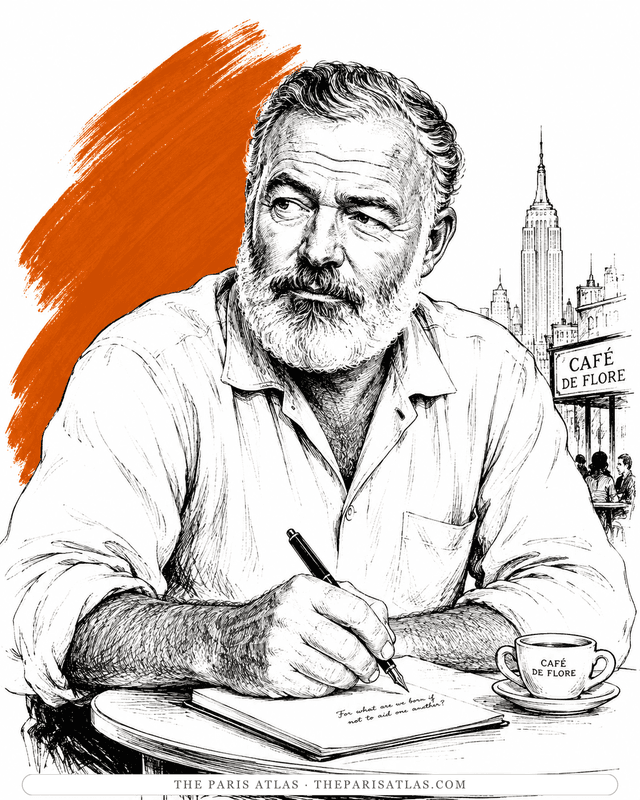
Ernest Hemingway
Fitzgerald vouched for him to Scribner's before they had met, then edited him better than he edited himself; the friendship's five rounds are chronicled in our journal.
View author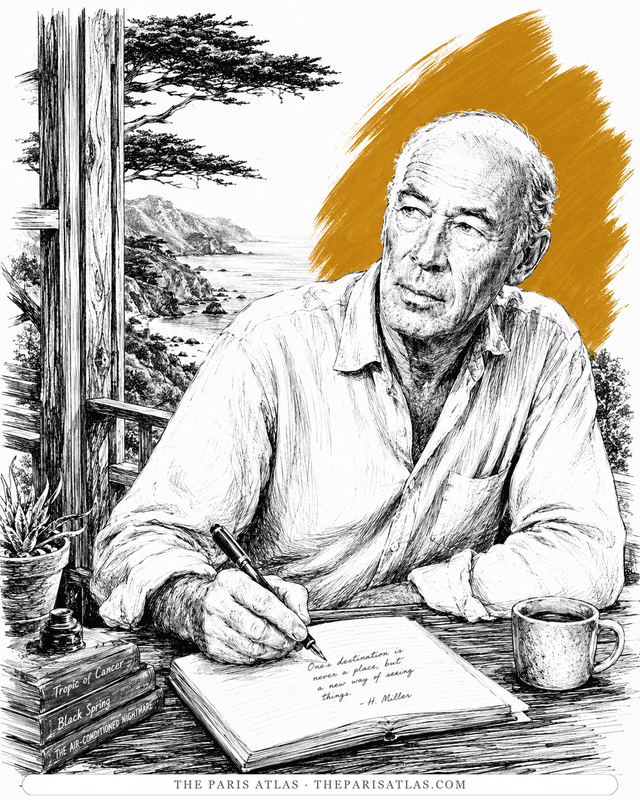
Henry Miller
The Brooklyn dropout who arrived in Paris broke at thirty-eight and wrote the exuberant, banned books that ended American censorship.
View author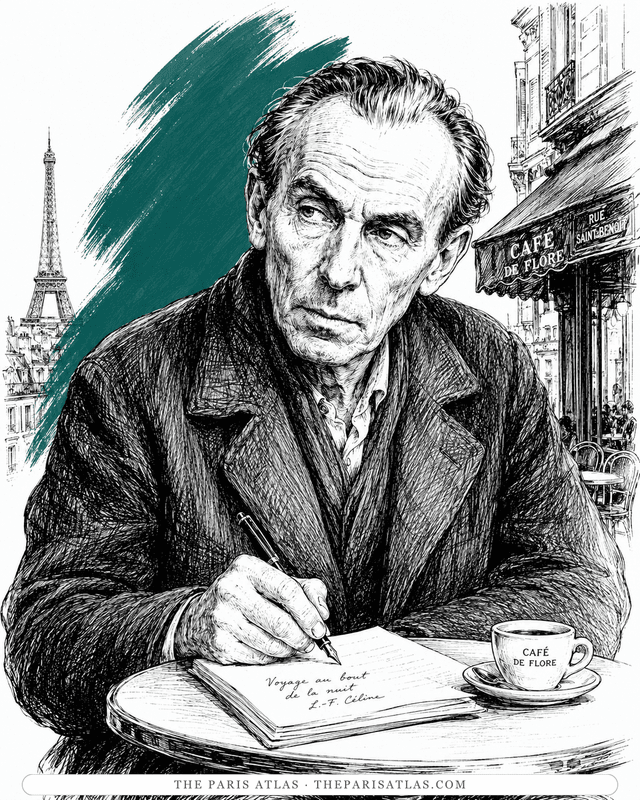
Louis-Ferdinand Céline
The doctor of the Paris slums who wrote the century's blackest, funniest novel — and changed the sound of French prose.
View author