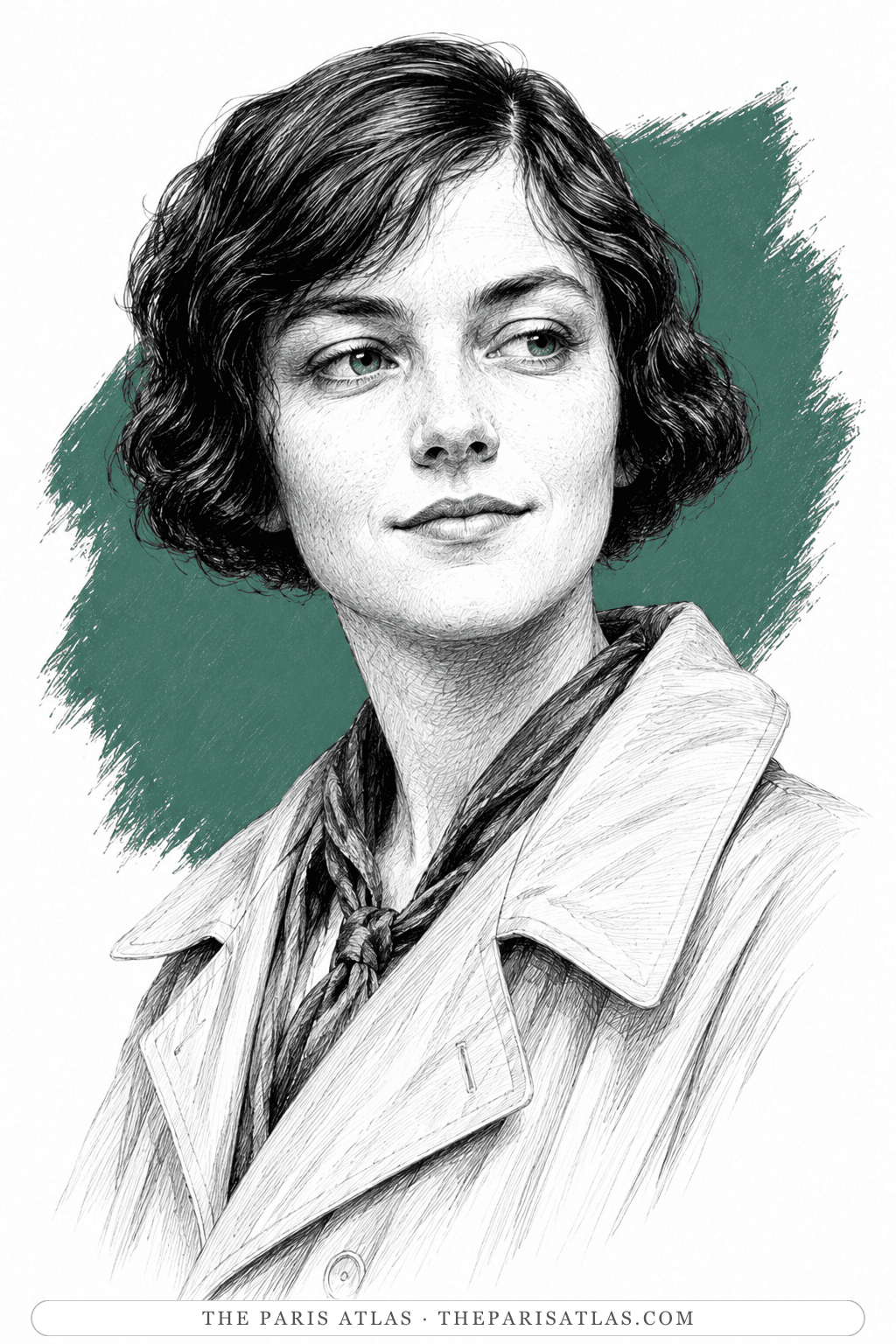
Eleanor Savage
Amory's last affair: an eighteen-year-old atheist he meets on a haystack during a Maryland thunderstorm, reckless enough to end his romanticism for good.
To live by her own mind without having to marry to do it. 'If I were born a hundred years from now, well and good,' she tells Amory, 'but now what's in store for me—I have to marry, that goes without saying.'
The book

At a glance
- Book Two, Chapter 3, 'Young Irony' — she appears in no other chapter
- Eighteen; Amory has just turned twenty-three and has recently been left by Rosalind Connage
- Ramilly County, Maryland, in a large old house with her grandfather, Ramilly Savage; raised in France, then Baltimore
- From mid-August nearly through September, the summer after the break-up in New York
Who they are in the book
Spoiler-freeEleanor Savage gets one chapter of the novel, 'Young Irony', and it is the strangest one in it. Amory Blaine, the young man the book follows, has gone to stay with an uncle in rural Maryland after losing the woman he wanted to marry. He gets caught in a thunderstorm, hears a girl singing a French poem to herself on top of a haystack, and climbs up. She is eighteen, she has just decided that she does not believe in God, and she came out into the lightning to see whether anything would happen to her.
The affair lasts about six weeks, from mid-August to late September. They swim, ride, read Swinburne and Rupert Brooke aloud to each other and write poems at the dinner table. The narrator is honest that neither of them is really in love: they are two clever people performing for each other because the performance is better than what either of them is feeling.
She is also the only person in the book who says out loud what it cost to be a clever girl in America just after the First World War, and the novel gives her a full page to do it.
How Eleanor Savage Is Portrayed
- Singing on a haystack in a thunderstormLost in the woods in a downpour, Amory hears a low voice nearby singing Paul Verlaine's autumn song in French. His reaction is the line that opens the whole episode: 'Who the devil is there in Ramilly County who would deliver Verlaine in an extemporaneous tune to a soaking haystack?' She calls back, unbothered, asking whether he is Manfred, St Christopher or Queen Victoria.
- What he sees in the lightningThe storm shows her to him in one flash: pale skin 'the color of marble in starlight', slender brows, short damp bobbed hair, and eyes that 'glittered green as emeralds in the blinding glare'. She is unimpressed by the effect she has just had, and says she supposes he is about to tell her that her green eyes are burning into his brain.
- She introduces herself like a formAsked who she is, she recites it deadpan: 'name of Savage, Eleanor; live in big old house mile down road; nearest living relation to be notified, grandfather—Ramilly Savage; height, five feet four inches; number on watch-case, 3077 W; nose, delicate aquiline; temperament, uncanny.'
- Why she was out in the stormShe had been afraid to say she did not believe in God in case the lightning struck her, so she put on a slicker and rubber boots and went out in a thunderstorm to find out. Nothing happened. She reports the result plainly: she is a materialist, she was a Christian Scientist the year before, and she is only eighteen.
- Brought up in France, exiled to MarylandShe was born and raised in France by a restless mother, came to America when her mother died, and insisted on being a debutante in Baltimore at seventeen. After a wild winter and a row with every relative she had there, she was sent to her grandfather's big gloomy house in the country. She hates Maryland.
- Poems at the dinner tableThey read Swinburne's 'The Triumph of Time' over and over, and she reads aloud in a husky voice that the narrator says brings them closer than being in each other's arms. She writes verse herself, and the two of them quarrel 'dangerously' over whether the words sea and see can be rhymed. She tells Amory he looks like the poet Rupert Brooke, and he spends the rest of the affair imitating him.
- 'Why am I a girl?'Riding out on their last night she says what none of the novel's other women says: that Amory can wander off and be bored and come back and be forgiven, while she has 'the brains to do everything, yet tied to the sinking ship of future matrimony.' She is too bright for most men and has to let them patronize her intellect to hold their attention, and every year she does not marry lowers her odds of a first-class man.
- Reckless on purposeShe rides at one in the morning, patting Amory with her riding-crop when he wants to go home, and heads for a hidden pool in the woods because the night is ghostly. He follows her, the narration says, 'as he had followed her all day for three weeks'.
Eleanor Savage quotes
I’m one of those people who go through the world giving other people thrills, but getting few myself except those I read into men on such nights as these. I have the social courage to go on the stage, but not the energy; I haven’t the patience to write books; and I never met a man I’d marry. However, I’m only eighteen.
The argument on the last night turns into a fight about religion. Amory tells her that people like her always call for a priest on their deathbeds. She asks 'Will I?' twice, shouts that she is going over the cliff, and rides straight at the edge of the plateau. Ten feet short she throws herself sideways out of the saddle and lands in brush. Her horse goes over and is killed.
What she says walking home is the only unguarded thing either of them says all summer: 'I've got a crazy streak. Twice before I've done things like that. When I was eleven mother went—went mad—stark raving crazy. We were in Vienna—' Amory's feeling for her drains away over the same walk, and the novel is blunt about why: he had loved himself in her, so what he hated at her door was a mirror. They do not kiss, and he never sees her again.
She sends him a poem some years later, printed in full at the end of the chapter, that treats the whole thing as already ancient. Her name stays in the list of women Amory recites to himself in the last chapters, and once, near the end, he places her exactly: Rosalind was nothing like his mother, and Eleanor was his mother again, 'only wilder and brainier.'
If you like This Side of Paradise


If you like F. Scott Fitzgerald
Explore authors with a similar voice, perspective, and influence.
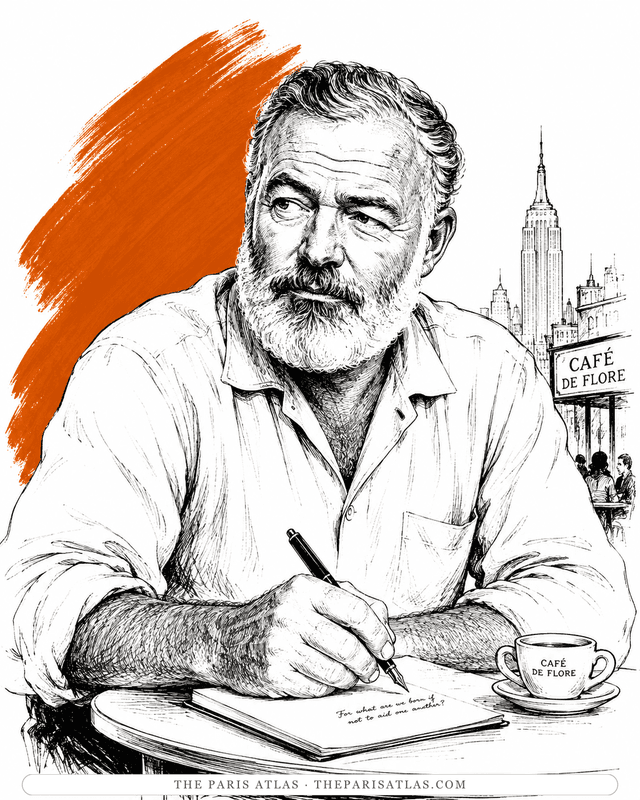
Ernest Hemingway
Fitzgerald vouched for him to Scribner's before they had met, then edited him better than he edited himself; the friendship's five rounds are chronicled in our journal.
View author
Henry Miller
The Brooklyn dropout who arrived in Paris broke at thirty-eight and wrote the exuberant, banned books that ended American censorship.
View author
Louis-Ferdinand Céline
The doctor of the Paris slums who wrote the century's blackest, funniest novel — and changed the sound of French prose.
View author