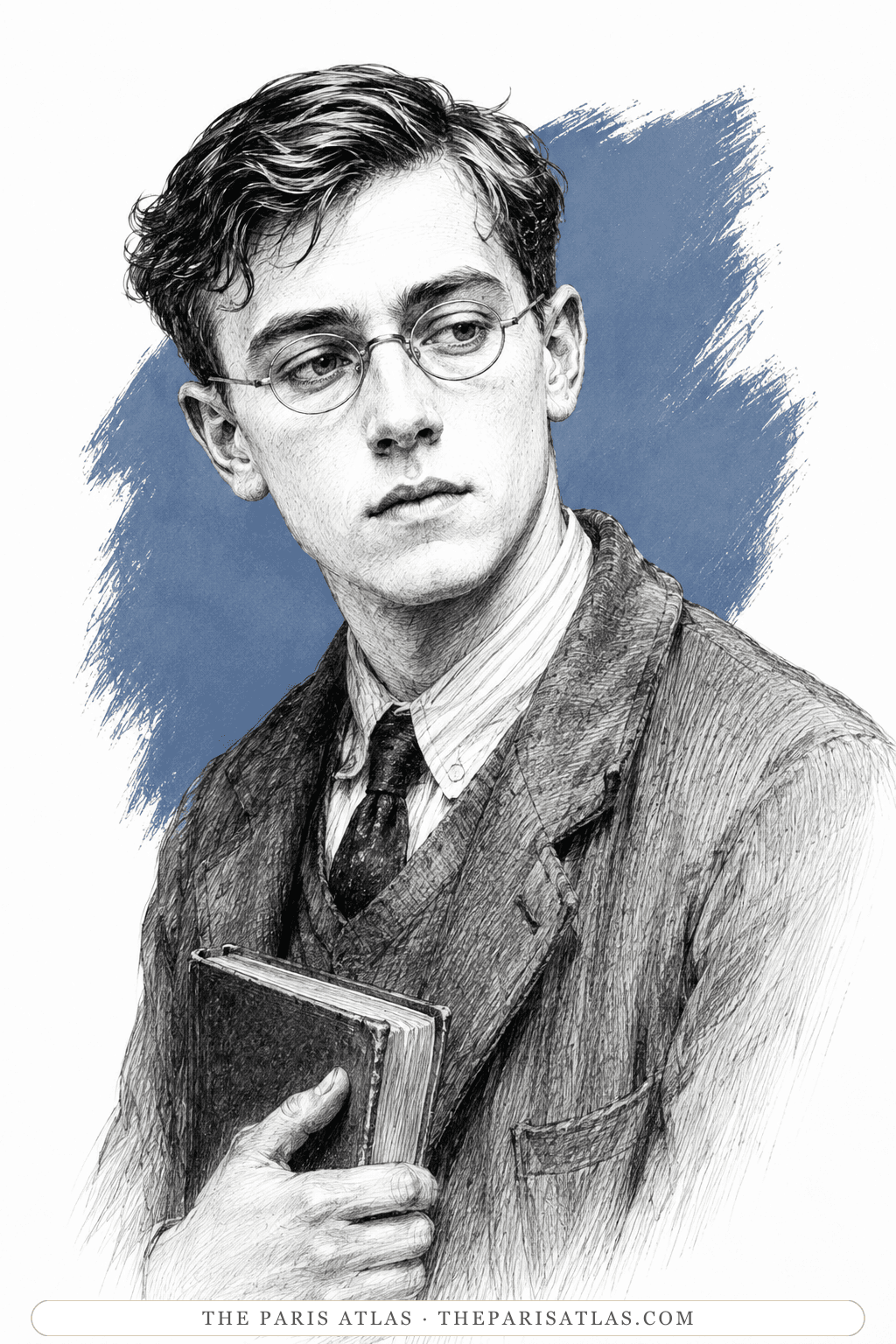
Thomas Parke D'Invilliers
The Princeton student poet who writes the love poems in the college magazine, lends Amory his Oscar Wilde, and is later credited as the author of The Great Gatsby's epigraph.
Someone at Princeton to read with. Finding 'a person who could mention Keats without stammering, yet evidently washed his hands, was rather a treat,' the narration says.
The book

At a glance
- Amory's closest literary friend, from the dining hall at Princeton to a shared flat in New York
- Tom to his friends; Thomas Parke D'Invilliers in full, mostly by people mocking him
- Student poet for the Nassau Literary Magazine at Princeton; magazine work in New York after the war
- Both halves of the novel: Princeton, the last night before the war, and the New York chapter called 'Experiments in Convalescence'
Who they are in the book
Spoiler-freeAmory meets Tom D'Invilliers over a conversation about poetry in a Princeton dining hall. Tom's reputation arrives first: 'that awful highbrow, Thomas Parke D'Invilliers,' the student who signs the passionate love poems in the Nassau Literary Magazine, the college magazine everyone calls the Lit. He is nineteen, stoop-shouldered, pale blue eyes, and has no idea that Princeton is a social competition, which is why being seen with him takes a little nerve on Amory's part. Tom's own view is that the university is half deadly Philistines and half deadly grinds, and that Amory is a rare find: someone who can mention the poet John Keats without stammering.
Fitzgerald kept him. Five years later the poem printed as the epigraph to The Great Gatsby, beginning 'Then wear the gold hat, if that will move her,' is signed Thomas Parke d'Invilliers. A character invented in this novel is credited with the first words of the next one.
How Thomas Parke D'Invilliers Is Portrayed
- Known before he appearsHe reaches the reader as a reputation: the awful highbrow who signs the passionate love poems in the Nassau Literary Magazine.
- What he looks likeNineteen, stooped shoulders, pale blue eyes, and 'without much conception of social competition and such phenomena of absorbing interest'.
- The book he lends AmoryHe offers Amory his copy of Oscar Wilde's The Picture of Dorian Gray across the dining-hall table, then takes him up to his room for the rest. The loan sets off a month of Wilde and Swinburne and reading enormously every night, and the novel's education-by-books starts here.
- Decorating the roomThe two of them gild the ceiling of Tom's room and hang imitation tapestry and tall candlesticks. He was 'an occasion rather than a friend' at first, the narration admits, before becoming the real thing.
- The one who sees something tooOn the night of the devil episode Tom looks up in their Princeton room, shouts 'look behind!' and tells Amory that something was watching him. He is the only other person in the novel who sees anything at all.
- Sharing a flat in New YorkAfter the war he and Amory take an apartment together, and it is Tom's furniture that decides them. It includes a carved Louis XV chair nobody can sit in for long, because, Tom claims, one is sitting in the lap of Madame de Montespan's ghost.
- Credited in The Great GatsbyThe epigraph of The Great Gatsby (1925) is signed Thomas Parke d'Invilliers. Fitzgerald promoted his invented undergraduate poet to the author of four real published lines.
Thomas Parke D'Invilliers quotes
Every author ought to write every book as if he were going to be beheaded the day he finished it.
If you like This Side of Paradise


If you like F. Scott Fitzgerald
Explore authors with a similar voice, perspective, and influence.
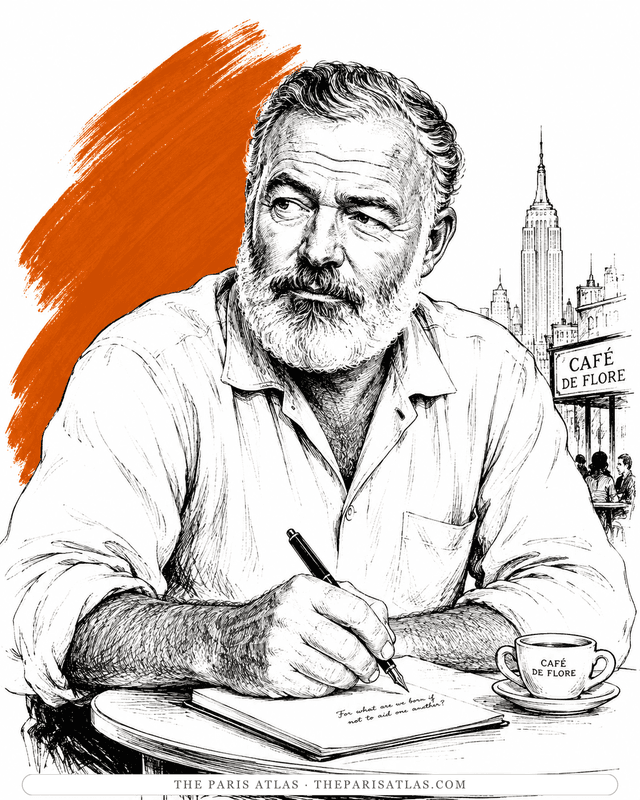
Ernest Hemingway
Fitzgerald vouched for him to Scribner's before they had met, then edited him better than he edited himself; the friendship's five rounds are chronicled in our journal.
View author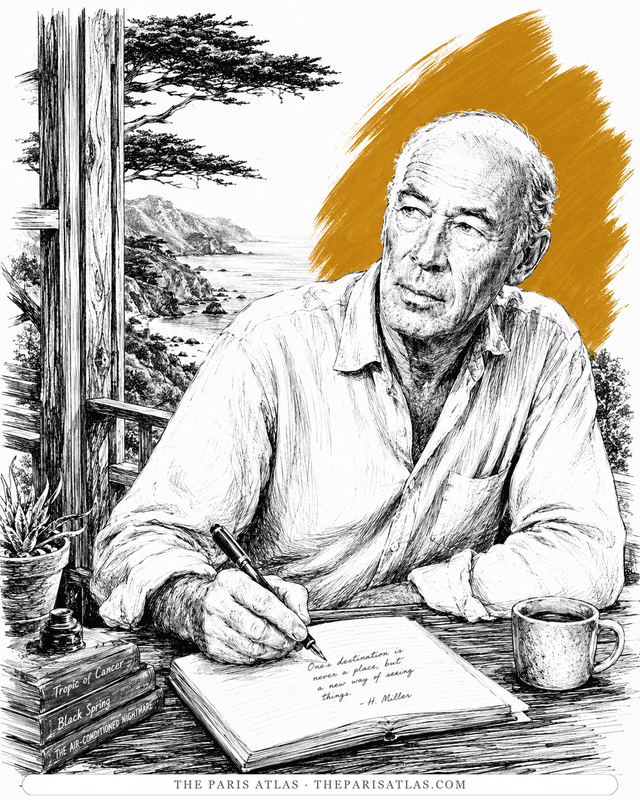
Henry Miller
The Brooklyn dropout who arrived in Paris broke at thirty-eight and wrote the exuberant, banned books that ended American censorship.
View author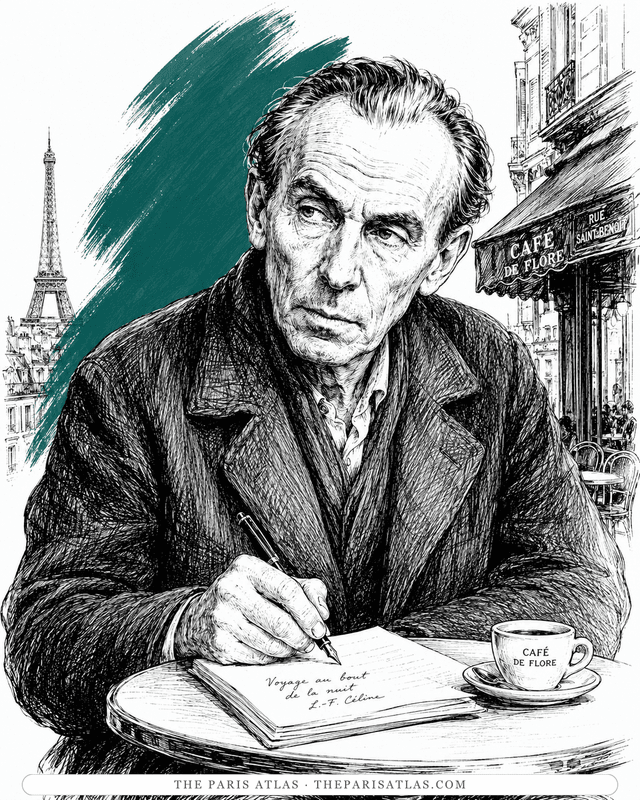
Louis-Ferdinand Céline
The doctor of the Paris slums who wrote the century's blackest, funniest novel — and changed the sound of French prose.
View author