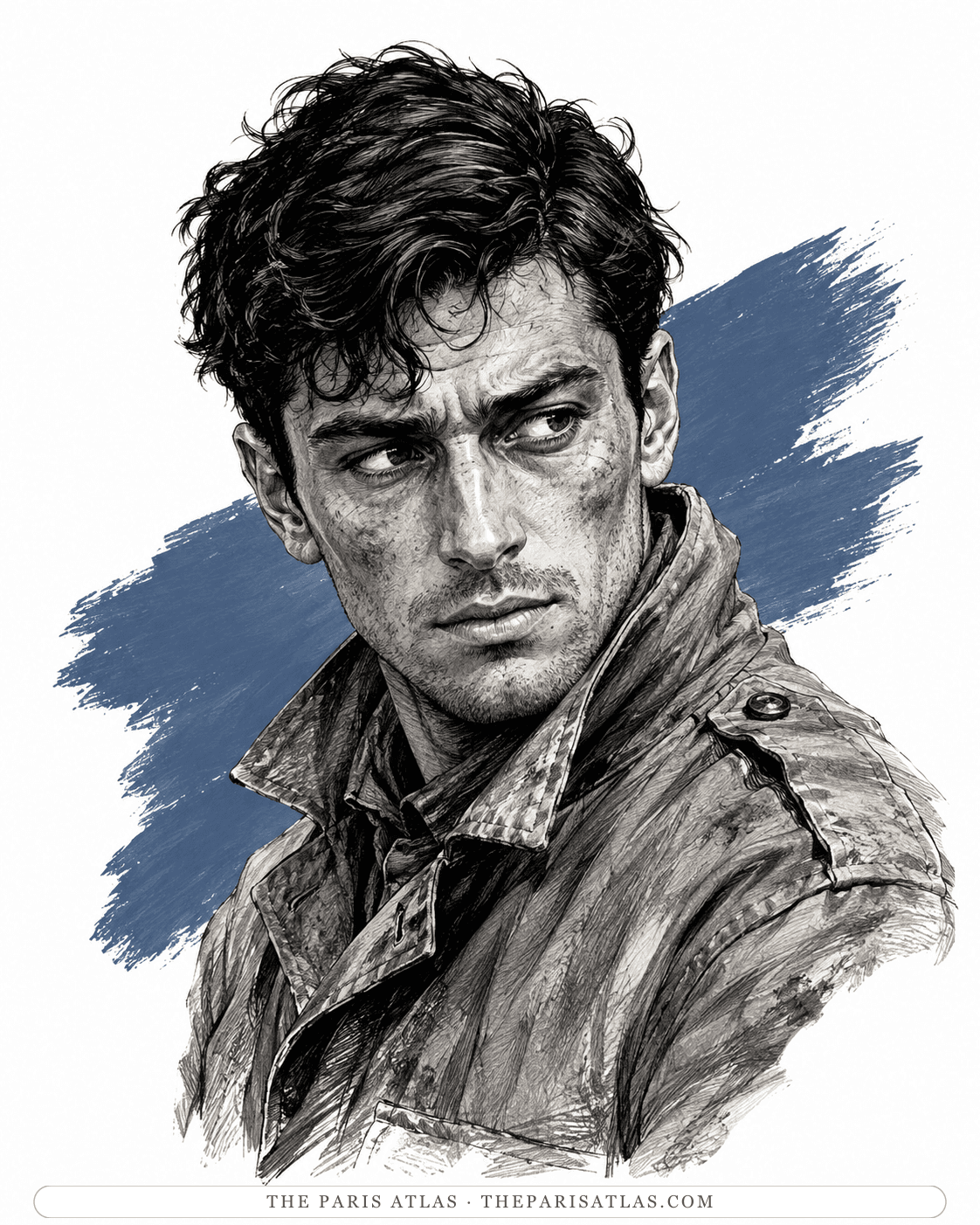
Bartolomeo Aymo
An ambulance driver, and the one Frederic Henry likes best. Italian rear-guard troops take the group for Germans and shoot him.
He never says. While the Italian army is falling back from Caporetto in 1917 he picks up two frightened sisters on the road, frightens the elder one by accident, and then cuts two pieces of cheese out of his knapsack and tells her to stop crying.
The book

At a glance
- Bartolomeo Aymo — an ambulance driver under Frederic Henry on the retreat from Caporetto
- Aymo throughout; Barto once, by Frederic
- Italian rear-guard troops, who took the group for Germans
- Crossing a railway embankment about ten kilometres short of Udine
Who they are in the book
Spoiler-freeAymo drives the car Frederic Henry rides in when the column leaves Gorizia. The book calls him Aymo almost throughout and gives him his full name once, in a wrecked villa, setting two bottles down: "This was a fine place," Bartolomeo Aymo said.
He is cheerful for most of the retreat, and the novel uses that against the reader. He is killed in the middle of a conversation about nothing, by his own side, on ground where none of them thought there was any danger.
How Bartolomeo Aymo Is Portrayed
- The two sistersHe picks up two girls on the road, about sixteen and a year younger, and cannot understand a word of their dialect. He puts a hand on the elder one's thigh; she pushes it away and he laughs. Then he tries to reassure her using a vulgar word, repeats it until she starts to cry. "I guess I scared her," Aymo says. "I didn't mean to scare her." He cuts them cheese to stop it. Frederic's word for the pair of them is two wild birds.
- "What a beautiful bridge"Cut off, on foot, hunting a way across a flooded river, he looks at a plain iron railway bridge and says that. It is the last thing anyone in the group finds to admire.
- Two shots from the brushCrossing the tracks toward a side-road, he lurches, trips and falls face down. He is hit low in the back of the neck and the bullet has ranged upward and come out under the right eye. He dies while Frederic is stopping up the two holes. Piani wipes at his face, then lets it alone, and puts his cap over it. The shots came from Italian rear guards firing at anything they saw.
- "I had liked him as well as any one I ever knew"Frederic looks back at the body from the far side of the embankment: quite small, arms by his side, boots together, cap over the face. "He looked very dead. It was raining." He has Aymo's papers in his pocket and will write to the family.
Aymo is the only one of the three drivers who dies, and the novel is careful about who kills him.
If you like A Farewell to Arms


If you like Ernest Hemingway
Explore authors with a similar voice, perspective, and influence.

Louis-Ferdinand Céline
The other great stylist the Great War produced — where Hemingway cut the language down, Céline set it on fire. The same wound, opposite treatments.
View author
Henry Miller
Paris on no money a decade later, with the restraint removed. Miller called Hemingway's Paris a tourist's Paris; readers get to referee.
View author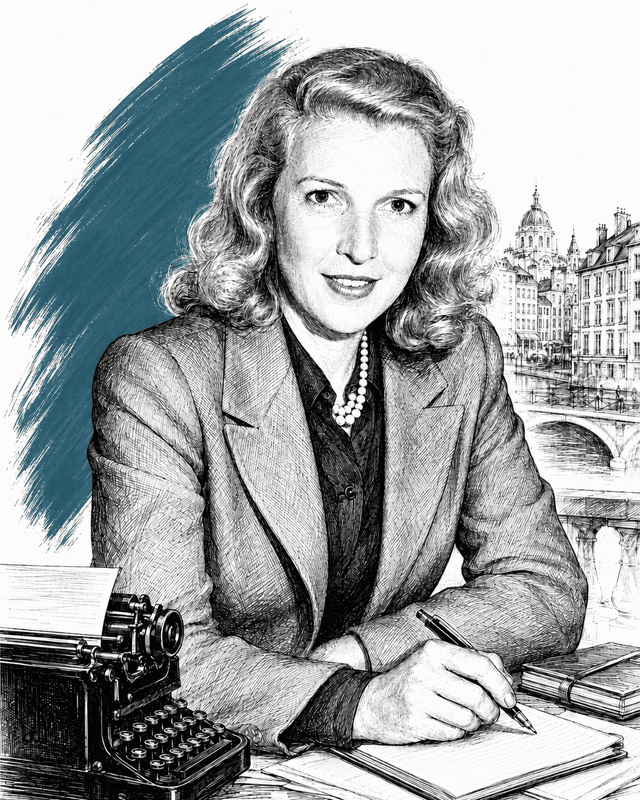
Martha Gellhorn
War correspondent who covered the Spanish Civil War, D-Day, and conflicts across five more decades; Hemingway's third wife, 1940–1945.
View author