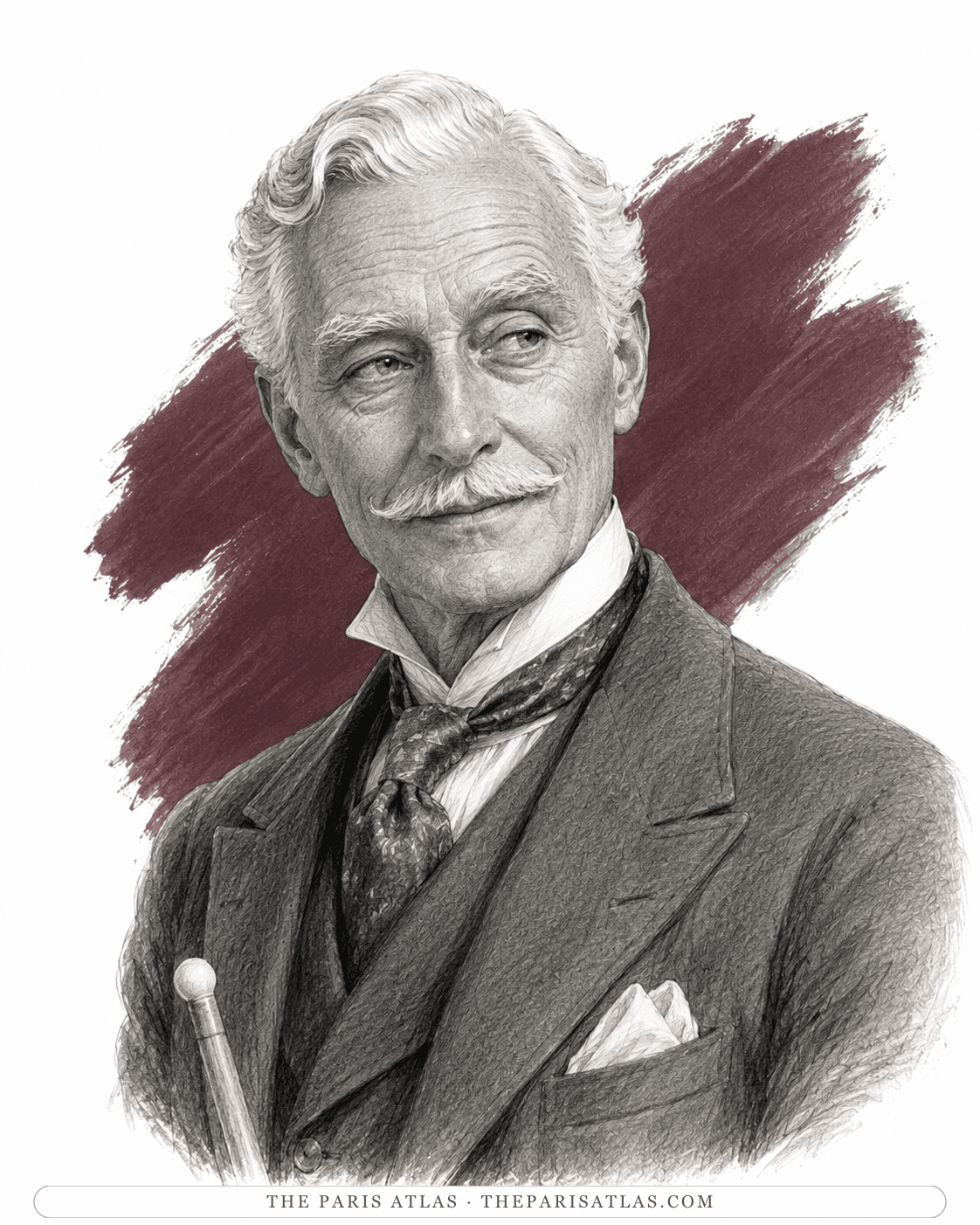
Count Greffi
A retired diplomat of ninety-four, staying at the same hotel in Stresa. He plays billiards with Frederic Henry and beats him.
To become devout before he dies, and to keep living. He says he had always expected to grow religious as he got older and that it has not come, and that he would like to live forever: "I very nearly have."
The book

At a glance
- Count Greffi — a retired diplomat of ninety-four, at the hotel in Stresa with his niece
- The diplomatic service of Austria and then of Italy; a contemporary of Metternich
- Birthday parties that were the great social event of the city
- Billiards, eighteen points in a hundred, a franc a point, two bottles of champagne
- "Some one I love" — the same answer Frederic gives
- Count Giuseppe Greppi · 1819–1921 · Milan
Who they are in the book
Spoiler-freeCount Greffi is ninety-four, has white hair and a white mustache, and has spent his career in the diplomatic service of both Austria and Italy. He was a contemporary of Metternich. His birthday parties are the great social event of Milan, and he intends to live to a hundred.
Frederic Henry meets him again at the hotel in Stresa, in civilian clothes and out of the war. They play billiards for a franc a point and drink two bottles of iced champagne, and talk about the war, old age, and whether either of them expects anything after death.
How Count Greffi Is Portrayed
- Ninety-fourThe barman reports that he is younger than ever and drank three champagne cocktails before dinner the night before. Frederic's own account is a smoothly fluent game of billiards played against his own ninety-four-year-old brittleness. Greffi says he is sometimes afraid he will break off a finger "as one breaks a stick of chalk."
- Eighteen points and a franc a pointHe offers ten points in a hundred, then fifteen. Frederic says that would be fine but he will lose anyway, so Greffi settles it at eighteen and a franc a point. He reaches his hundredth point with Frederic at ninety-four, then smiles and pats him on the shoulder. He also asks whether they might switch to Italian, because English has become tiring, and says that is how he knows he is getting old.
- "They do not grow wise. They grow careful"Frederic calls him wise. Greffi refuses it: the wisdom of old men is "the great fallacy." Told that being careful might be a kind of wisdom, he allows the point and dismisses it. "It is a very unattractive wisdom."
- "I think it is stupid"His verdict on the war, asked directly. He picks Italy to win, because they are a younger nation, and when Frederic asks what happens after that, he says "They become older nations." Told that sounds wise, he corrects him again: "That is not wisdom. That is cynicism."
- "Pray for me if I am dead"Asked whether he is a believer, Frederic says "At night." Greffi says he had expected to become more devout as he grew older and it has not come, which he calls a great pity, and that all his family died very devout. He is asking several friends to pray for him. Frederic promises he will.
The billiards scene is the last quiet evening in the novel.
Count Giuseppe Greppi was real. Hemingway met him at Stresa in September 1918, on ten days' leave from the Milan hospital, and spent the time playing billiards at the Grand Hôtel des Îles Borromées. Greppi was born in Milan in 1819 and died in Rome in 1921 at a hundred and two. He entered Austrian service as an attaché in 1842 and worked in the state chancellery under Metternich, changed sides after the Milan rising of 1848, and served Sardinia and then Italy in London, Berlin, Athens, Constantinople, Stuttgart, Munich and Madrid before becoming ambassador at St Petersburg in 1883. That is why the novel's account of Greffi's career reads as exactly specified rather than invented: it is a real curriculum vitae. Hemingway lowered the age. Greppi was ninety-nine when they met, not ninety-four. Some accounts give the name as Emanuele Greppi, a Milanese relative, but the career in the novel is Giuseppe's.
If you like A Farewell to Arms


If you like Ernest Hemingway
Explore authors with a similar voice, perspective, and influence.

Louis-Ferdinand Céline
The other great stylist the Great War produced — where Hemingway cut the language down, Céline set it on fire. The same wound, opposite treatments.
View author
Henry Miller
Paris on no money a decade later, with the restraint removed. Miller called Hemingway's Paris a tourist's Paris; readers get to referee.
View author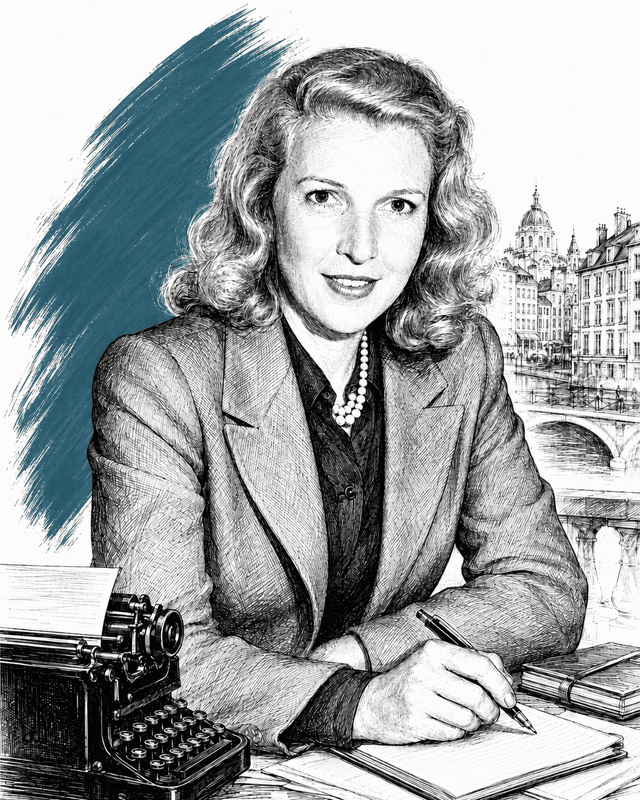
Martha Gellhorn
War correspondent who covered the Spanish Civil War, D-Day, and conflicts across five more decades; Hemingway's third wife, 1940–1945.
View author