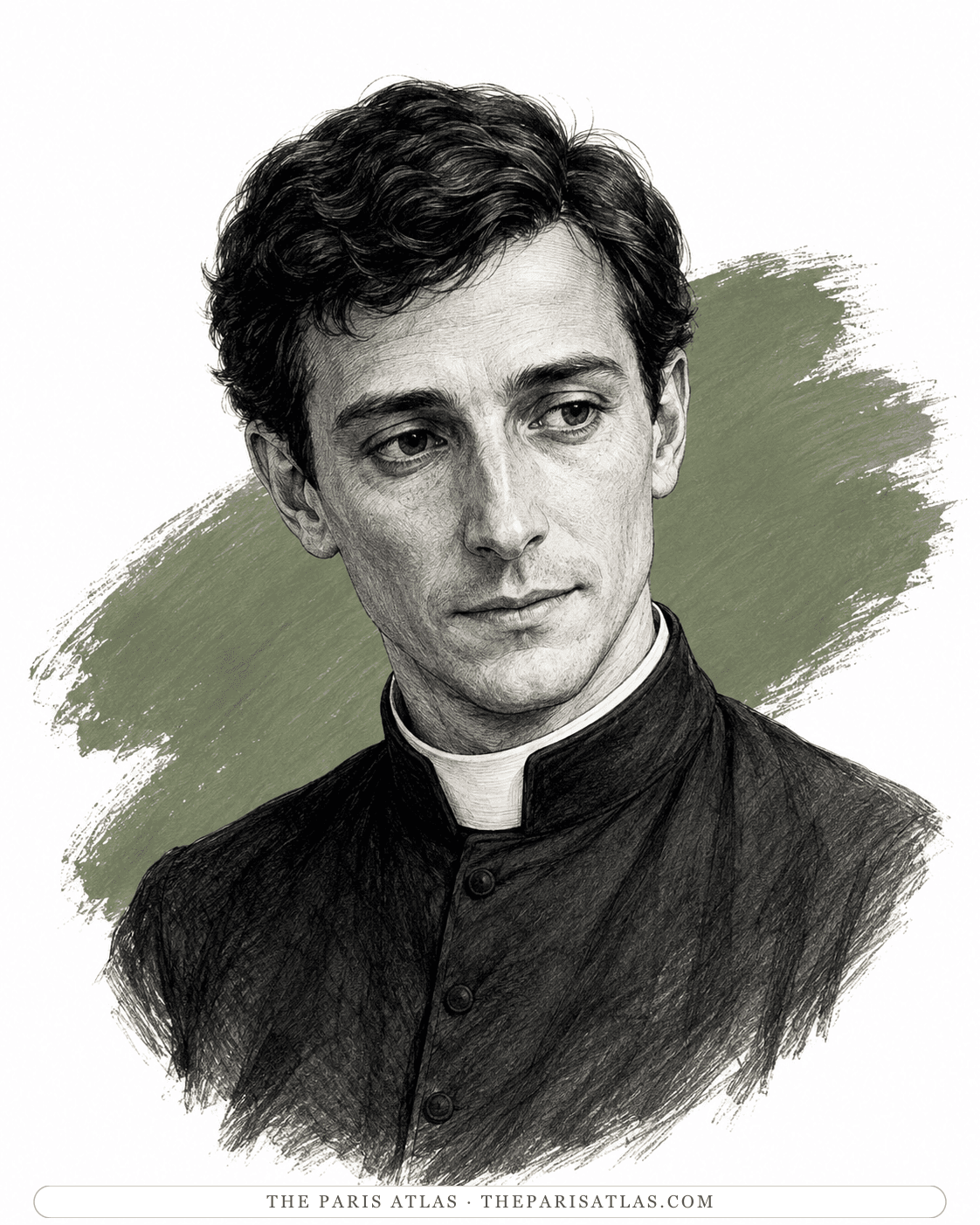
The priest
The unit's chaplain, who is teased at the officers' mess every night. He wants Frederic to spend his leave with his family in the Abruzzi.
For Frederic Henry to understand love as service: "When you love you wish to do things for. You wish to sacrifice for. You wish to serve." For himself, to get home to his family at Capracotta, in the mountains of the Abruzzi.
The book

At a glance
- The unit's priest — young, unnamed throughout
- The same gray uniform as the officers, with a dark red velvet cross above the pocket
- Capracotta, in the Abruzzi
- The nightly target, which he treats as a joke
- Presents to the hospital, and the only serious conversation in the book about what love is
Who they are in the book
Spoiler-freeThe priest is never named. He is young, blushes easily, and wears the same gray uniform as everyone else with a dark red velvet cross above the pocket. At the officers' mess he is the designated target, and he absorbs it every night without ever quite conceding the point.
He is also the only person in the book who tells Frederic the truth about himself early, and turns out to be right. He comes from Capracotta in the Abruzzi, and what he wants — repeatedly, and in vain — is for Frederic to go and see it.
How The priest Is Portrayed
- The uniform and the blush"The priest was young and blushed easily and wore a uniform like the rest of us but with a cross in dark red velvet above the left breast pocket of his gray tunic."
- "Priest every night five against one"The captain's joke, delivered in pidgin Italian so that the visiting American cannot miss it, complete with a gesture. Everyone at the table laughs. "The priest accepted it as a joke."
- The mess theologyThe major announces that the Pope wants the Austrians to win and that he himself is an atheist; a lieutenant offers to lend the priest the book that shook his faith. The priest's whole reply is two sentences: "It is a filthy and vile book," he says. "You do not really like it."
- The AbruzziHe wants Frederic to spend his leave at Capracotta with his family, where it is clear and cold and dry and the roads are frozen hard as iron. Frederic goes to the cities instead, and afterwards is suddenly and precisely sorry about it — the priest had written to his father, and they had been expecting him.
- What love is"What you tell me about in the nights. That is not love. That is only passion and lust. When you love you wish to do things for. You wish to sacrifice for. You wish to serve." Frederic says he doesn't love. "You will. I know you will. Then you will be happy."
- "But you call me father"Visiting the hospital with presents, he is told he is a fine boy. "I am a boy," he answers. "But you call me father." Frederic says it is politeness, and the priest smiles and asks, hopefully, whether he is wanted for anything.
The priest is proved right and never gets to hear it. Everything he tells Frederic about love — that what he has been describing is not it, and that when it comes he will want to sacrifice and to serve — is what happens over the next two hundred pages. But Frederic leaves the front and never sees him again, so the last exchange between them is a small polite argument about whether a young man can be called father.
If you like A Farewell to Arms


If you like Ernest Hemingway
Explore authors with a similar voice, perspective, and influence.

Louis-Ferdinand Céline
The other great stylist the Great War produced — where Hemingway cut the language down, Céline set it on fire. The same wound, opposite treatments.
View author
Henry Miller
Paris on no money a decade later, with the restraint removed. Miller called Hemingway's Paris a tourist's Paris; readers get to referee.
View author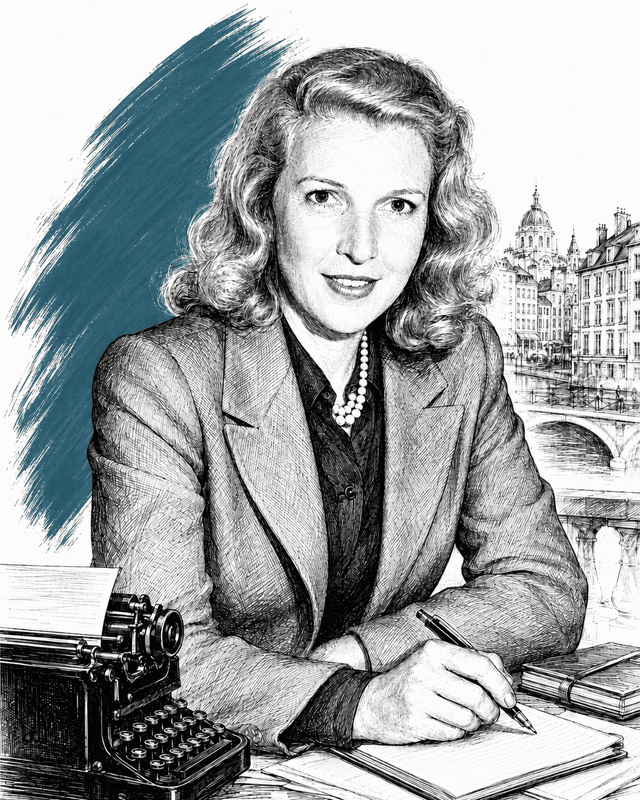
Martha Gellhorn
War correspondent who covered the Spanish Civil War, D-Day, and conflicts across five more decades; Hemingway's third wife, 1940–1945.
View author