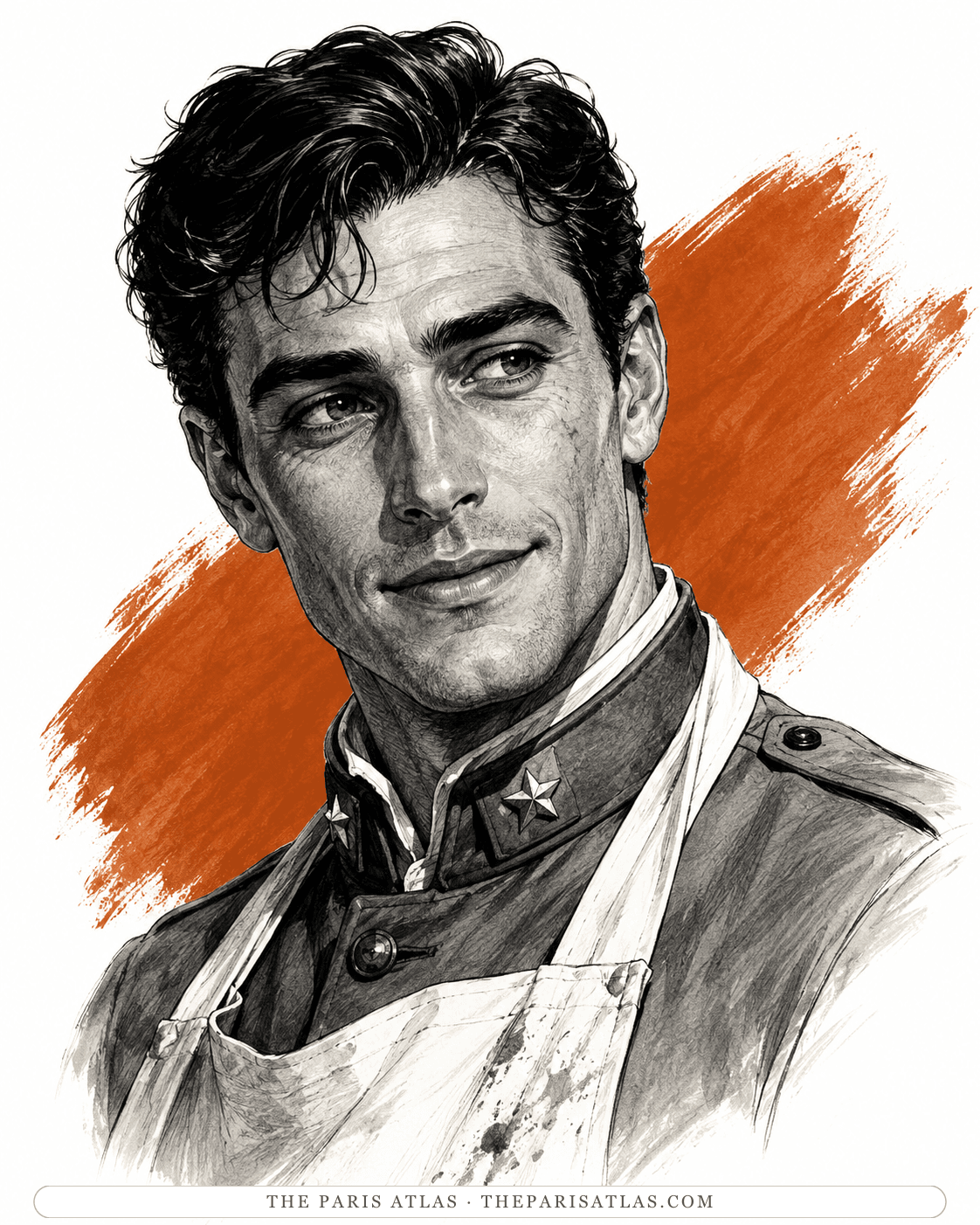
Rinaldi
An Italian surgeon, and Frederic's roommate at the front. He calls Frederic "baby" and talks almost without stopping.
Work enough to keep from thinking, and Frederic Henry's company in the evenings. "I never think. No, by God, I don't think; I operate."
The book

At a glance
- Rinaldi — surgeon in Frederic's unit, and his roommate at Gorizia
- "Baby," almost exclusively
- Gorizia — the mess, the room, and the hospital; he never leaves the front
- Catherine Barkley, briefly and loudly, before Frederic is
- Syphilis, which Frederic does not believe he has
Who they are in the book
Spoiler-freeRinaldi is a surgeon in the same unit, and shares Frederic's room in Gorizia. He is the most talkative person in the book and the funniest, and he is the one who takes Frederic to meet the English nurses in the first place, having decided he is in love with Catherine Barkley himself.
In the summer offensive he operates for weeks on end and stops leaving the hospital. When Frederic comes back from Milan he finds his friend drinking harder, boasting worse, and frightened about his health, and the novel gives him no ending at all.
How Rinaldi Is Portrayed
- "Baby"It is what he calls Frederic in nearly every conversation they have, from the first evening to the last. "I love you, baby," he says, in the middle of an argument about whether he is capable of friendship.
- The Villa RossaThe officers' brothel in town, and his standing recommendation. Asked where he has been: "At the Villa Rossa. It was very edifying, baby. We all sang."
- "I don't think; I operate"His answer to being asked what he thinks about anything: "I never think. No, by God, I don't think; I operate." By then he has been at the hospital the whole time Frederic was away, doing exactly that.
- Baiting the priestHe leads the nightly teasing at the officers' mess, and is not cruel about it so much as relentless. The priest takes it as a joke, which is the arrangement they have.
- "I am the snake of reason"He says he has no married friends, not if they love each other, because they do not like him: "I am the snake. I am the snake of reason." Frederic tells him he has it mixed and that the apple was reason. "No, it was the snake." Rinaldi is more cheerful after that.
- The thing he is afraid ofHe believes he has syphilis, and says so. Frederic doesn't think he does, and reflects later that it was not a serious disease anyway if you took it in time. It is the only subject on which Rinaldi runs out of talk.
Rinaldi has no ending, which is its own kind of ending. Frederic leaves Gorizia and the novel simply stops following the man who has been in almost every early scene. The last of him is a question Frederic asks himself much later, in another country: he was wondering whether Rinaldi had the syphilis. There is no answer, and nobody in the book mentions him again.
If you like A Farewell to Arms


If you like Ernest Hemingway
Explore authors with a similar voice, perspective, and influence.

Louis-Ferdinand Céline
The other great stylist the Great War produced — where Hemingway cut the language down, Céline set it on fire. The same wound, opposite treatments.
View author
Henry Miller
Paris on no money a decade later, with the restraint removed. Miller called Hemingway's Paris a tourist's Paris; readers get to referee.
View author
Martha Gellhorn
War correspondent who covered the Spanish Civil War, D-Day, and conflicts across five more decades; Hemingway's third wife, 1940–1945.
View author