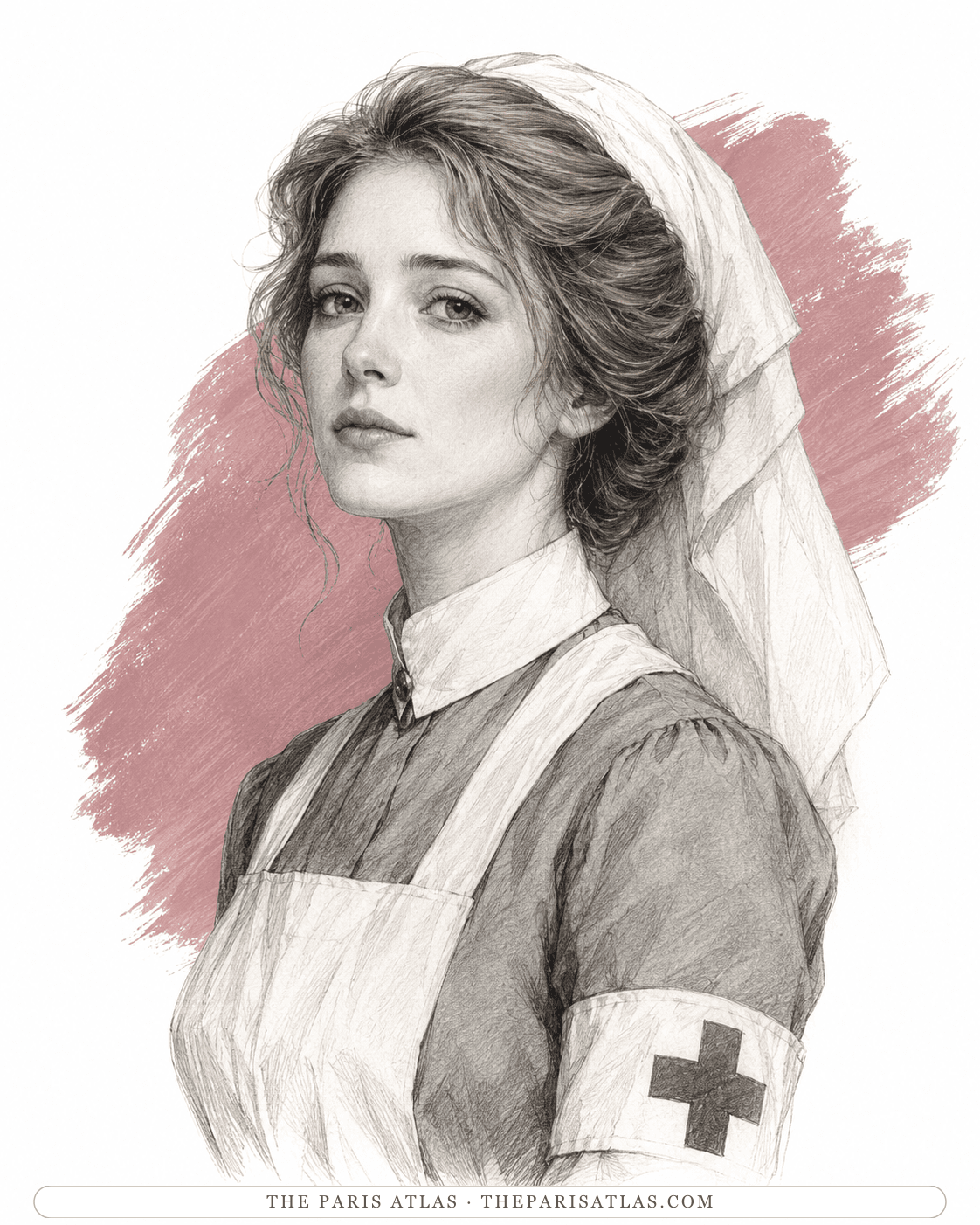
Catherine Barkley
An English nurse in Italy. Frederic Henry pretends to love her at first, and then finds that he does.
To lose herself in Frederic Henry. Her fiancé was killed the year before at the Battle of the Somme, and she tells him, "I want what you want. There isn't any me any more."
The book

At a glance
- Catherine Barkley — English V.A.D. nurse, first at a British hospital near the front, then in Milan
- Tall, blonde, tawny-skinned and gray-eyed, carrying a leather-bound rattan stick
- A fiancé killed in the Somme the year before the book opens
- Gorizia, the Milan hospital, Stresa, and Switzerland
- Helen Ferguson, a Scottish nurse who disapproves of the whole thing
- Agnes von Kurowsky · 1892–1984 · Germantown, Pennsylvania
Who they are in the book
Spoiler-freeCatherine Barkley is an English V.A.D. nurse working at a British hospital near the Italian front when Frederic Henry meets her in 1917. She is tall, blonde, tawny-skinned and gray-eyed, and she is carrying a thin rattan stick like a toy riding-crop. It belonged to a boy who was going to marry her and who was killed in the Somme the year before.
She sees through the courtship faster than he does and says so out loud, and then commits to it anyway, completely. Later, in Milan and Switzerland, she gives up everything separate about herself on purpose, and the novel is careful not to decide whether that is devotion or damage.
How Catherine Barkley Is Portrayed
- The rattan stickShe carries "a thin rattan stick like a toy riding-crop, bound in leather." Asked what it is, she says it belonged to a boy killed the year before, who was going to marry her, and who died in the Somme.
- "This is a rotten game we play, isn't it?"On the second evening she names the thing they are doing. "You're a nice boy," she tells him, "and you play it as well as you know how. But it's a rotten game." Then she lets him off it: "You don't have to pretend you love me. That's over for the evening."
- "I've come back to Catherine in the night"She scripts what she wants him to say and has him repeat it back. He does, kisses her closed eyes, and concludes that she is probably a little crazy — and that it is all right if she is, because this is better than the alternative.
- Inside the tent of her hairIn the Milan hospital he takes her hair down pin by pin, laying them on the sheet, until it comes down over them both. His word for it: "the feeling of inside a tent or behind a falls."
- "I'm afraid of the rain because sometimes I see me dead in it"She says it, then immediately takes it back — it's nonsense, it's only nonsense, she isn't afraid of the rain — and starts to cry. The rain keeps its appointment at the end of the book.
- "It's just a dirty trick"Her last words in the book. The doctor tells her she cannot talk; she winks at Frederic, her face gray, and he says he will be right outside. "Don't worry, darling," Catherine says. "I'm not a bit afraid. It's just a dirty trick."
Catherine is pregnant by the time Frederic reaches Stresa, and the two of them spend a winter in the mountains above Montreux waiting for the birth, unmarried, because she will not be married while she looks the way she does.
Agnes von Kurowsky was the American Red Cross nurse who cared for Hemingway in Milan in 1918 — twenty-six years old to his nineteen. She was fond of him and did not return what he felt. They talked about marrying in America, and then, in a letter dated 7 March 1919, she told him she was engaged to an Italian officer instead. He had already used the break once, bitterly, in the 1924 story "A Very Short Story," before rewriting her as Catherine five years later. She married an American engineer in 1928, worked as a nurse for decades, and died in 1984 at ninety-two, having spent much of her later life being asked about a novel whose ending had nothing to do with her.
If you like A Farewell to Arms


If you like Ernest Hemingway
Explore authors with a similar voice, perspective, and influence.

Louis-Ferdinand Céline
The other great stylist the Great War produced — where Hemingway cut the language down, Céline set it on fire. The same wound, opposite treatments.
View author
Henry Miller
Paris on no money a decade later, with the restraint removed. Miller called Hemingway's Paris a tourist's Paris; readers get to referee.
View author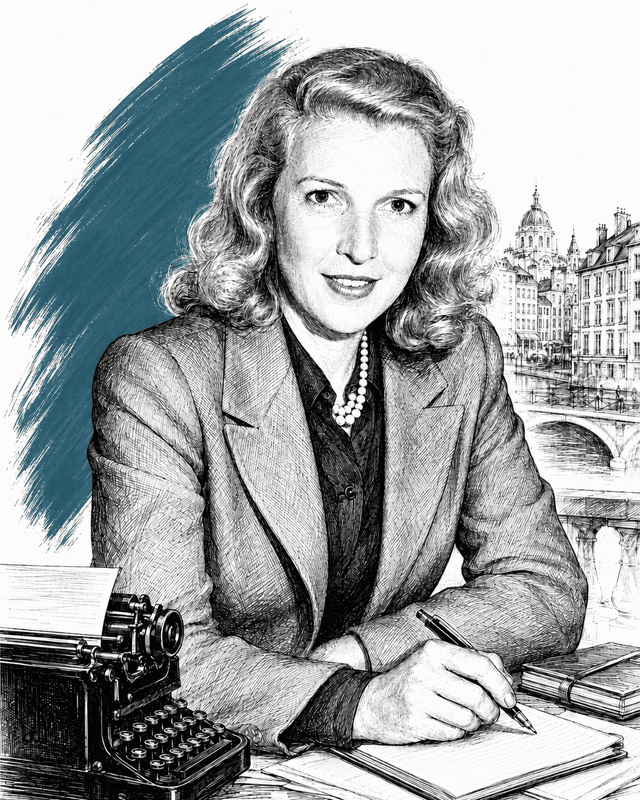
Martha Gellhorn
War correspondent who covered the Spanish Civil War, D-Day, and conflicts across five more decades; Hemingway's third wife, 1940–1945.
View author