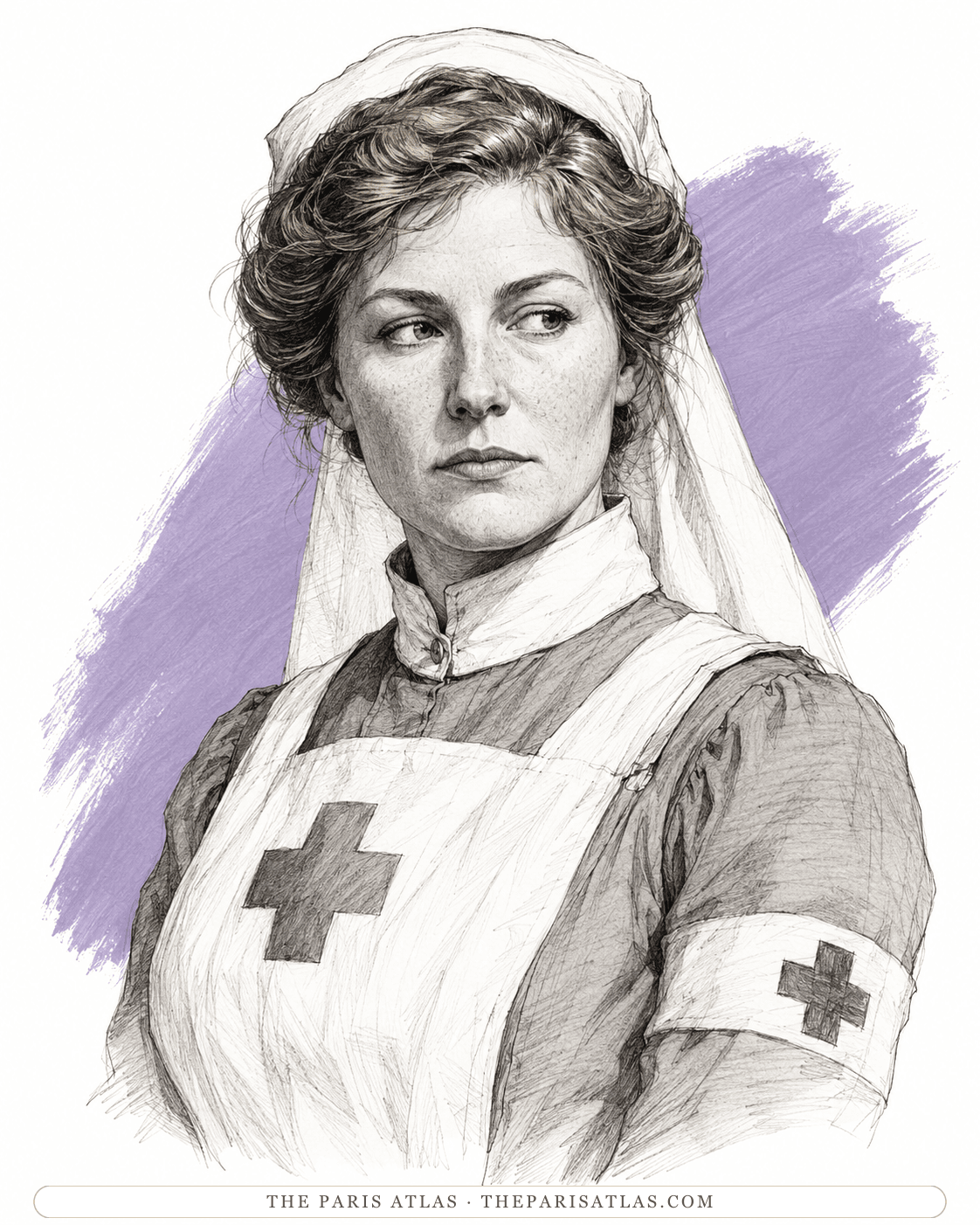
Helen Ferguson
A Scottish nurse and Catherine's closest friend. She is the only person in the book who says the affair is a bad idea.
Her friends decently married, and not to be left on her own. She tells Catherine Barkley she should want to be married rather than do it to please anyone, and admits she is afraid to stay alone.
The book

At a glance
- Helen Ferguson — Scottish nurse, Catherine's friend and colleague
- Fergy, by Catherine
- The hospital near the front, Milan, and the hotel at Stresa
- That they should be married, and that Frederic is a sneak
- Covers for them, repeatedly
Who they are in the book
Spoiler-freeHelen Ferguson — Fergy — is a Scottish nurse who works with Catherine Barkley, first near the front and then in Milan. She covers for the two of them repeatedly and disapproves the entire time, and she is the one character who states plainly what everyone else in the novel is willing to leave unsaid.
Her objection is not really moral, although she puts it in moral terms. She can see how it ends and cannot make either of them look at it, and the argument she loses in a Stresa hotel is the only scene in the book where somebody tries.
How Helen Ferguson Is Portrayed
- The cover storyAt the hospital she is the one who knows, keeps quiet, and arranges to be elsewhere — and who tells Frederic, more than once and without warmth, exactly what she thinks of him for it.
- "You're like a snake"In Stresa she lets him have it: he has ruined Catherine with his sneaking Italian tricks, and Americans are worse than Italians. "You're like a snake. A snake with an Italian uniform: with a cape around your neck." Told he hasn't got an Italian uniform any more, she calls that another example of his sneakiness.
- The charge sheet"You had a love affair all summer and got this girl with child and now I suppose you'll sneak off." Catherine's answer is that they'll both sneak off, and the two of them smile at each other across the table, which is what breaks Ferguson.
- Crying and not crying"I don't care," she sobs, with Catherine's arm around her. "I think it's dreadful." Then: "I'm not crying," Ferguson sobs. "I'm not crying. Except for the awful thing you've gotten into." Then she looks at Frederic. "I hate you," she says. "She can't make me not hate you. You dirty sneaking American Italian."
- "Why don't you get married?"Her actual demand, once the crying stops. Catherine offers to be married if it will please her. Ferguson refuses that too: "Not to please me. You should want to be married."
- The one who is left behindShe wants them both happy and says so in the same breath as the hatred — "You mustn't mind me, either of you. I'm so upset. I'm not reasonable. I know it." Nobody in the book takes her advice, and nobody argues that she is wrong.
Ferguson does not come to Switzerland and is not in the last quarter of the book. She is left in Stresa having made the only argument nobody answers: that the two of them are treating a pregnancy, a war and a desertion as a private joke, and that it will not hold. She is right, and the novel never returns to her to say so.
If you like A Farewell to Arms


If you like Ernest Hemingway
Explore authors with a similar voice, perspective, and influence.

Louis-Ferdinand Céline
The other great stylist the Great War produced — where Hemingway cut the language down, Céline set it on fire. The same wound, opposite treatments.
View author
Henry Miller
Paris on no money a decade later, with the restraint removed. Miller called Hemingway's Paris a tourist's Paris; readers get to referee.
View author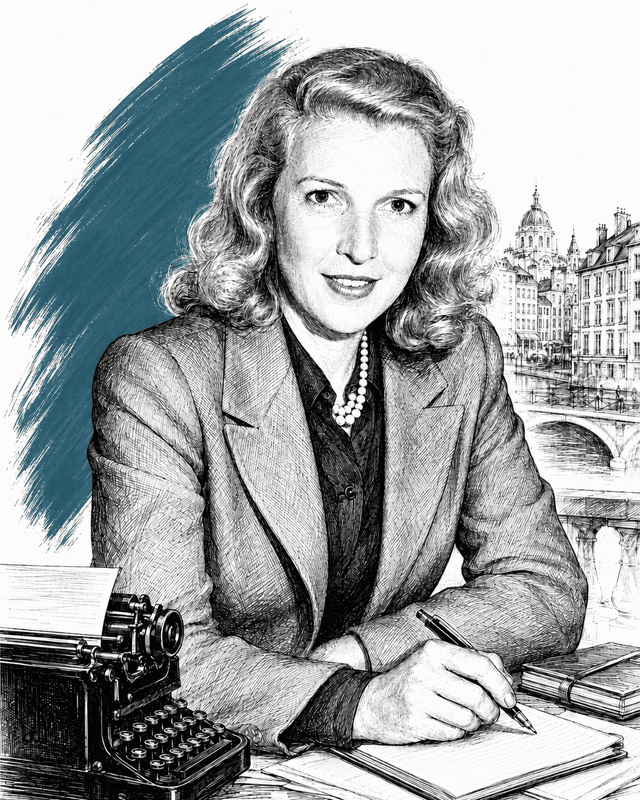
Martha Gellhorn
War correspondent who covered the Spanish Civil War, D-Day, and conflicts across five more decades; Hemingway's third wife, 1940–1945.
View author