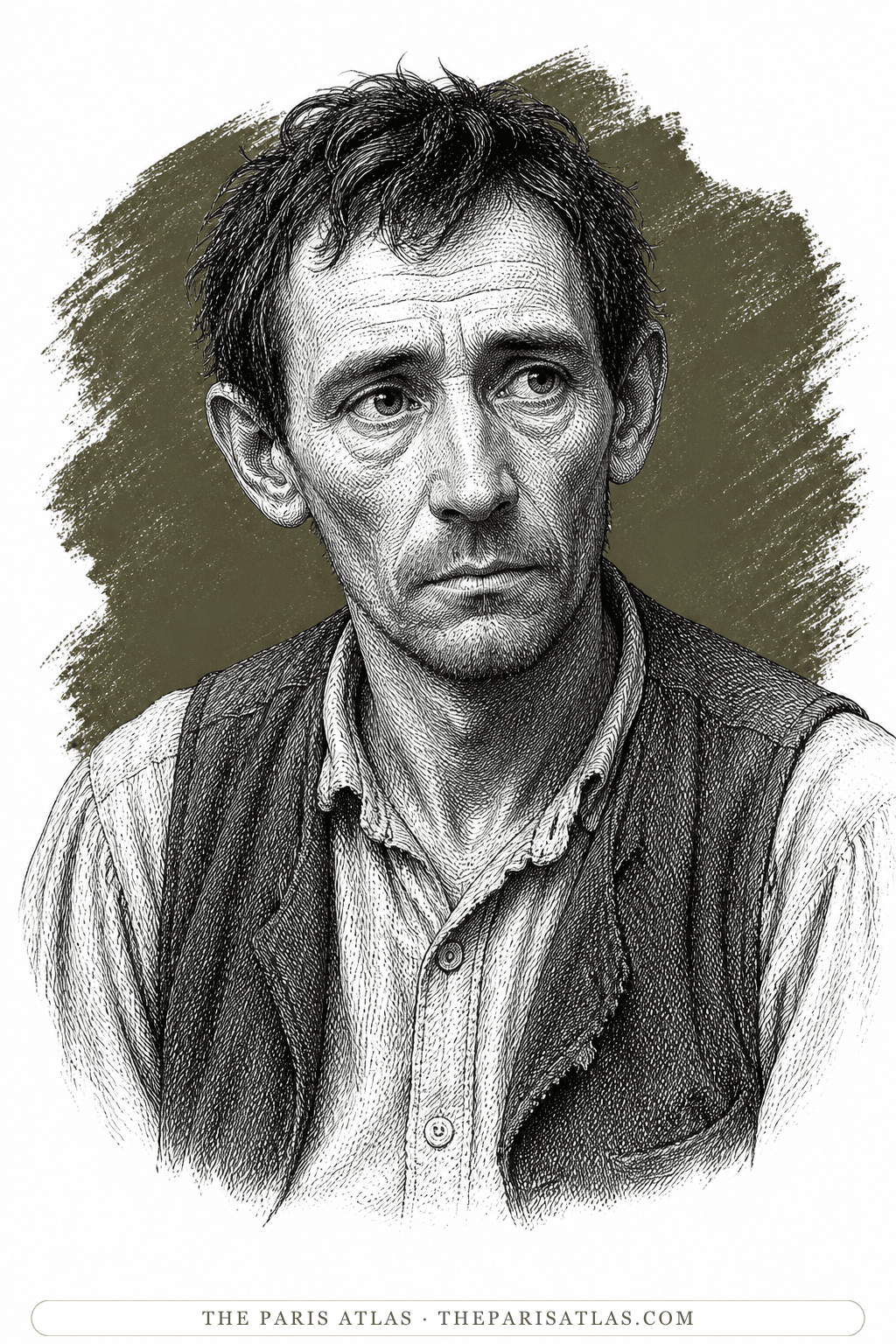
Allie Mulberry
The Bidwell whittler, famous for a ship in a bottle, who carves the first model of Hugh McVey's machine.
To be watched working. He likes to sit near people and have his talent as a whittler appreciated, and the pleasure of it lasts him all the years he spends producing wooden chains and ships that nobody needs.
The book

At a glance
- Whittler; carver of the first model of the plant-setting machine, and later the driver of the horses in its field tests
- With his mother, in a tumbledown house at the edge of town on the Medina Road
- A large club, for his weak legs and for dogs and boys
- Steve Hunter's judgement: “He can whittle anything if you only show him what you want.” — and, in Steve's estimate, would never work out what the secret was
Who they are in the book
Spoiler-freeAllie Mulberry lives with his mother in a tumbledown house at the edge of town on the Medina Road. His legs are weak and trembling and he can only move them with difficulty, so he carries a large club, partly to lean on and partly to see off dogs and boys. The town calls him a half-wit and treats him, on the whole, with rough affection: he likes to sit in the shade with his back to a building and whittle where people can watch him and admire the work.
He makes fans out of pine, long chains of wooden beads, and one object that made him locally famous. When Steve Hunter needs someone to carve a model of an invention in secret, Allie is the obvious choice, because he can copy anything he is shown and will not understand enough to give the game away. That turns out to be wrong about the second half.
How Allie Mulberry Is Portrayed
- The ship in the bottleA ship with sails and three tiny wooden sailors standing at the salute, floating in a beer bottle half filled with water and laid on its side — too large to have come through the neck. Nobody ever found out how he did it, and the clerks and merchants argued about it for days.
- The windowThe bottle sat corked on a cushion in the window of Hunter's jewellery store for months under a sign reading “Carved by Allie Mulberry of Bidwell” and the question “How Did He Get It Into The Bottle?” Merchants walked their travelling salesmen down to see it, and then round the corner to see him at work.
- What the town concluded“He has a good brain,” the citizen of Bidwell said, shaking his head. He does not appear to know very much, the verdict runs, but look what he does — he must be carrying all sorts of notions around inside his head.
- The apprenticeIn the old pickle factory he sits at a corner bench under Hugh's direction, ignoring Steve Hunter entirely and watching the silent man at the desk. Hugh makes each part roughly out of boards and Allie reproduces it in miniature. Hugh, who is embarrassed by everyone else alive, will spend hours explaining a mechanism to him.
- The part that workedOne day a piece Hugh has designed will not work, and Allie makes a version of his own that does. Hugh puts it in the machine and is so pleased that he cannot sit still and walks up and down the shop making a noise of delight.
The model Allie carves replaces his own ship in the jewellery-store window, and he is inordinately proud of it. The novel says that under Hugh's instruction something began to come into his eyes that words had never put there, and that love and understanding did for him what talking could not. Every night the whole of Main Street stops him to ask what is being built out at Pickleville, and he shakes his head and smiles.
He stays on at the shop as the business grows and a dozen mechanics are hired, and drives the team in the fields when the full-sized machine is tested. He is not mentioned again after the plant-setting machine fails.
If you like Poor White


If you like Sherwood Anderson
Explore authors with a similar voice, perspective, and influence.

Ernest Hemingway
Anderson's letters of introduction sent him to Paris; In Our Time borrowed the Winesburg shape; The Torrents of Spring paid the debt back in parody.
View author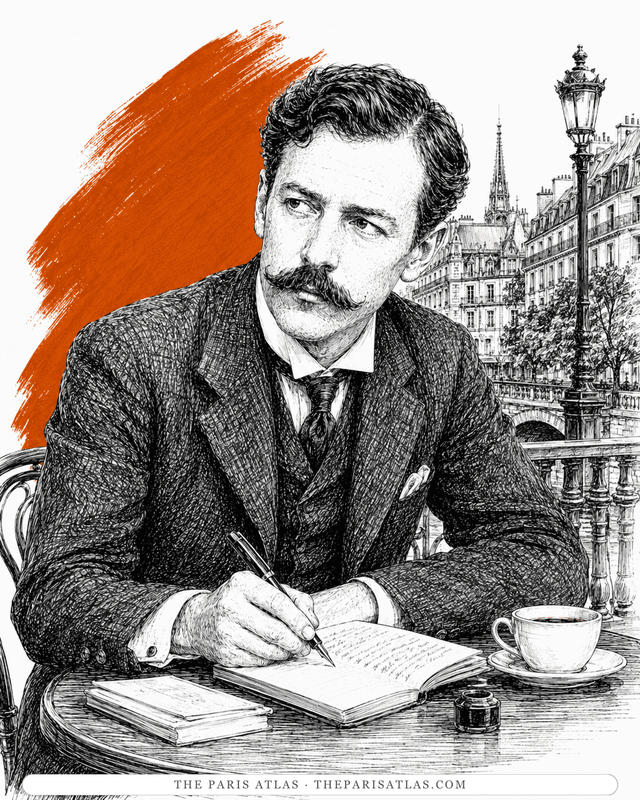
Sisley Huddleston
The witness who recorded Anderson's Paris — the hotel by the Odéon, the Luxembourg walks, and the long conversations about America and art.
View author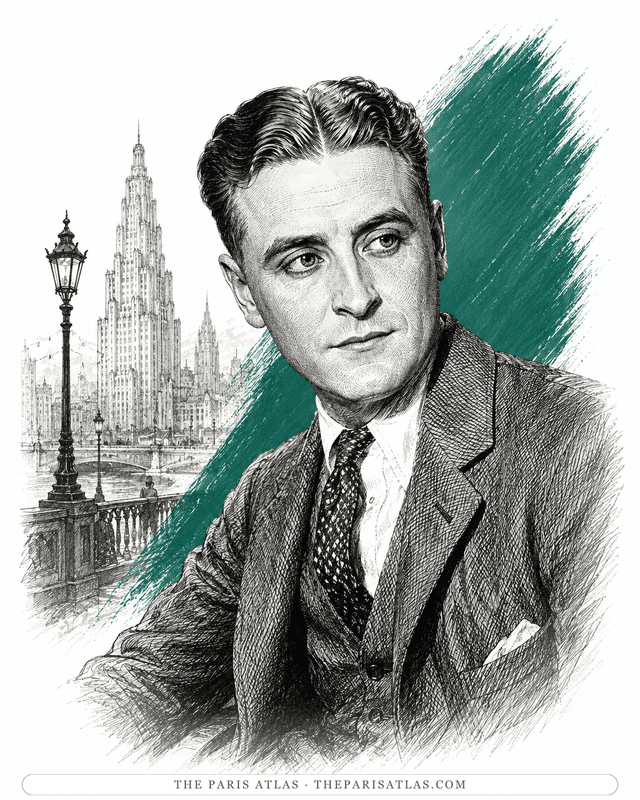
F. Scott Fitzgerald
The Jazz Age's laureate — famous at twenty-three, author of Gatsby at twenty-eight, and owner of the longest posthumous comeback in American letters.
View author