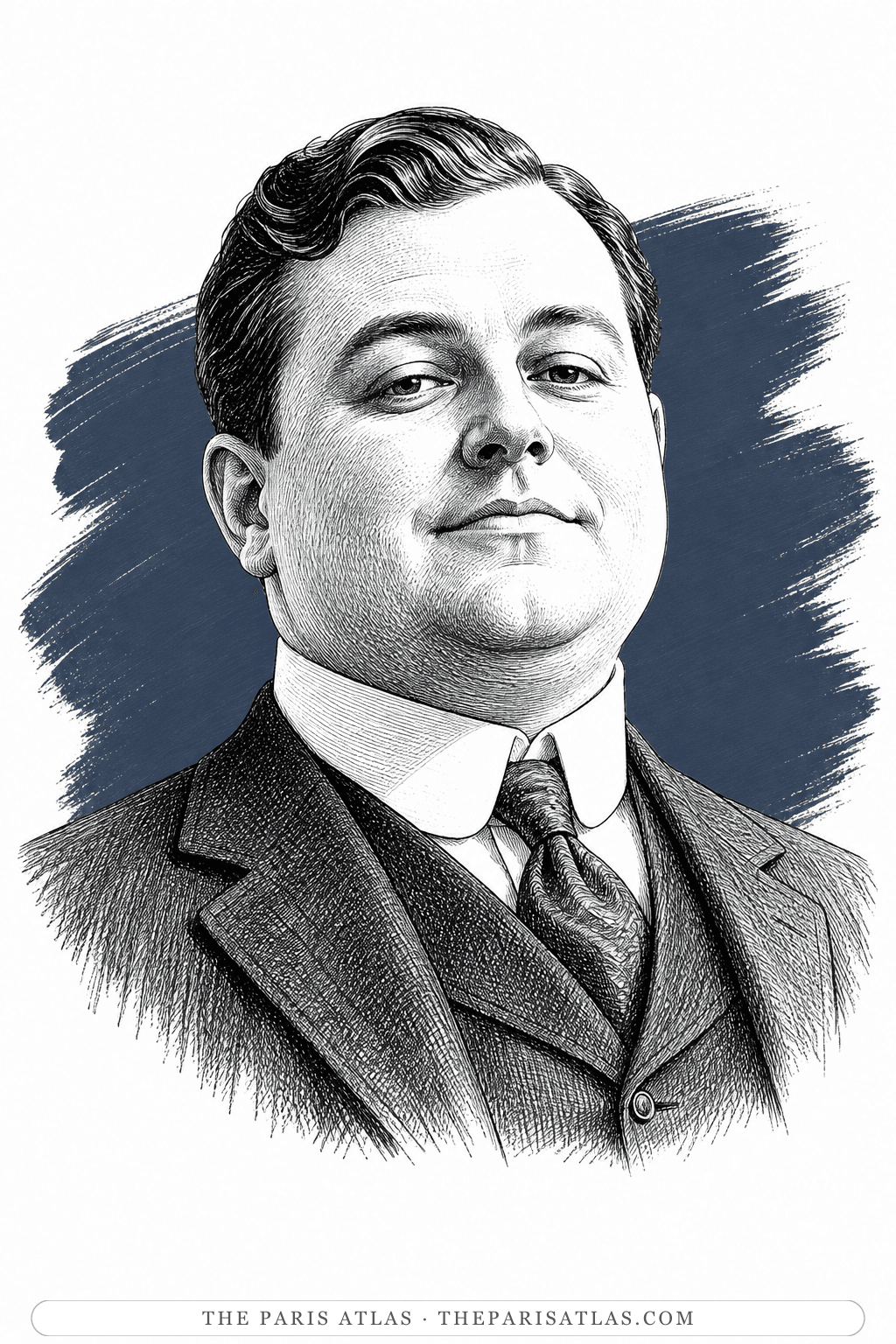
Steve Hunter
The Bidwell jeweller's son who talks his way into becoming the town's first manufacturer, starting with a lie told in the back room of a bank.
To be respected in the town he grew up in. Having just invented a company out of nothing, he tells the banker and the rich farmer: “What a man wants in his home town is respect.” He means it more sincerely than anything else he says all book.
The book

At a glance
- Jeweller's son; founder of the Bidwell Plant-Setting Machine Company and the town's first manufacturer
- A business college in Buffalo, New York
- From the soap maker E. P. Horn: “Hang on to that. That's the way I made my success. I always kept the control.”
- Ernestine Horn, the soap maker's daughter, within a month of the two-hundred-thousand-dollar sale
- Public honours, campaign funds, and in secret the United States Senate or the governorship
Who they are in the book
Spoiler-freeSteve Hunter grew up in Bidwell as the boy with the first safety bicycle, riding up and down Main Street with no hands and a folded white collar, until the other boys started calling him Smarty and then giving him a girl's name. He is short, already getting fat, and entirely undamaged by ridicule. At business college in Buffalo he met a soap manufacturer named E. P. Horn, who gave him one piece of advice he never forgot: sell stock and borrow all you like, but never give up control.
When he hears the rumours about the strange telegraph operator at Pickleville he decides to investigate, is cornered by the banker and Tom Butterworth before he has anything to investigate with, and announces that the inventor is already his man. Then he walks out to Pickleville in the mud, terrified, to make it true. Everything he later becomes in Bidwell — the manufacturer, the man who gives to campaign funds and dreams of the Senate — rests on that afternoon, and he never understands how badly he underpaid.
How Steve Hunter Is Portrayed
- The bicycleAt twelve he owned the only safety bicycle in town and rode it up and down Main Street in the evenings, frightening horses and riding with his hands off the bars. The other boys called him Smarty Hunter and then, for the stiff white collar folded over his shoulders, a girl's name.
- The Mr. Wilson experimentRehearsing his new gravity, he stops the town shoemaker outside the post office and asks him with great courtesy how the quality of leather from the tanneries is these days. Four clerks and a carpenter's apprentice spend the afternoon repeating the question in the shoemaker's shop; the last one is nearly hit by a thrown hammer.
- The bluffLed into the back room of the bank to be laughed at, he shuts the door, sits in the president's chair and says of the telegraph operator: “That fellow is my man.” It is not true. He also produces a bundle of letters he claims are offers from Cleveland and Buffalo, and beats them on the table edge.
- The windowHe builds a miniature field in his father's jewellery shop window, with clockwork and pulleys to pull the model machine across it, and a second field where the tiny plants are left to grow. When plants die he comes at night and replaces them with sturdier ones, so the field always shows a brave front. Later he pays Ed Hall to do the same in the real test field.
- The plan for the failureTold by Hugh that the plant-setting machine will not work, he calls his four partners into the bank and lays out what to do: build the factory, sell the shares, let the company fail, buy the plant cheap between them and make something else in it. “You see we few men have got to run things here.” Every one of them agrees, and each of them privately sells his stock anyway.
- The stormWalking out of the bank into a black afternoon with the dust blowing up Main Street, he takes the storm personally, as evidence of his own force. He goes out along Turner's Pike in the rain, loses his hat to the wind, stops where there are no houses, lifts his small hands and shouts into the empty fields: “I'm a man. I tell you what, I'm a man.”
- The sisterHis sister Elsie, two years older, has a twisted body and a face that twitches, and never leaves the house. She once beat him about the head with a wrench in the barn. He becomes her guardian, keeps her on an allowance, tells acquaintances it is the dream of his life to make the poor afflicted soul happy, and pays a man to trace the family back to a courtier of Edward the Second.
The plan works exactly as he described it. The plant-setting machine company goes into a receiver's hands, the plant is sold, a firm of Cleveland lawyers buys it just over the partners' low bid and resells it privately to Steve and Tom Butterworth, and the two of them start making the corn-cutter that Hugh has meanwhile invented. The banker and his assistant cashier, who had quietly sold their own stock, are cut out and can say nothing about it in public. The townspeople who put in their savings are never repaid, and Steve is able to point out, accurately, that he told the big shareholders not to sell.
The one thing he does not get is Hugh. The novel says plainly that Steve overreached himself the day he made his contract at Pickleville and never knew it: once Tom Butterworth took charge of the inventor's affairs, the chance was gone for good. Steve is shot in the street by Joe Wainsworth, who lost twelve hundred dollars in the company, and recovers. Four years later he is still in business with Tom, still winning strikes, and Bidwell has become a city.
If you like Poor White


If you like Sherwood Anderson
Explore authors with a similar voice, perspective, and influence.

Ernest Hemingway
Anderson's letters of introduction sent him to Paris; In Our Time borrowed the Winesburg shape; The Torrents of Spring paid the debt back in parody.
View author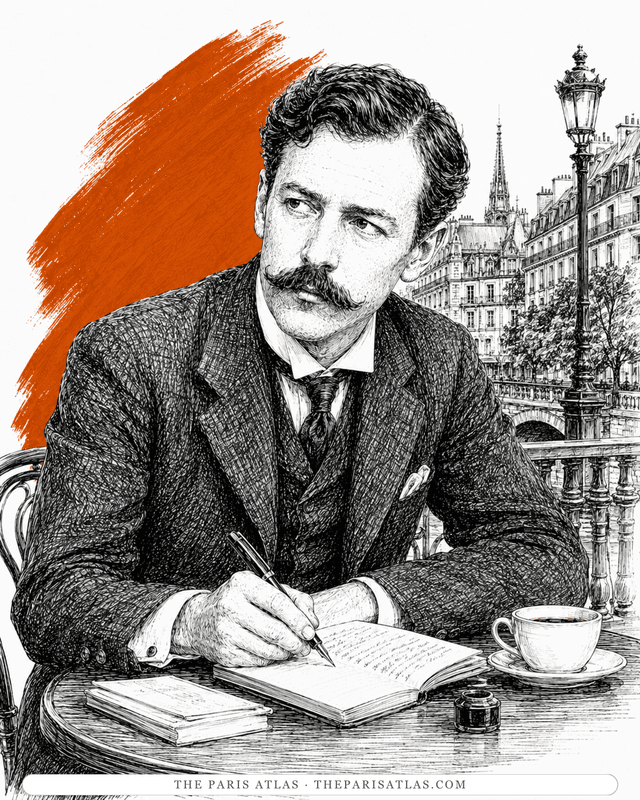
Sisley Huddleston
The witness who recorded Anderson's Paris — the hotel by the Odéon, the Luxembourg walks, and the long conversations about America and art.
View author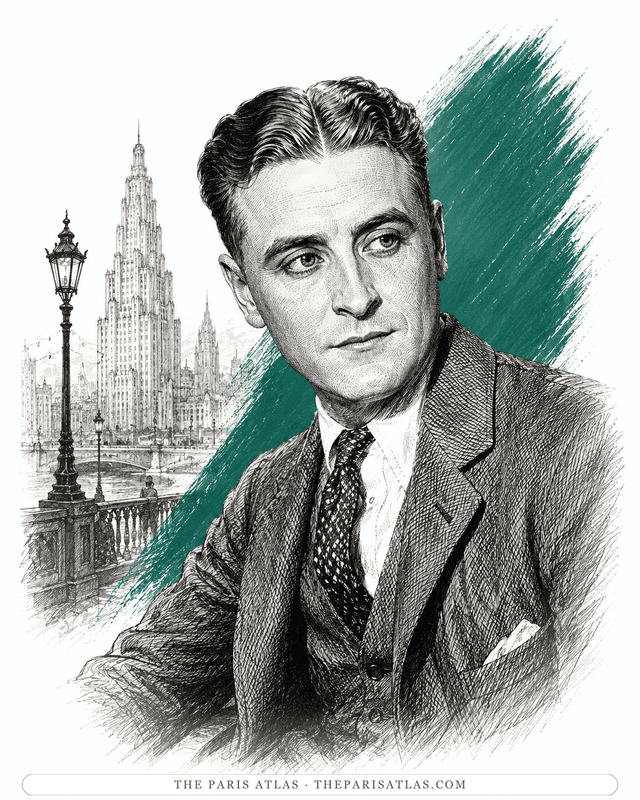
F. Scott Fitzgerald
The Jazz Age's laureate — famous at twenty-three, author of Gatsby at twenty-eight, and owner of the longest posthumous comeback in American letters.
View author