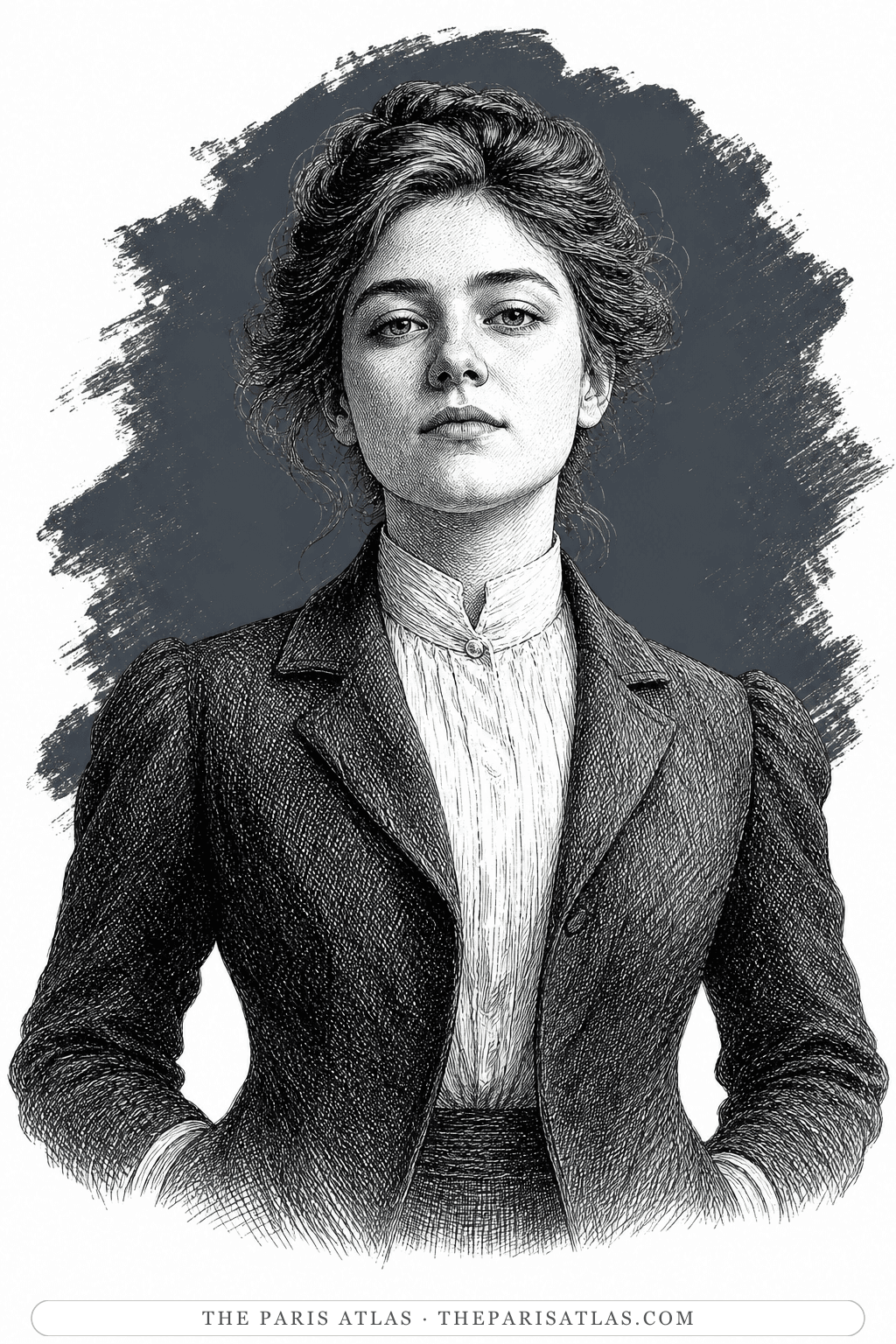
Kate Chanceller
Clara Butterworth's friend at the university in Columbus — a socialist who walks like a man, argues with everyone, and teaches Clara how to think about her own life.
Work of her own, and a life that is not decided by her body. She breaks off in the middle of a rant about men and women to say it: “I know what I'm going to do. I'm going to find some kind of work and do it.” She intends to become a doctor.
The book

At a glance
- Clara Butterworth's classmate and closest friend at the State University in Columbus
- A town in Missouri, come to Columbus with her brother
- A chemist at a manufacturing plant at the edge of town, who wants to be a composer and plays the piano in the evenings
- Socialist; talks about capital and labour at a time when Columbus is becoming an industrial city
- A doctor
Who they are in the book
Spoiler-freeKate Chanceller came to Columbus from a town in Missouri with her brother, a quiet chemist at a plant outside the city who wants to be a composer. She meets Clara Butterworth in a university class in Clara's third year, and the two of them spend that winter and spring walking the streets at night talking. The book states her situation directly, in the plain terms of 1920: the brother is like a woman, and Kate, who wears skirts and has a woman's body, is in her nature a man. She wears her hands in skirt pockets cut like trouser pockets, strides home alone across the city at night, and swears when she is angry.
She is a socialist and Columbus is turning into an industrial city, so she talks about capital and labour and what the changes are doing to men and women. With Clara she talks about marriage, and fights the urge to condemn it outright, because she can see that her own reasons might not be Clara's. She is the only person in the novel who tries to be fair on purpose.
How Kate Chanceller Is Portrayed
- The can-openersHer summary of the position she is in: “The rules were not made for me. Men manufactured them as they manufacture can-openers, on the wholesale plan.” Then she laughs and asks Clara to try to imagine her in a lace cap, knitting baby stockings.
- The evening callShe walks into the Woodburn house, where the uncle does account books and the aunt knits stockings for poor children who do not exist, tells them to put the figures and the knitting away, sits down with her legs crossed and argues free trade against protection with the treasurer of the plow company. Afterwards she tells Clara the old man knows nothing about the meaning of what he does in life.
- Ice tongsHer verdict on how men go about it, delivered walking up and down the room. They should be watching and studying such women as herself, she says, because being part women they know how to approach women and are not blundering and crude: “Love is the most sensitive thing in the world. It's like an orchid.” And then the line Clara remembers: “Men try to pluck orchids with ice tongs, the fools.”
- The bench in the parkTwo men fall in beside them on the street. Kate leads them to a bench, sits them down, explains exactly what she and Clara had been discussing, and asks what the two of them have to contribute that would make it worth breaking off the conversation. They leave, calling the women highbrows. Kate swaggers a little afterwards, and Clara privately thinks she was not entirely fair.
- The line she does not crossShe loves Clara, wants to hold her hand and kiss her, and puts it down in herself. She says so as plainly as she can manage on her way out of the door one night: “I'll do nothing to confuse you.” Clara knows what the struggle is and respects her for it.
- The interventionWhen Clara is caught on the porch in the arms of a man her uncle has forbidden the house, Kate goes to the plow factory office without telling her and explains the matter to him. He is respectful throughout and completely lost afterwards: she says Clara was not to blame, and will not tell the story, because she thinks the man was not to blame either.
- The dress lessonsMannish in her own clothes, she has a precise eye for other people's, and teaches Clara how to dress to her own figure. It is why, standing in a machine shop years later, Clara can outclass the schoolteacher Hugh has been unable to speak to for two years without saying a word about it.
Kate never appears in Bidwell and never meets Hugh McVey, and she is present in the whole second half of the book anyway. Clara writes to her the night before the marriage announcing that she intends to leave home and go to work, then marries within the week and never posts the sequel. On her wedding night, surrounded by drunk guests telling stories about nightgowns, what Clara wants is not a husband: “What I want above everything else is a woman,” she thinks, meaning her, and thinks that if she could have spent that evening with Kate she could have come to a man believing marriage might be sweet.
The friendship's last appearance is a memory of walking in Columbus at dusk, when Kate stopped in the street and put her arms round Clara's shoulders with a look that was gentle and hungry at once, was embarrassed a moment later, laughed, took her arm and said they should walk like the devil.
If you like Poor White


If you like Sherwood Anderson
Explore authors with a similar voice, perspective, and influence.

Ernest Hemingway
Anderson's letters of introduction sent him to Paris; In Our Time borrowed the Winesburg shape; The Torrents of Spring paid the debt back in parody.
View author
Sisley Huddleston
The witness who recorded Anderson's Paris — the hotel by the Odéon, the Luxembourg walks, and the long conversations about America and art.
View author
F. Scott Fitzgerald
The Jazz Age's laureate — famous at twenty-three, author of Gatsby at twenty-eight, and owner of the longest posthumous comeback in American letters.
View author