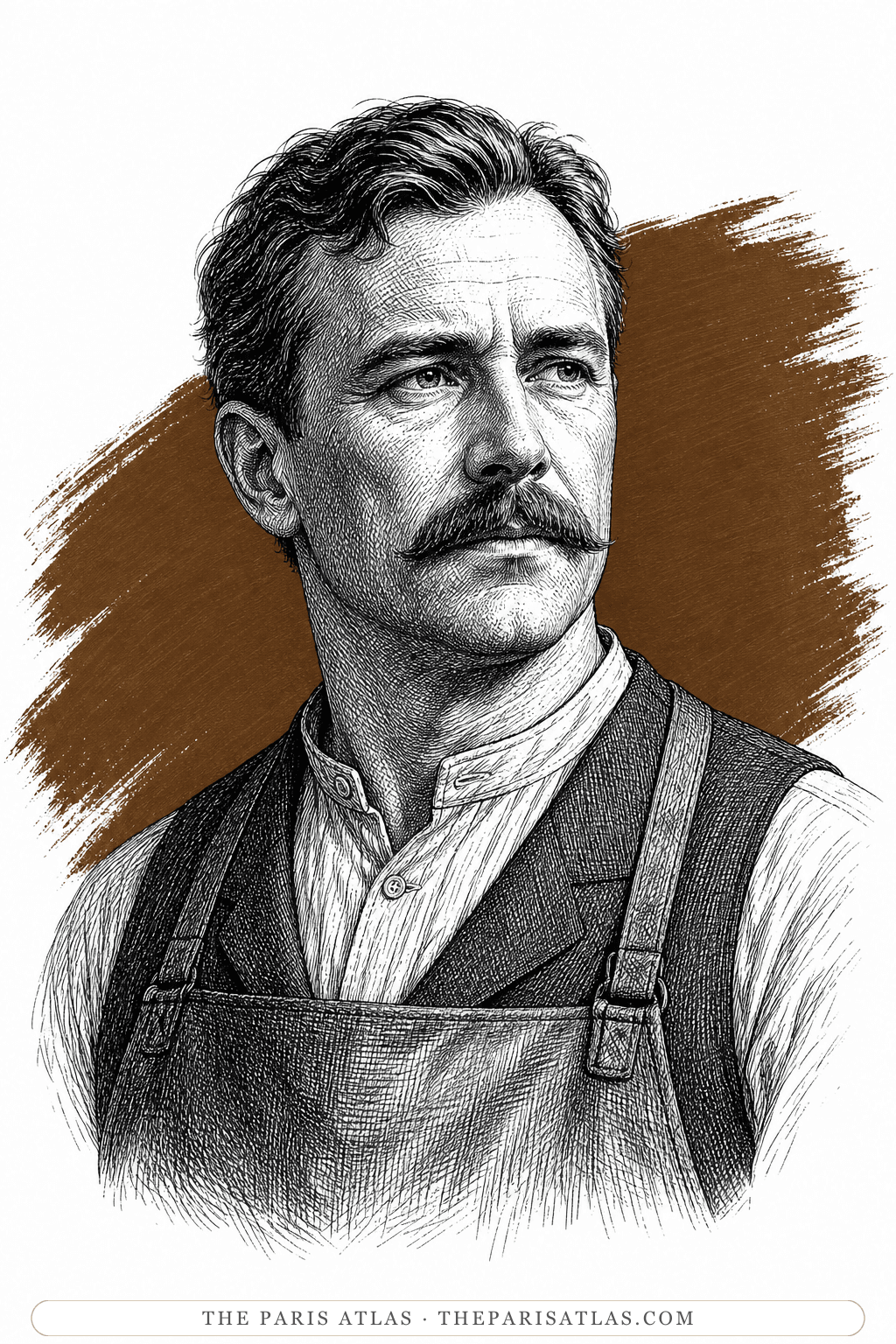
Joseph Wainsworth
Bidwell's harness maker, who served ten years learning his trade and watches factory-made harness arrive in his town.
To be left alone with his trade. On the afternoon of the Philadelphia order he says it to his apprentice: “The man who knows his trade is a man. He can tell every one to go to the devil.” He spends the rest of the book discovering that this has stopped being true.
The book

At a glance
- Master harness maker, owner of the shop on Bidwell's Main Street
- Five years apprenticed, five more as a journeyman in Boston, Providence and elsewhere
- His shop, his house, and twelve hundred dollars in the bank at the start of the novel
- To a country girl from New York State who waited for him through his trade years; she dies before the last book
- Will Sellinger, an apprentice who leaves for Cleveland, and then Jim Gibson, a journeyman who arrives drunk
Who they are in the book
Spoiler-freeJoseph Wainsworth learned harness making by serving a five-year apprenticeship and then spending five more years on the road as a journeyman, working in shops in Boston and Providence. He came back to Bidwell, opened his own shop on Main Street, and went to New York State to fetch the girl who had waited for him. He owns his shop and his house and has twelve hundred dollars in the bank, and he believes, quietly and completely, that a man who knows a trade owes nothing to anybody.
The book gives him the first blow of the new age. Tom Butterworth walks into the shop one noon to say he has ordered four sets of work harness from a factory in Philadelphia, and would Joe repair them when they break. Everything that happens to Joe afterwards happens because of that morning: the twelve hundred dollars into the plant-setting machine company, the loss of it, the drifting journeyman who takes over his shop, and the eighteen sets of factory harness hung on his own walls.
How Joseph Wainsworth Is Portrayed
- The Philadelphia orderTom Butterworth asks whether he will repair factory harness when it fails. Joe fumbles at the tools on his bench, then turns and tells him that when the cheap things start going to pieces he can take them somewhere else — and shouts at the farmer's back to take the damn things to Philadelphia where he got them.
- The private lectureAlone in the shop with a boy apprentice he talks about nothing but harness: the cuts of leather they use in Boston, the stitching they use in Providence, and his own method, which he considers better than anything he saw in ten years of looking. To customers he talks about cabbage prices and the winter wheat.
- Kneeling at the latheConvinced that his twelve hundred dollars bought the new lathe standing on the unfinished factory floor, he climbs in through a window at night to find it, puts his hands round its iron legs in the dark and thinks: “What a strong thing it is!” He wants to kiss it or pray to it, does neither, and goes home feeling better — until he overhears a neighbour who has also invested praying aloud for the machine to work.
- Following the inventorOne evening he creeps into a fence corner on Turner's Pike to watch Hugh McVey walk past, the way Hugh once crouched in a fence corner to watch the plant setters. First he wants to throw a stone at him. Then he wants to creep close enough to touch the hem of his coat. He does neither and runs off along the road behind him.
- Handing over the shopWhen his journeyman slaps him on the back and calls him old daddy, Joe is too frightened of being left to run the shop alone to throw him out. He works an hour in silence and then apologises to the man: “You do as you please here.” The story is round every store on Main Street by the next day.
- The squirrelFor years he took his wife on Sundays to a beech wood five miles north, where they fed the squirrels and chipmunks with nuts from his pocket. A farm boy shot one in front of them. Joe said nothing, walked his wife to their usual place, reached for the nuts, and then began to cry, and was ashamed, and she pretended not to see.
- The knifeAfter his wife dies he stops sleeping. He takes to spending hours honing his half-moon harness knife on a piece of leather when his employee is out of the shop, and one day buys a cheap revolver at the hardware store. Nobody notices either.
Joe kills Jim Gibson in the shop with the half-moon knife, in near silence, at one stroke, on an evening when Gibson has been telling the men outside the door how he made his employer cry. Then he locks the front door, takes down the eighteen sets of factory harness he was forced to order, and cuts every strap of them into pieces until the litter reaches his waist. He goes out the back way meaning to walk to the beech wood and shoot himself. On a residence street he recognises Steve Hunter stopping to light a cigar — the man who took his twelve hundred dollars — and shoots him instead, dropping the revolver as he runs.
He is found before morning sitting under a tree in the beech wood, hit in the mouth by Ed Hall, and thrown into the back of Tom Butterworth's new motor car with Hugh and Clara in it. Steve Hunter recovers. Joe does not: at the police station he turns, sees Hugh for the first time, screams that it was not him — “It wasn't me. You did it.” — and fastens his teeth and fingers in Hugh's neck. He is dragged into the station kicking, and the novel does not follow him inside. What he leaves behind is the thing that finally makes Hugh start thinking, four years too late to matter to Joe.
If you like Poor White


If you like Sherwood Anderson
Explore authors with a similar voice, perspective, and influence.

Ernest Hemingway
Anderson's letters of introduction sent him to Paris; In Our Time borrowed the Winesburg shape; The Torrents of Spring paid the debt back in parody.
View author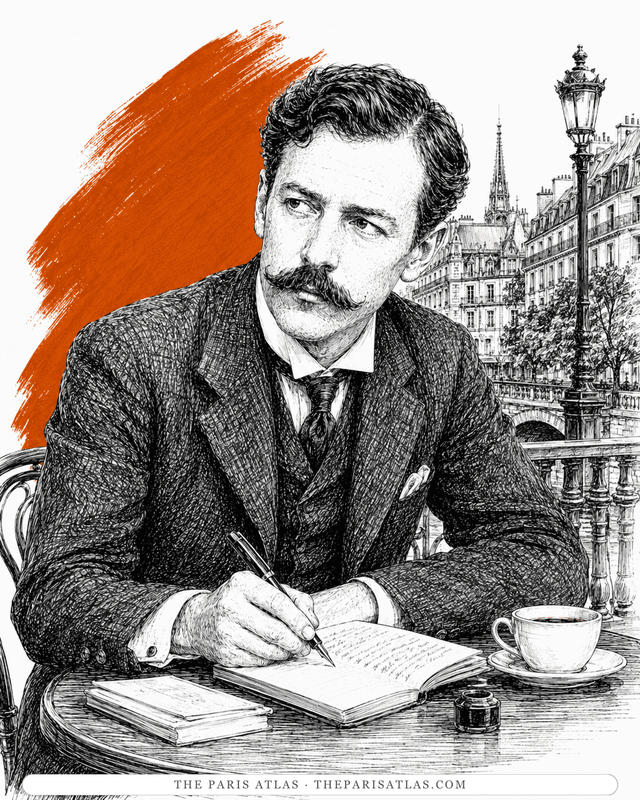
Sisley Huddleston
The witness who recorded Anderson's Paris — the hotel by the Odéon, the Luxembourg walks, and the long conversations about America and art.
View author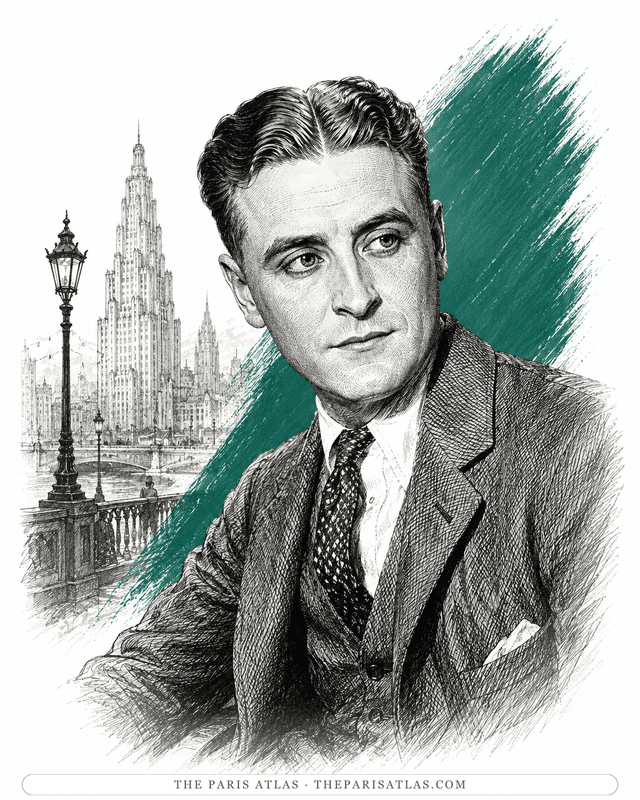
F. Scott Fitzgerald
The Jazz Age's laureate — famous at twenty-three, author of Gatsby at twenty-eight, and owner of the longest posthumous comeback in American letters.
View author