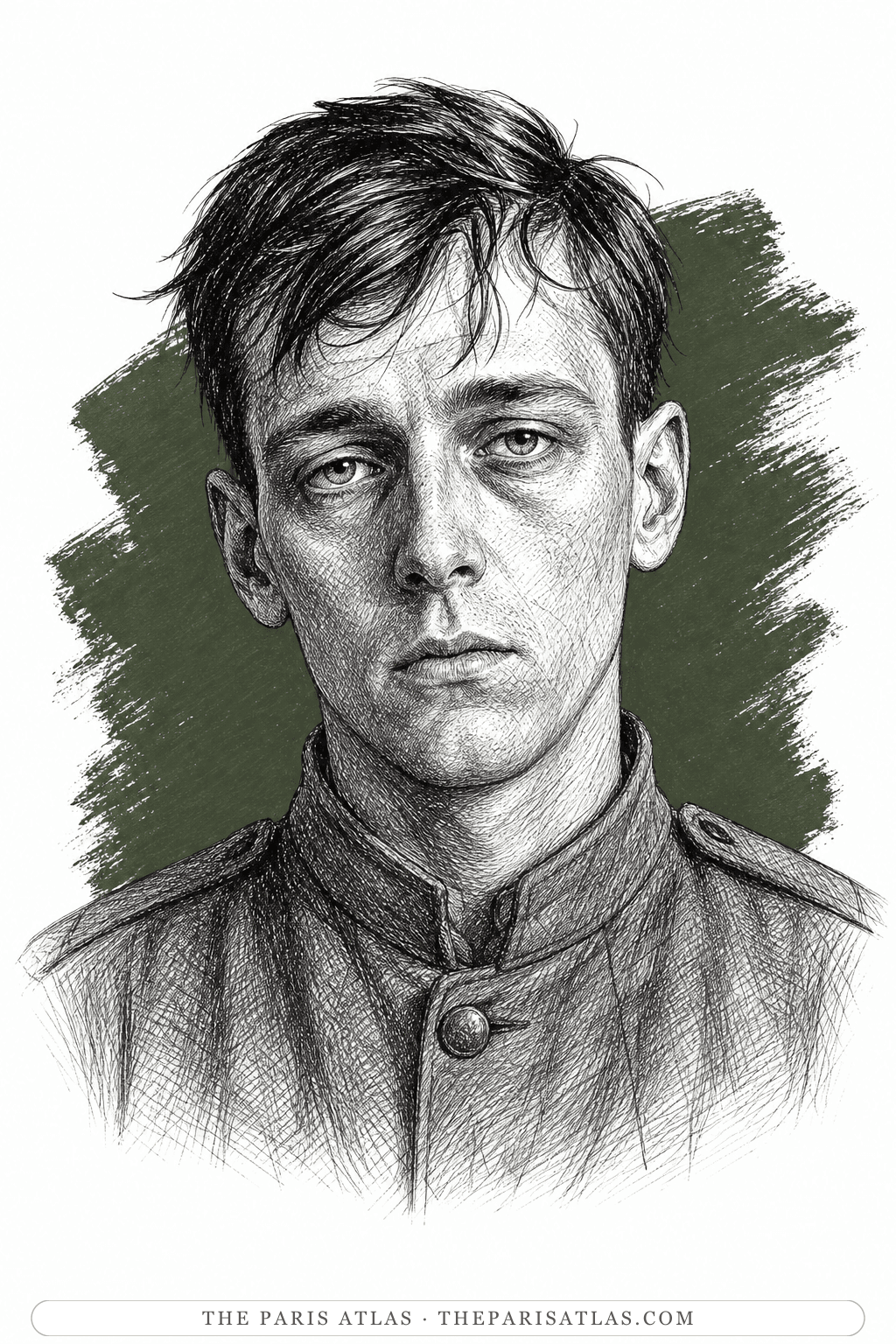
Carrol Key
In "May Day": one of two privates just off the boat from France, looking for a drink on the night of 1 May 1919 and finding a mob instead.
A drink, which the law will not sell him in uniform. He has one asset and offers it straight away: "I got a brother somewhere." The brother turns out to be a waiter at Delmonico's, which is how the two soldiers end up in the building where the rest of the story is happening.
The book

At a glance
- In "May Day", the third of the eleven pieces
- A drafted division from New Jersey, landed in New York three days earlier
- Private Gus Rose, short, dark and bandy-legged
- George Key, a waiter at Delmonico's, married with three children
- Less than five dollars
- Sixth Avenue, the mob, a Delmonico's store room, and the newspaper office on Forty-fourth Street
Who they are in the book
Spoiler-freeCarrol Key is one of the two demobilised soldiers in "May Day", the story F. Scott Fitzgerald set in New York on 1 and 2 May 1919. He and Gus Rose come out of a cheap restaurant on Sixth Avenue at nine in the evening. They are wearing the uniform of a drafted New Jersey division that landed three days before, and they have less than five dollars between them.
Fitzgerald introduces the two of them with a paragraph so cold it has bothered readers ever since: they are ugly, ill-nourished, friendless, and were tossed as driftwood from their births. He then does something more interesting than the paragraph, which is to follow them closely and fairly for the rest of the night. He notes that the pair would have felt more at home in a prison than in the freedom they have just been handed, and that their entire mental furniture consists of a grievance against whatever institution is keeping them alive and against the man immediately above them in it.
Key is the taller one, with a long chinless face and dull watery eyes. Fitzgerald observes that his name hints at ancestry — Francis Scott Key, whom the author was himself named after and distantly related to — and then says that you could stare at the face endlessly without finding any trace of it. What Key actually wants is a drink, and he has an idea about how to get one.
How Carrol Key Is Portrayed
- Why he leaves the mobHe joins the crowd sweeping down Sixth Avenue with real enthusiasm, repeating that they are going to show them, and drops out the moment he hears the meeting is on Tenth Street. "I'd rather get some liquor," said Key. They walk off to jeers of "Quitters!" It is the only choice in the story that could have saved him.
- His brotherGeorge Key, a waiter at Delmonico's, greets him with immediate suspicion, assuming he is about to be asked for money. He takes two dollars, promises a quart of whiskey in half an hour, and parks the two of them in a store room full of pails and scrubbing brushes under one dim electric light.
- The planThrough the green baize door is a room laid out with whiskey, gin, brandy, vermouth and two empty punch bowls for the dance upstairs. Key argues for patience: wait until the bottles are opened and everyone will assume a college man took one — and privately decides to ask his brother about getting a job as a waiter himself.
- How he is with Peter HimmelCaught peering through the door, the two soldiers are invited in, given highballs and cigarettes, and subjected to a long comic oration they cannot follow at all. They laugh at him uproariously, having concluded he is drunk or mad, and accept every drink he pours. Key manages the only piece of sympathy anyone offers anyone in the story: told about the girl who would not kiss him, he says that is awful hard luck.
- What he wants to beSitting on an upturned pail in the store room, he works out what his brother must earn. "I bet he's making fifty dollars a week." Fitzgerald then gives him the ambition itself, in a sentence that is the only future the story ever grants him: "In fact, Key's narrow brow was secreting a resolution to ask his brother to get him a job."
- Where he is standing at the endWhen the mob forces its way into the newspaper office, Fitzgerald puts him at the front without naming him: two very drunk soldiers wobbling fatuously, one short and dark, the other tall and weak of chin. Edith Bradin notices him twice, the second time because he is still there and the short one has gone.
He is killed. In the dark of the fight in the newspaper office a figure is edged sideways past Edith Bradin and goes out through the open window with a short cry; by the faint light from the building behind she has the impression it was the tall soldier with the weak chin. The police captain announces it to the room in one sentence, in dialect, without stopping what he is doing: one of your own soldiers got shoved out of the back window and killed himself.
Fitzgerald gives the death its full weight in one place only, and it is not in the riot scene. At dawn, in Childs' restaurant on Fifty-ninth Street, Gus Rose sits over coffee among débutantes eating buckwheat cakes and thinks about him. "He had fallen thirty-five feet and split his skull like a cracked cocoa-nut." Then Rose's verdict, twice: "He was a darn good guy, o'right."
If you like Tales of the Jazz Age


If you like F. Scott Fitzgerald
Explore authors with a similar voice, perspective, and influence.
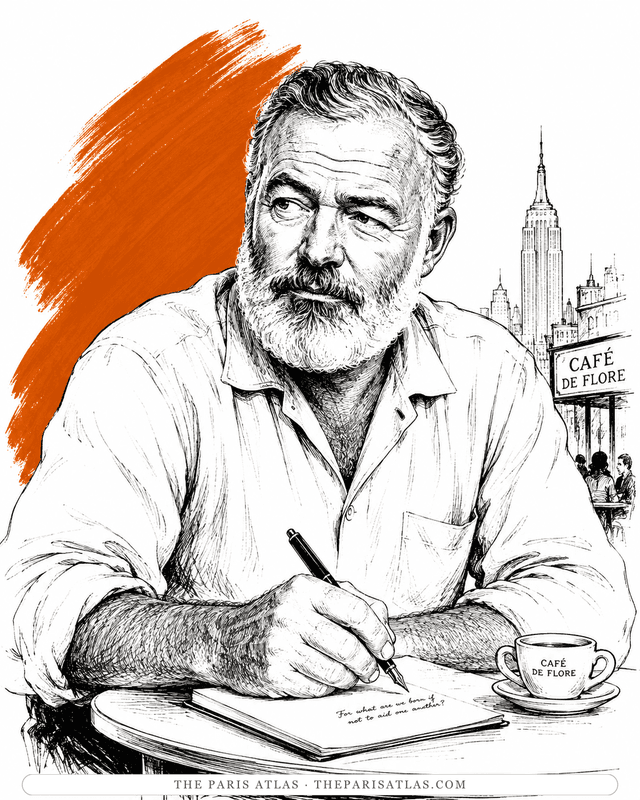
Ernest Hemingway
Fitzgerald vouched for him to Scribner's before they had met, then edited him better than he edited himself; the friendship's five rounds are chronicled in our journal.
View author
Henry Miller
The Brooklyn dropout who arrived in Paris broke at thirty-eight and wrote the exuberant, banned books that ended American censorship.
View author
Louis-Ferdinand Céline
The doctor of the Paris slums who wrote the century's blackest, funniest novel — and changed the sound of French prose.
View author