
Philip Dean
In "May Day": Gordon Sterrett's Yale classmate, in New York on holiday with a dozen silk shirts and no intention of letting anyone spoil his week.
A good two weeks, undisturbed. He says it twice and means it both times: "I came East to have a good time." His advice to Gordon is of the same order: "If you haven't got money you've got to work and stay away from women."
The book

At a glance
- In "May Day", the third of the eleven pieces
- About twenty-four — Gordon Sterrett's exact contemporary
- Yale, the class before the war; roomed with Gordon in senior year
- The Biltmore, on a two-week holiday
- Eighty dollars, of the three hundred he was asked for
- Mr. Out, from four in the morning onward
Who they are in the book
Spoiler-freePhilip Dean is the man Gordon Sterrett telephones at nine in the morning at the start of "May Day", F. Scott Fitzgerald's story of New York on 1 and 2 May 1919. The two of them are the same age, about twenty-four, and were Yale classmates who roomed together in senior year. Dean is blond, ruddy and rugged, radiates fitness and bodily comfort, and smiles a great deal, showing large and prominent teeth. He has taken a couple of weeks off and come east to enjoy himself.
Gordon wants three hundred dollars. Dean's family keep close tabs on what he spends, and by his own account he is not rich, though he owns nearly a dozen heavy silk shirts and buys a dozen neckties in an afternoon without checking a price. He is not cruel. He is something more ordinary and, in the story, more damaging: a comfortable young man who resents being handed somebody else's emergency in the middle of a holiday.
Fitzgerald uses him as the measure of what has happened to Gordon. The two of them are the same age, from the same class, out of the same college, and the story keeps setting them next to each other until the difference stops looking like luck.
How Philip Dean Is Portrayed
- The shirtsNearly a dozen of very heavy silk, yellow with a pale blue stripe, littered on the chairs with impressive neckties and soft woollen socks. Fitzgerald never says Dean is rich. He shows the shirts, and then shows Gordon's cuffs.
- How he refusesNot at once, and not cleanly. He says he cannot decide right off, changes the subject twice, spends the afternoon buying neckties, and finally takes Gordon aside in the Biltmore lobby: "I've thought the whole thing over carefully and I've decided that I can't lend you that money." He counts out seventy-five dollars, notes that with the five he already gave that makes eighty, and leaves for the barber.
- The word he reaches forTrying to name what is wrong with his friend, he lands on something he cannot really justify: "There's a regular aura about you that I don't understand." Then: "It's a sort of evil." It is the closest the story comes to explaining Gordon, and it comes from the man least equipped to explain him.
- The moment they stop being friendsDean tosses him a five-dollar bill and their eyes meet, and each looks away. Fitzgerald states it without decoration: "For in that instant they quite suddenly and definitely hated each other."
- Mr. OutBy dawn he is drunk enough to take the cardboard signs off the two Delmonico's coat-room doors and wear one inside his waistcoat. Peter Himmel takes the one marked "In"; Dean takes "Out". They shake hands as strangers — "Mr. In meet Mr. Out" — and spend the morning ordering champagne for breakfast at three hotels.
- What he does when he sees Gordon againAt Childs' at dawn he stops at the table where Gordon is sitting with Jewel Hudson, wags a finger at the pair of them and asks what he told him. He does it twice. It is the last conversation the two men have.
Nothing happens to him. He is last seen in an elevator at the Biltmore at nine in the morning with Peter Himmel, asking for a floor above the top one, while ten paces away in the lobby Edith Bradin is identifying the soldier who broke her brother's leg and a crowd is closing round. Fitzgerald says the whole scene reached the two of them as a particolored iridescent segment of a whirring, spinning world.
That is the point of him. Gordon Sterrett shoots himself a few hours later; a soldier is dead on a pavement off Forty-fourth Street; Henry Bradin has a broken leg. Dean has a hangover and a fortnight left. He never learns what happened, and the story does not arrange for him to.
If you like Tales of the Jazz Age


If you like F. Scott Fitzgerald
Explore authors with a similar voice, perspective, and influence.
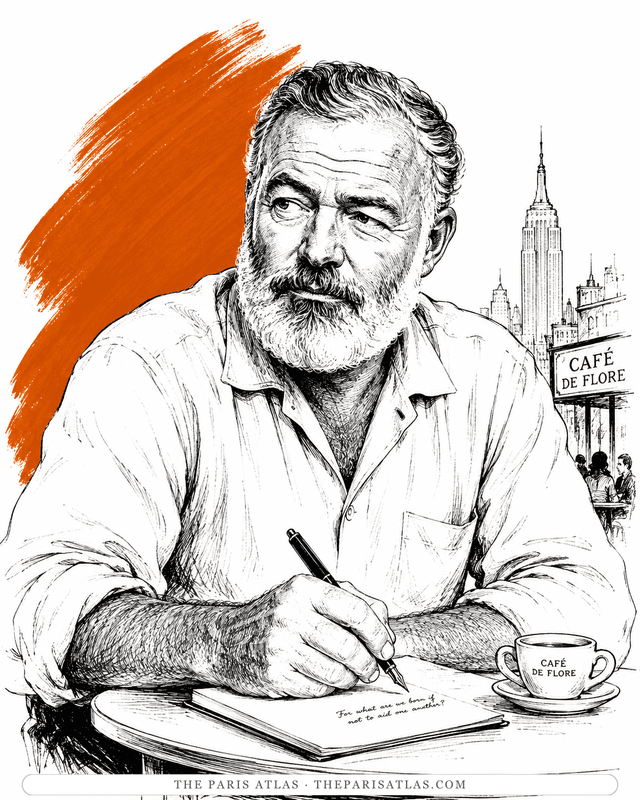
Ernest Hemingway
Fitzgerald vouched for him to Scribner's before they had met, then edited him better than he edited himself; the friendship's five rounds are chronicled in our journal.
View author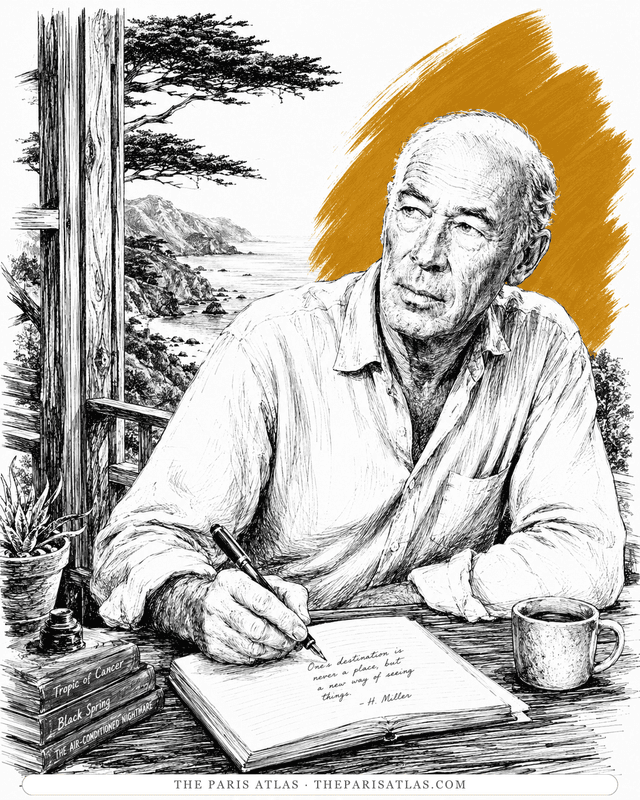
Henry Miller
The Brooklyn dropout who arrived in Paris broke at thirty-eight and wrote the exuberant, banned books that ended American censorship.
View author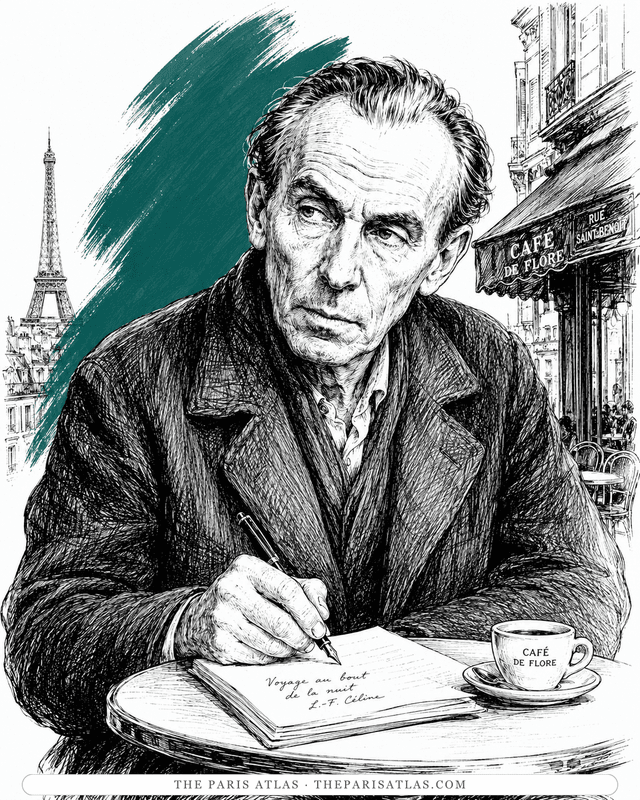
Louis-Ferdinand Céline
The doctor of the Paris slums who wrote the century's blackest, funniest novel — and changed the sound of French prose.
View author