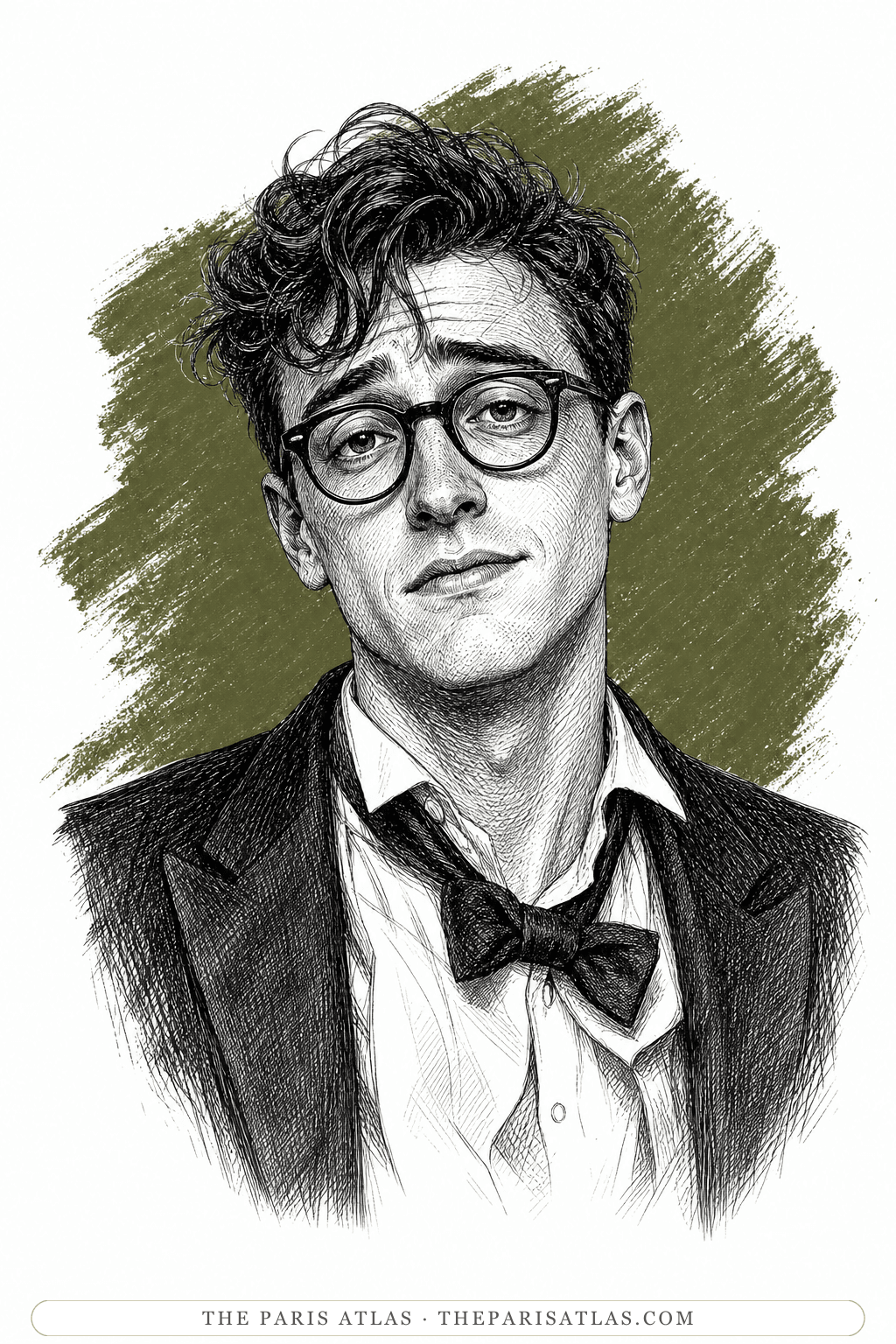
Peter Himmel
In "May Day": the Yale junior who takes Edith Bradin to the dance, fails to kiss her, and drinks his way into the strangest friendship in the story.
To be kissed, and failing that, to be drunk about it. He works the position out in the hall and repeats it until it sounds like principle: "Well, if any girl ever led a man on and then jolted him, she did—and she has no kick coming if I go out and get beautifully boiled."
The book

At a glance
- In "May Day", the third of the eleven pieces
- A junior — a year or two behind Gordon Sterrett and Philip Dean
- Edith Bradin, at the Gamma Psi fraternity dance at Delmonico's
- Horn-rimmed glasses, and after four in the morning a cardboard sign reading "In"
- Privates Carrol Key and Gus Rose, whom nobody else at the dance ever speaks to
Who they are in the book
Spoiler-freePeter Himmel is Edith Bradin's escort in "May Day", the long New York story at the centre of Tales of the Jazz Age. He is a Yale junior, tall and humorous, with horn-rimmed glasses and an air of attractive whimsicality. He has been writing to Edith on special-delivery terms for two months and believes he is on firm ground.
He is not. In the taxi to Delmonico's he tries to put an arm round her, brushes her hair with his elbow, and is snubbed. He is unaccustomed to it, and takes it badly. His response, formulated carefully in the hall and repeated to himself several times, is that if a girl leads a man on and then jolts him she has no complaint coming if he goes out and gets beautifully boiled.
So he does, in a small room off the supper room where the punch bowls are kept — and in doing so becomes the one character in "May Day" who talks to people from a different part of the story. Two privates are hiding behind the green baize door of that room, drinking stolen whiskey. Peter opens the door, bows, and offers them a drink.
How Peter Himmel Is Portrayed
- The two mistakes in the taxiHe used the near arm rather than the far arm, which Fitzgerald notes is always the clumsier of the two, and his elbow grazed hair Edith had spent the afternoon on. He is snubbed with what the story calls a correct mixture of dignity and reticent pity, and does not recover for hours.
- How he treats the two soldiersFinding two privates hiding in a broom closet with stolen liquor, he welcomes them in, gives them highballs and cigarettes from his case, and delivers an elaborate mock-oration asking why, in a world manufacturing seventeen thousand chairs a day, they choose to sit on pails. They laugh at him rather than with him, having decided he is either raving drunk or raving crazy. Both classes of person are being perfectly friendly, and the scene is the only meeting of the two halves of the story.
- What he says about the riotTold the soldiers have been in a fight with a Bolshevik, he becomes enthusiastic on the subject and shouts, "Kill the Bolshevik! Exterminate 'em!" He then buys another round and toasts everyone as Americans. Fitzgerald sets this thirty pages before the mob puts a man through a window, and does not comment.
- The apology to EdithDrunk, he cuts in on her, tells her he loves her, and apologises twice: first for presuming to try to kiss her, and second for drinking, which he had only done because he thought she was angry with him. She smiles at him unwillingly.
- Childs' at dawnTold to sit down or get out, he proposes to Dean that they beat up the waiter, then throws a handful of hash into the air over the nearby tables and bows. "Thank you for your kind applause, ladies and gents." He is chased round the restaurant by eight waiters and pinned after overturning a sugar bowl.
- Mr. InHe takes the cardboard sign marked "In" off a Delmonico's coat-room door and wears it inside his waistcoat, so the word is printed across his shirt front. Dean takes "Out". They introduce themselves to each other formally and go and order champagne for breakfast.
He comes through it without a scratch and without a clue. The two soldiers he bought drinks for go on from that room to the mob on Forty-fourth Street; one of them is dead by two in the morning and the other is arrested at nine. Peter spends those hours in a taxi with Dean shouting at street cleaners, then ordering champagne at the Commodore and the Biltmore and finding the word "mortifying" funnier each time either of them says it.
The last scene puts all of it in one place. He bows to Edith in the Biltmore lobby, is pushed aside by her escort, and is still standing there when she points out Gus Rose — the soldier he had been drinking with eight hours earlier — as the man who broke her brother's leg. He does not recognise him. He and Dean get into an elevator and ask for a floor above the top one.
If you like Tales of the Jazz Age


If you like F. Scott Fitzgerald
Explore authors with a similar voice, perspective, and influence.
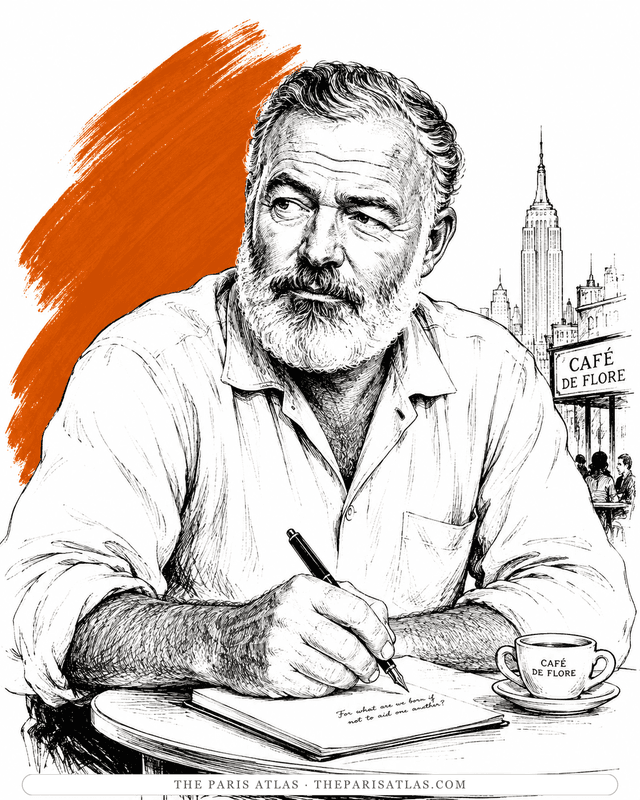
Ernest Hemingway
Fitzgerald vouched for him to Scribner's before they had met, then edited him better than he edited himself; the friendship's five rounds are chronicled in our journal.
View author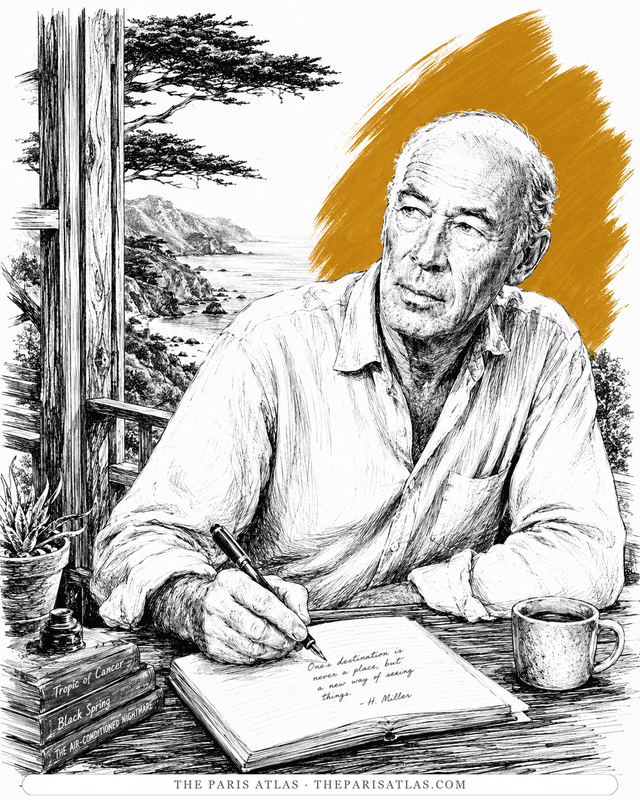
Henry Miller
The Brooklyn dropout who arrived in Paris broke at thirty-eight and wrote the exuberant, banned books that ended American censorship.
View author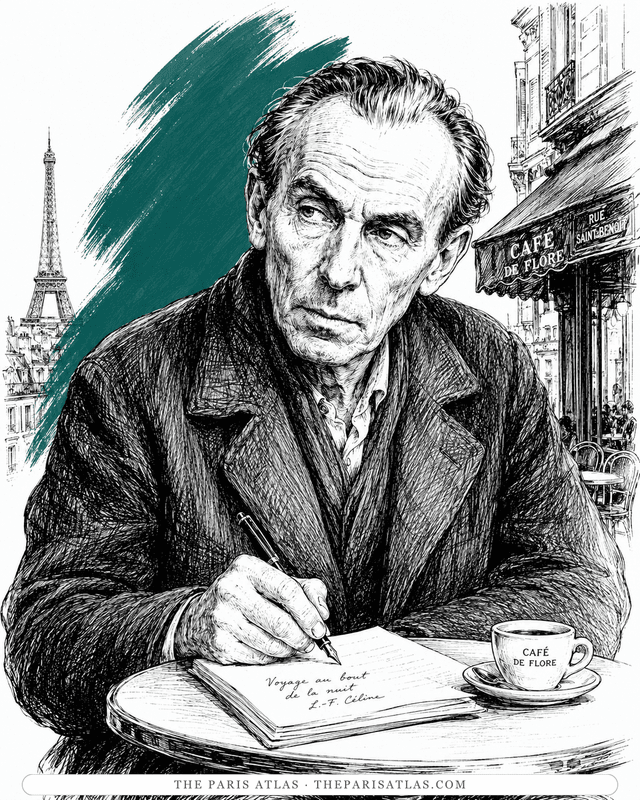
Louis-Ferdinand Céline
The doctor of the Paris slums who wrote the century's blackest, funniest novel — and changed the sound of French prose.
View author