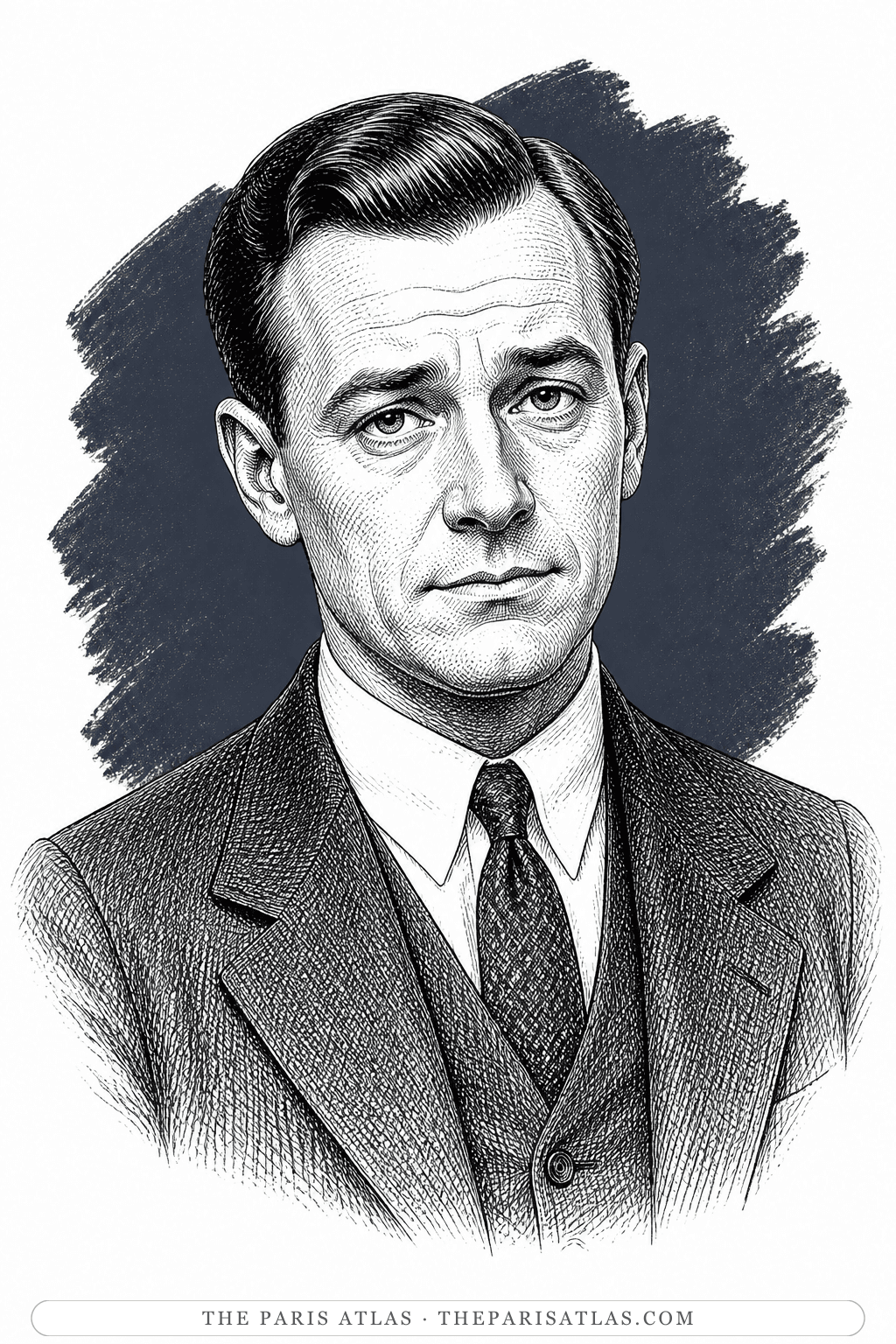
Roscoe Button
Benjamin Button's son, who inherits the family firm, then his father, and finds the second inheritance unbearable.
For his father to behave normally, and failing that, quietly. He puts it to him in the plainest terms he has: "This has gone too far to be a joke. It isn't funny any longer."
The book

At a glance
- In "The Curious Case of Benjamin Button", the sixth of the eleven pieces
- 1881, the year after his parents married
- Harvard, ten years before his father enrolled there
- Roger Button & Co., Wholesale Hardware, from about 1910
- Married, with a son born in 1920 — whose grandfather is then a boy of about ten
Who they are in the book
Spoiler-freeRoscoe Button is Benjamin Button's son in "The Curious Case of Benjamin Button". He is born in 1881, a year after his parents marry, graduates from Harvard around 1900, and takes over Roger Button & Co., Wholesale Hardware, in about 1910 when his father hands it on. He is married, prominent in Baltimore, and wants no scandal attached to his family.
For a while the arrangement is comfortable enough that the two men are often mistaken for each other, which Benjamin enjoys. Then his father keeps going. By 1914 Benjamin looks twenty and is living in Roscoe's house, moping about it in what the story calls adolescent mooniness; by 1920 he is a grubby boy of about ten playing with lead soldiers on the day Roscoe's first child is born, and nobody at the christening mentions that the boy is the baby's grandfather.
Fitzgerald is very funny about how Roscoe copes, and the joke is entirely at the expense of his generation's vocabulary. Roscoe believes in efficiency. He does not find his father efficient.
How Roscoe Button Is Portrayed
- The word he keeps reaching forFitzgerald has him fail to describe the situation four times in one paragraph. He does not consider the matter efficient. He thinks his father, in refusing to look sixty, has not behaved like a red-blooded he-man. He believes live wires should keep young, but carrying it out on such a scale was — was — was inefficient. And there Roscoe rested.
- "Uncle"His solution to the problem of a fifteen-year-old father is to make him answer to "Uncle" in front of visitors, and then all the time, so he gets used to it. His reason is embarrassment: it looks absurd for a boy of fifteen to call him by his first name.
- The whiskersWhen Benjamin first comes home from Harvard, Roscoe proposes he wear eye-glasses and imitation whiskers glued to his cheeks — the same disguise Benjamin's own father imposed on him sixty years earlier, running the other way. The whiskers itch. Benjamin weeps, and Roscoe reluctantly relents.
- Camp MosbyWhen his father slips out of the house with a genuine brigadier-general's commission and reports to an infantry camp in South Carolina, Roscoe arrives from Baltimore two days later, hot and cross from a hasty trip, and escorts the weeping general home without the uniform.
- The kindergartenThe one thing he does gently. Five years after his own son is born he takes the boy and his father to kindergarten on the same day, under the supervision of the same nurse. His son moves up to first grade after a year. Benjamin stays.
He outlasts his father, which is the strange shape of the whole story. Benjamin goes down through kindergarten and out the other side, is handed over to a nurse called Nana, and disappears into a crib. Roscoe is the man who came to see him sometimes — Fitzgerald's phrasing in the last paragraphs reduces him to exactly that, an unnamed visitor in a room where nothing is remembered.
He gets no scene of grief and asks for none. Fitzgerald's interest in him is comic and slightly cruel throughout: the son who wanted his father to be a red-blooded he-man, and got a baby instead.
If you like Tales of the Jazz Age


If you like F. Scott Fitzgerald
Explore authors with a similar voice, perspective, and influence.
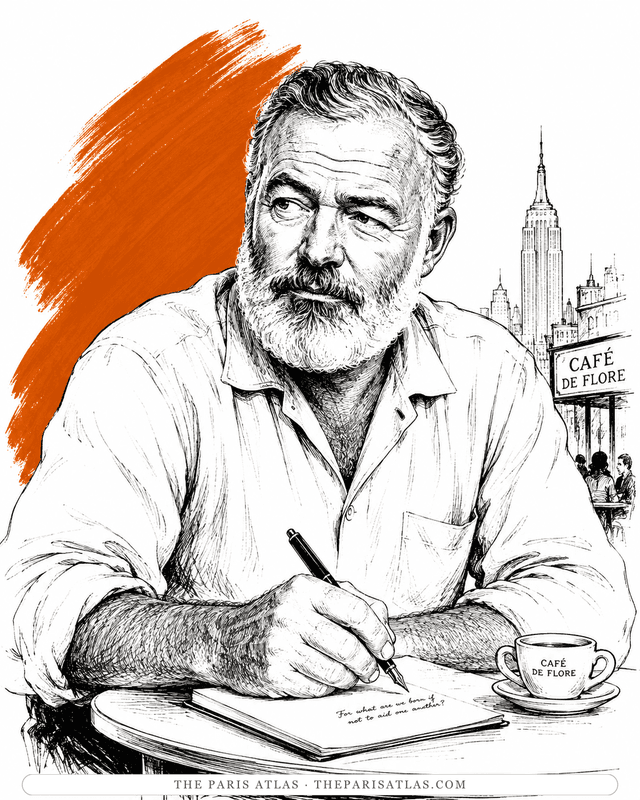
Ernest Hemingway
Fitzgerald vouched for him to Scribner's before they had met, then edited him better than he edited himself; the friendship's five rounds are chronicled in our journal.
View author
Henry Miller
The Brooklyn dropout who arrived in Paris broke at thirty-eight and wrote the exuberant, banned books that ended American censorship.
View author
Louis-Ferdinand Céline
The doctor of the Paris slums who wrote the century's blackest, funniest novel — and changed the sound of French prose.
View author