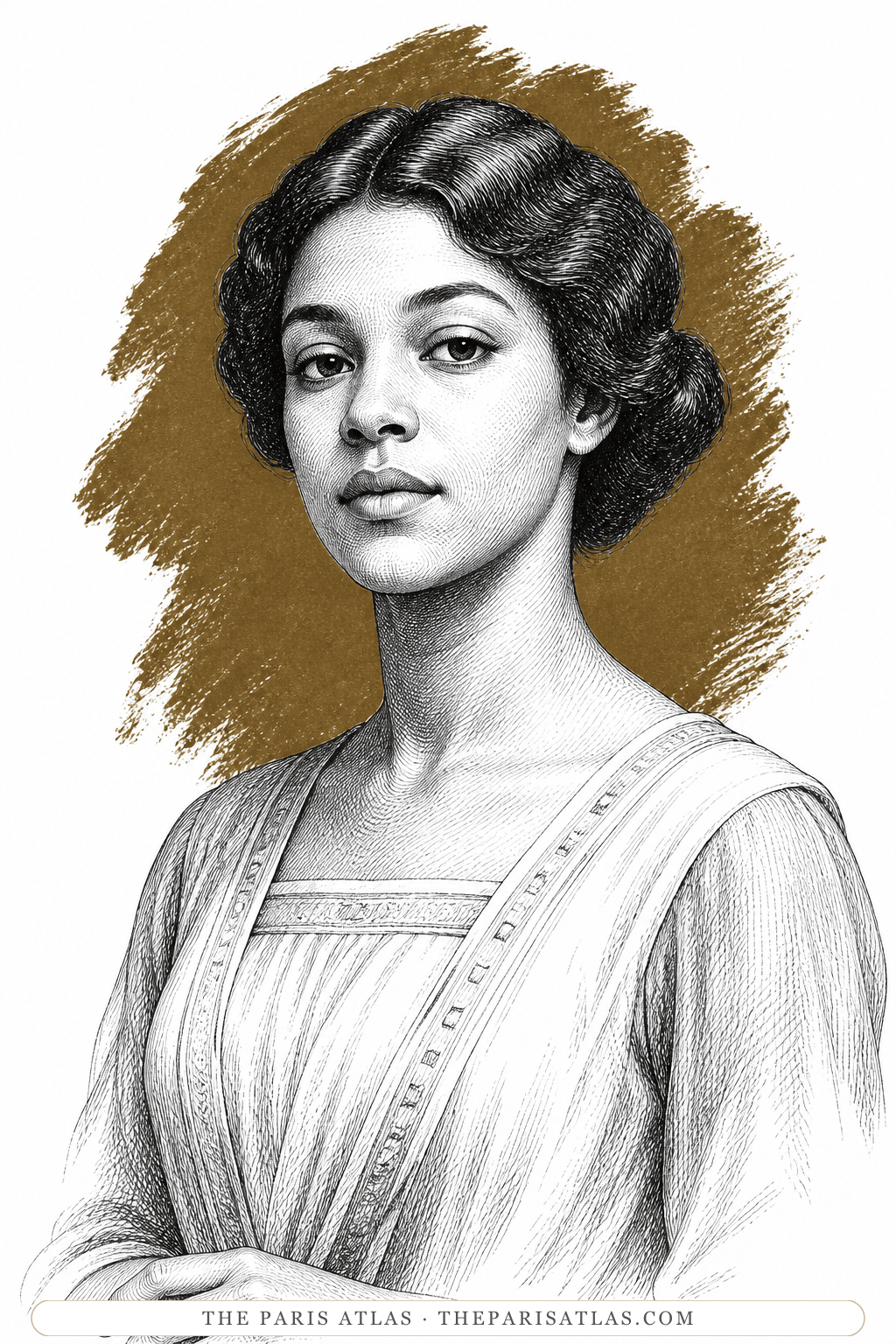
Jasmine Washington
The elder Washington daughter in "The Diamond as Big as the Ritz": the one who invited the houseguests her father then had killed, and the one who offers to take in laundry at the end.
To look after somebody. It runs from her reading to her war ambition to the last page, where, penniless and orphaned, she volunteers for the only job she can think of: "I have always washed my own handkerchiefs. I'll take in laundry and support you both."
The book

At a glance
- In "The Diamond as Big as the Ritz", the fifth of the eleven pieces
- Elder daughter of Braddock Tarleton Washington; sister of Percy and Kismine
- Newport for the summer, and coming out in London the following autumn, to be presented at court
- A canteen expert in Europe, until the First World War ended without her
- Inviting the houseguests, every summer, knowing what happened to them
- The basket of food that feeds all three survivors
Who they are in the book
Spoiler-freeJasmine Washington is Kismine's older sister in "The Diamond as Big as the Ritz", F. Scott Fitzgerald's 1922 story about a family living on a Montana mountain made of solid diamond. She is the plainer of the two and the story says so: she "resembled Kismine in appearance" except that she was somewhat bow-legged and terminated in large hands and feet, "but was utterly unlike her in temperament".
The temperament is the interesting part. Her brother Percy and her sister Kismine both inherited their father's arrogance whole, and Fitzgerald writes that a chaste and consistent selfishness ran like a pattern through their every idea — and Jasmine did not. What she has instead is a persistent, slightly absurd urge to be of use to somebody. She reads books about poor girls who keep house for widowed fathers. She wanted to go to Europe during the war as a canteen expert, and never recovered from the war ending before she could.
None of which makes her innocent, and the story is careful about that. The houseguests who came to the valley every summer and were drugged in their sleep on the way out were invited by her. She knew, and she kept writing to them, and she gave them the nicest presents toward the end of the visit.
How Jasmine Washington Is Portrayed
- How the story describes herAlmost entirely by comparison with her sister, and not kindly: she resembles Kismine in appearance except for being somewhat bow-legged and terminating in large hands and feet, and is utterly unlike her in temperament. It is the only physical description she gets.
- What she reads"Her favourite books had to do with poor girls who kept house for widowed fathers." Fitzgerald puts this in a household where a single room is lined floor to ceiling with diamonds, and leaves the joke alone.
- The war that ended too soonShe "had never recovered from the shock and disappointment caused her by the termination of the World War, just as she was about to start for Europe as a canteen expert", and pined away for a time afterwards.
- The war her father tried to arrangeTo cheer her up, Braddock Washington took steps to promote a new war in the Balkans. It came to nothing, because she saw a photograph of some wounded Serbian soldiers and lost interest in the whole proceedings. The two halves of that sentence are the two halves of the family.
- She invited themKismine is explicit about who was responsible for the guests: "I never invited one. Jasmine did." She kept writing to them to come, knowing what happened in August, and — Kismine's phrasing — "She'd give them the nicest presents toward the last."
- The child who pushed her father downstairsKismine's proof that the Washington children were never punished. Once, when Jasmine was a little girl, she pushed her father down the stairs, and he just got up and limped away.
- Asleep through the end of the worldWoken at two in the morning to escape, she climbs the mountain with the others and then, while her home is bombed below, drops off against a tree — obliging and phlegmatic, in Fitzgerald's two words for her, asleep immediately against the trunk while her sister and John watch the valley burn. She had thought to bring a basket of food.
- The picnicAt sunset on the far side of the cliff she spreads a table-cloth, stacks the sandwiches and says, "Don't they look tempting? I always think that food tastes better outdoors." Her sister supplies the verdict: "With that remark," remarked Kismine, "Jasmine enters the middle class."
She survives, along with Kismine and John T. Unger. Her father, mother and brother go through a trap-door in the side of the mountain and Braddock Washington detonates it; the château explodes into the lake. Jasmine watches none of this, having fallen asleep against a tree, and Fitzgerald never gives her a line of grief.
What he gives her instead is the last practical thought in the story. The jewels Kismine grabbed are rhinestones, John is calculating that they will have to live in Hades, and Jasmine — who has spent the whole story wanting to be useful and being laughed at for it — says quietly that she loves washing, that she has always washed her own handkerchiefs, and that she will take in laundry and support them both. It is the only offer of help anybody in the Washington family makes to anybody, and it comes from the one member of it the story has treated as a joke.
If you like Tales of the Jazz Age


If you like F. Scott Fitzgerald
Explore authors with a similar voice, perspective, and influence.
Ernest Hemingway
Fitzgerald vouched for him to Scribner's before they had met, then edited him better than he edited himself; the friendship's five rounds are chronicled in our journal.
View author
Henry Miller
The Brooklyn dropout who arrived in Paris broke at thirty-eight and wrote the exuberant, banned books that ended American censorship.
View author
Louis-Ferdinand Céline
The doctor of the Paris slums who wrote the century's blackest, funniest novel — and changed the sound of French prose.
View author